Why underwater movement feels delayed
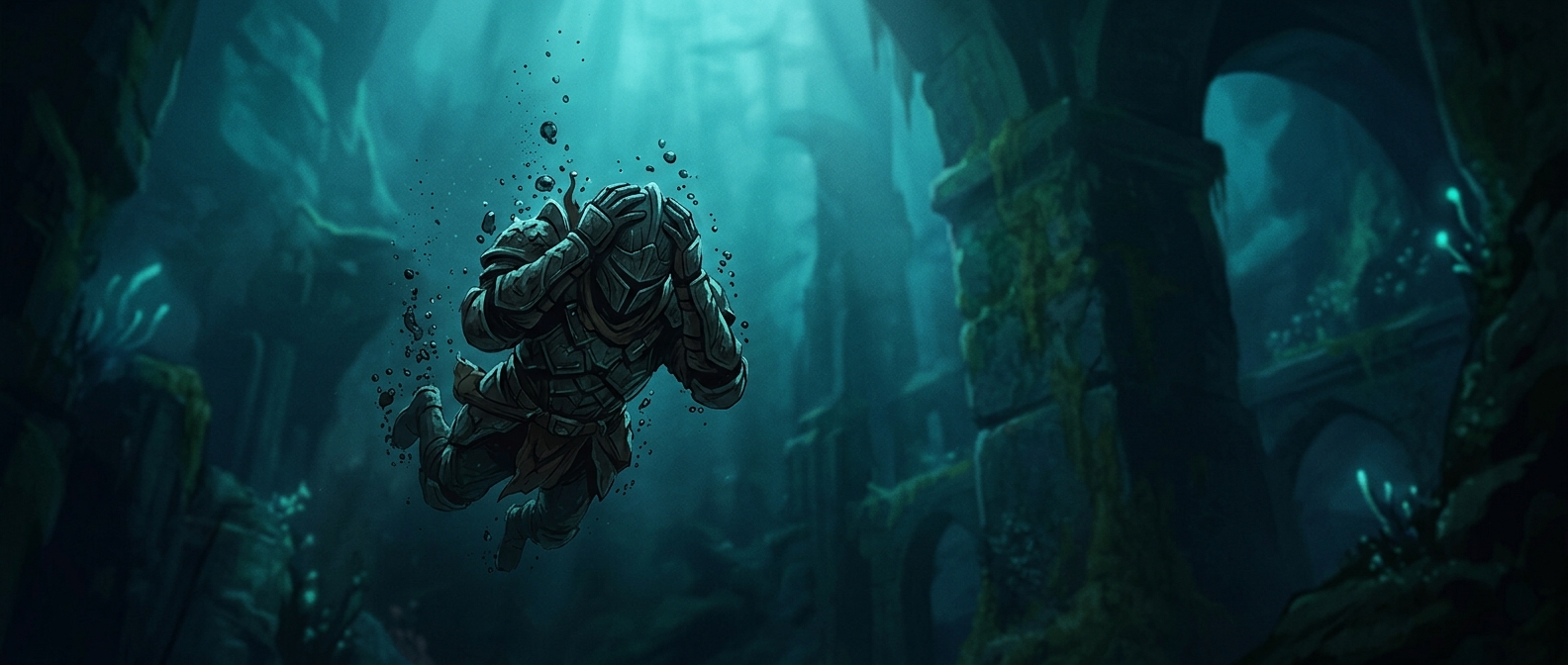
On land, a game can make a character stop or turn almost as soon as the player changes direction. Underwater, designers often stretch that response out: the character keeps drifting, takes time to accelerate, and needs a wider arc to turn. The result feels less like walking and more like pushing a body through resistance.
That sensation is a designed approximation, not a universal law of game controls. Real water slows motion, but games exaggerate the effect so players can feel that they have entered a different environment. A familiar button press now produces a slower, less exact response, making the setting register through the controller as well as on screen.
Sluggishness changes the challenge
The delay also changes how players navigate. A turn started too late may carry a character past a narrow opening; a jump or attack may require more anticipation than it would on land. Designers can use that loss of precision to make hazards feel tense and to make open water feel disorienting or heavy.
But there is a tradeoff. If movement is too slow or difficult to correct, the challenge can feel like fighting the controls rather than mastering the level. Games therefore tune underwater acceleration, turning, and braking to keep the sensation while preserving enough control to steer. Some give players a quick burst or sharper turn as a counterbalance.
When the balance works, the awkwardness tells a story: the player is no longer moving on familiar ground. The same delayed turn that makes a tight passage nerve-racking can make reaching the far side of a pool feel like an accomplishment.