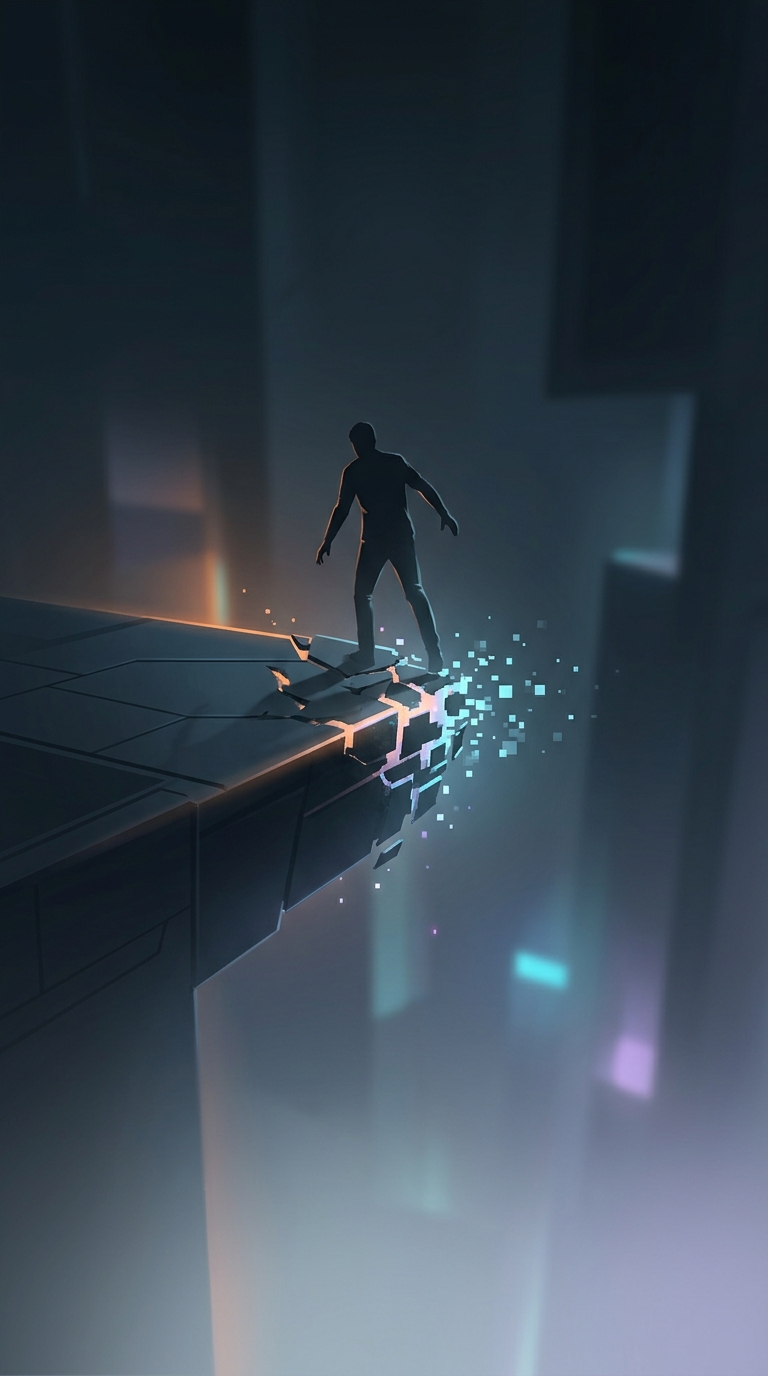
The jump that still works after the ledge
In a platformer, the game usually checks whether a character is touching solid ground when the player presses jump. But those checks happen in tiny steps, not continuously. A player can press the button just after the character has visually run off an edge—close enough that the jump feels as if it should have worked, but late enough that the game’s ground check says no.
Coyote time is a brief grace period after leaving a ledge during which the game still allows a jump. The character may already be falling, but the input is accepted as though the player had pressed it a moment earlier. The name nods to cartoons in which a character can run past a cliff before noticing there is no ground beneath them.
A small window, carefully tuned
A common way to implement it is to remember when the character was last grounded. After the character leaves a platform, the game keeps jump eligibility active for a short interval, then switches it off. The player does not see a timer; they simply get a little more room for timing error.
That room matters because the image, the button press, and the game’s internal collision checks do not line up perfectly from a player’s perspective. Coyote time softens that mismatch without making every late jump succeed. If the grace period is too generous, jumps can feel detached from the platforms; if it is too short, the assistance may be hard to notice.
It is distinct from input buffering, which remembers a jump pressed just before landing and triggers it once the character touches down. Together, the two techniques forgive errors on opposite sides of a platform edge. The result is a game that can remain precise while being less punishing about a fraction-of-a-second mistake.