The obstacle changes who knows what
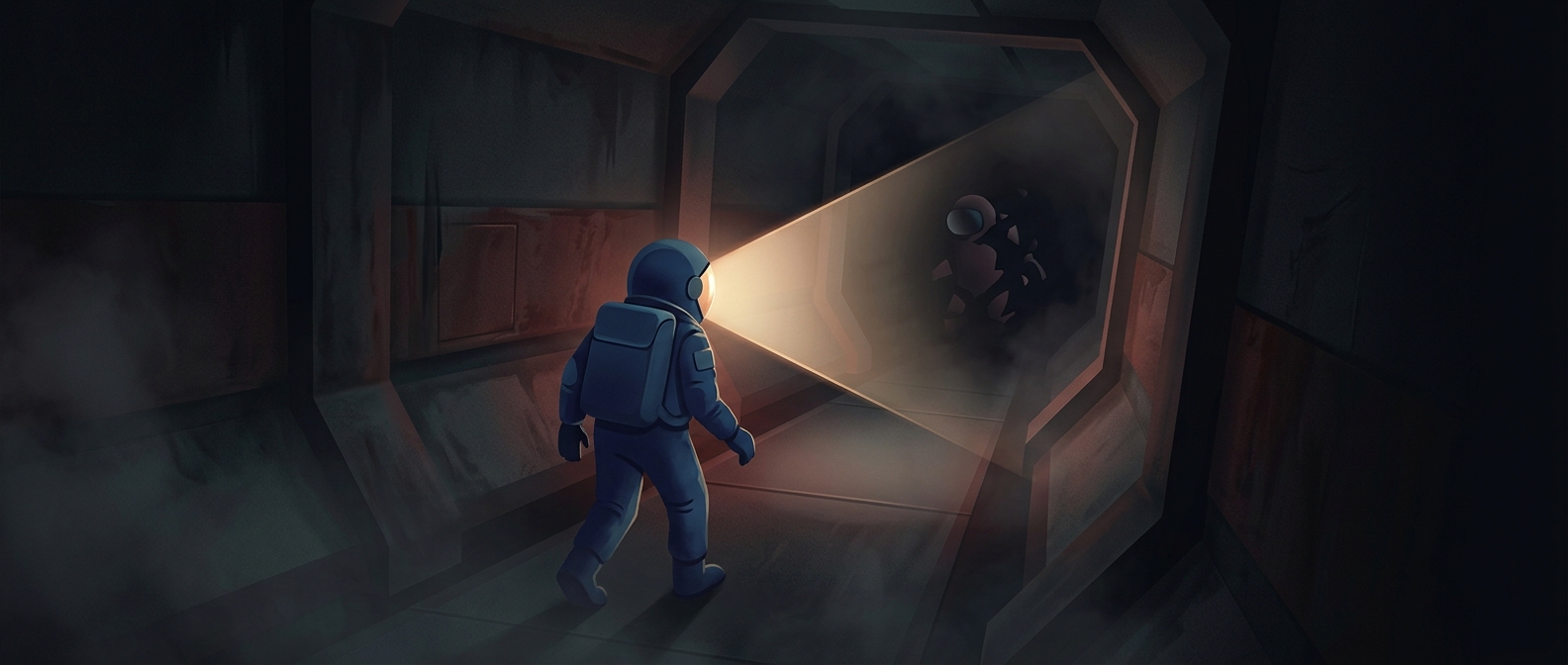
In Among Us, some obstacles create an uneven view of the same space: a crewmate’s view is blocked, while the impostor can still see that player. The obstacle is therefore more than cover. It gives the impostor information the target—and potentially nearby witnesses—does not have.
That asymmetry can make an attack look as though it came from empty space. The victim may not see the impostor approach, and other players may have no clear view of who was nearby. The impostor can use the hidden side of the obstacle to choose when to strike, while the people trying to identify the culprit are left with an incomplete picture.
A visual trick becomes a social weapon
The attack is only part of the effect. Afterward, players must reason from what they could actually see: who was near the body, who had a chance to move unseen, and whether anyone’s account fits the limited view. Because witnesses do not all share the same information, they can reach different conclusions without anyone necessarily lying.
That makes the obstacle useful to the impostor even when no one is directly watching. It can conceal an approach, muddy a timeline, or make an encounter difficult to describe convincingly. The advantage is not simply hiding; it is knowing more than the people who will later judge what happened.