How a Better Tool Changes the Next Goal
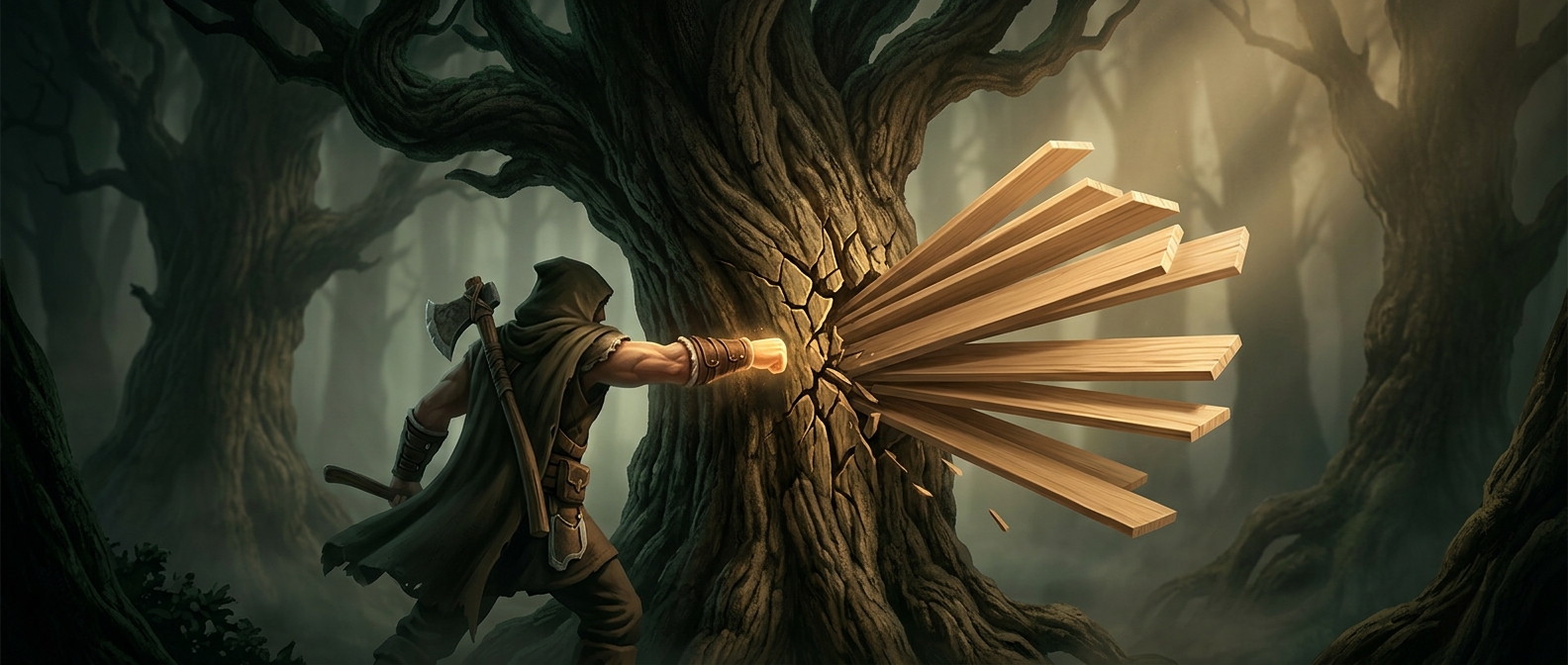
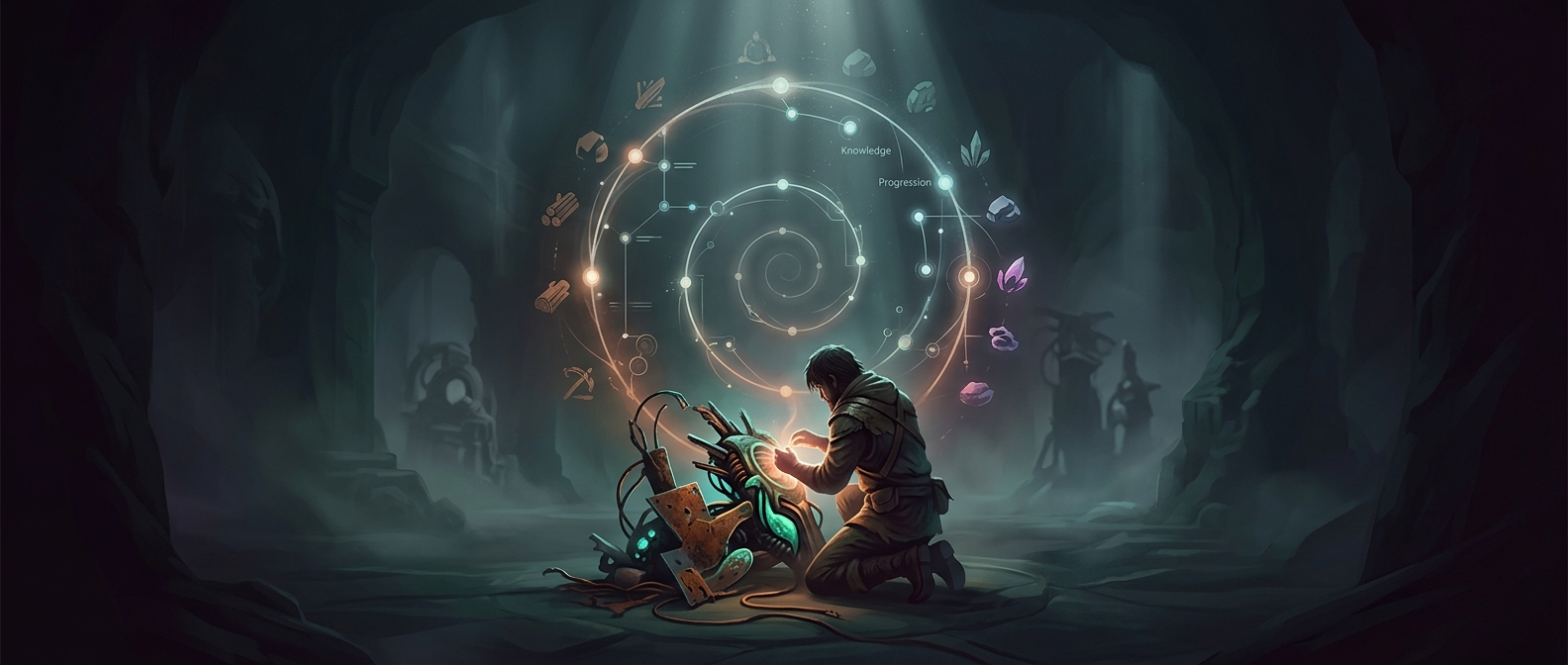
A basic tool does more than unlock a new item: it changes the cost of everything that comes after it. If a stronger axe cuts wood more efficiently, the player can gather the materials for the next project with less effort. That project may require a different resource, sending the player somewhere new or prompting another upgrade. Progress becomes a chain in which each improvement makes the next task more manageable.
The important design choice is that upgrades often feed back into the activity that earned them. The player isn’t only accumulating power for a distant final challenge; they can feel the difference in the next trip to gather materials. That immediate payoff makes an upgrade useful twice: it is a reward, and it speeds up future progress.
Small Goals Make the Loop Easy to Continue
Survival games can present a large, open-ended problem—stay alive and make a place to live—without requiring the player to solve it all at once. A short-term need, such as making a tool or adding shelter, gives the player a clear next step. Completing it reveals another task, while the world remains open to detours and experiments.
This structure also makes setbacks easier to absorb. When a goal is concrete, a failed trip or an unexpected obstacle can become a reason to prepare better rather than a sign that there is nothing left to do. The cycle stays compelling when each upgrade both marks progress and changes what the player can do next.