Why a Punch Can Turn a Tree Into Planks
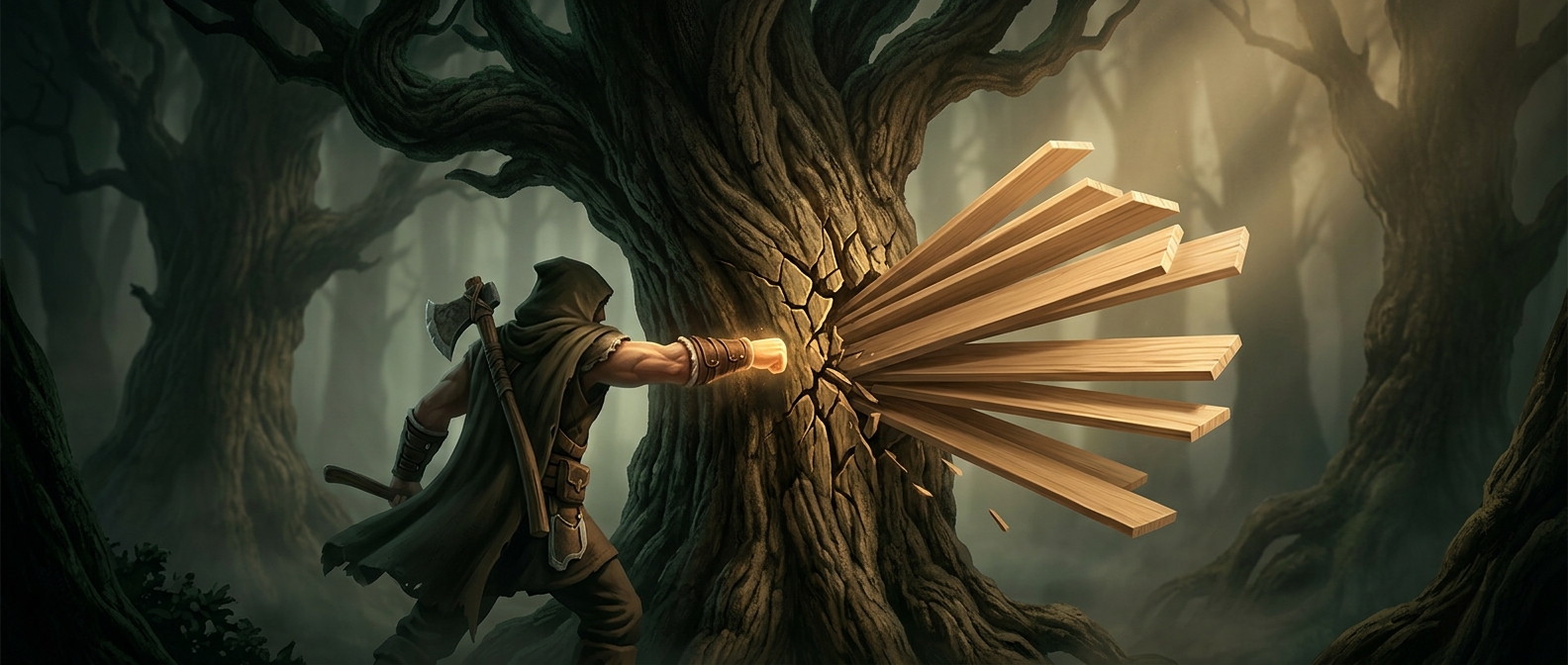
In a survival or crafting game, a tree is often less a tree than a resource node: an object the player can interact with to obtain a useful material. The punch is the input, the falling tree or disappearing trunk signals that the action worked, and planks are the reward. A single animation can stand in for several real-world steps—cutting down the tree, removing branches, sawing the trunk, and preparing boards.
That compression keeps the player focused on the game’s main loop: gather materials, make something, and use it to reach the next goal. If every building project required finding tools, operating a sawmill, and processing logs, routine construction could become a separate simulation rather than a quick part of play.
The Shortcut Is a Design Choice
Making the action a punch also makes the rule easy to learn. Players can test an unfamiliar tree immediately, see whether it yields resources, and begin building without first locating specialized equipment. The clean conversion—from a large object to a stack of usable pieces—also fits the way games commonly organize materials in an inventory. The player receives an amount they can count and spend, rather than having to manage the size and shape of a log.
Games can add complexity when it serves a particular challenge: a tool may speed up harvesting, different trees may provide different materials, or processing may become a crafting step. But those details are optional layers, not necessary parts of the basic resource loop. The punch-to-plank shortcut turns a forest into a practical supply of building materials—and gets the player back to building.