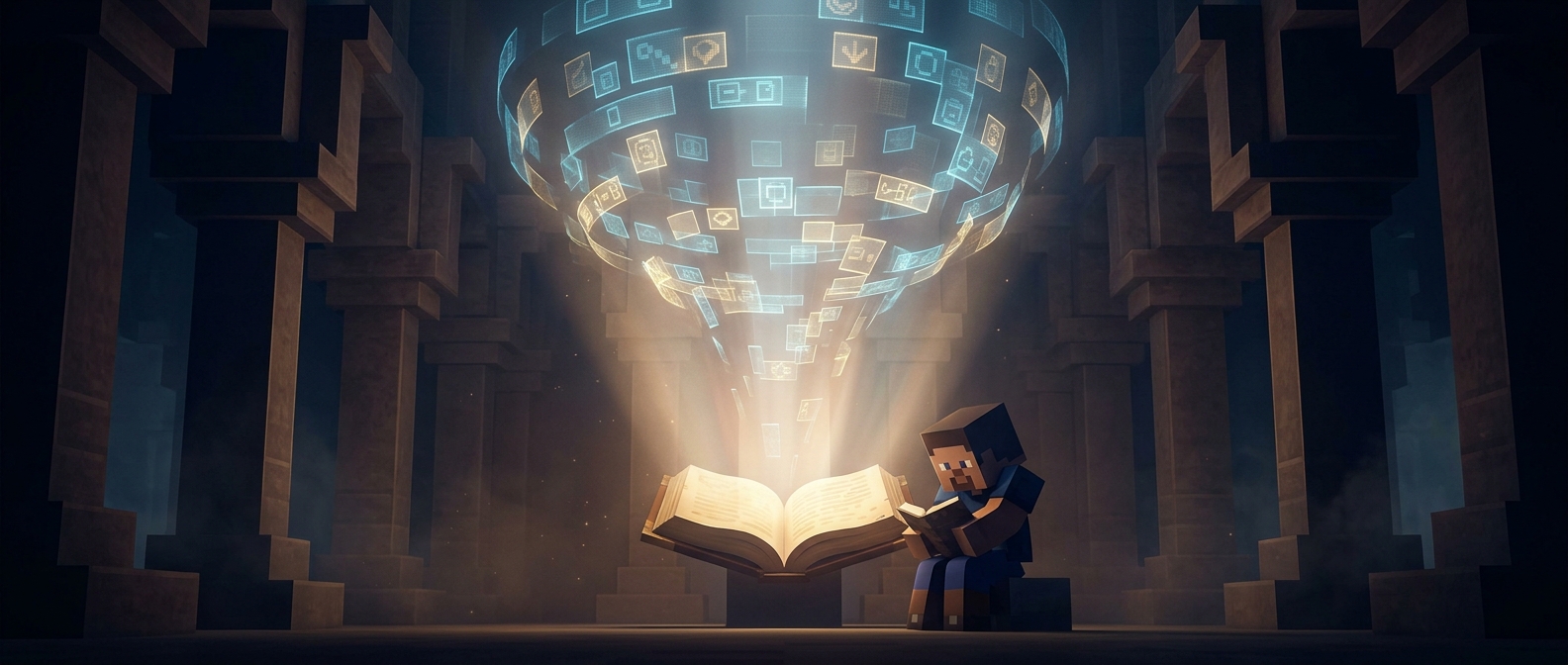
Crafting Was a Puzzle Hidden in the Grid
In early Minecraft, the crafting interface showed a grid but did not tell players what belonged in it. To make an item, you placed materials into particular squares and watched for a result to appear. A wooden pickaxe, for example, takes three planks across the top row and two sticks down the middle. Knowing the ingredients was not enough; their arrangement mattered too.
Some recipes were less strict about placement, but many depended on recognizable shapes. That made crafting a kind of visual code: players learned that sticks could form handles, while other materials had to sit above or around them. The game offered little guidance for decoding that language.
Guesswork Became Part of the Game
A player could test combinations in the grid, but with many possible materials and layouts, experimentation was slow. A missed recipe might mean the ingredients were wrong—or that the pattern was right but shifted into the wrong squares. Discovering a useful tool could therefore involve repeated attempts, not just gathering resources.
That uncertainty pushed players toward one another. Friends shared recipes, and community wikis became practical reference books for anyone who did not want to solve each pattern alone. A recipe learned from another player could feel like a small piece of hard-won knowledge.
Later, Minecraft added an in-game recipe book, making many crafting possibilities easier to find. The change removed much of the need to consult outside guides, but it also changed the texture of discovery: an item that once had to be inferred from a grid could now be surfaced by the interface.