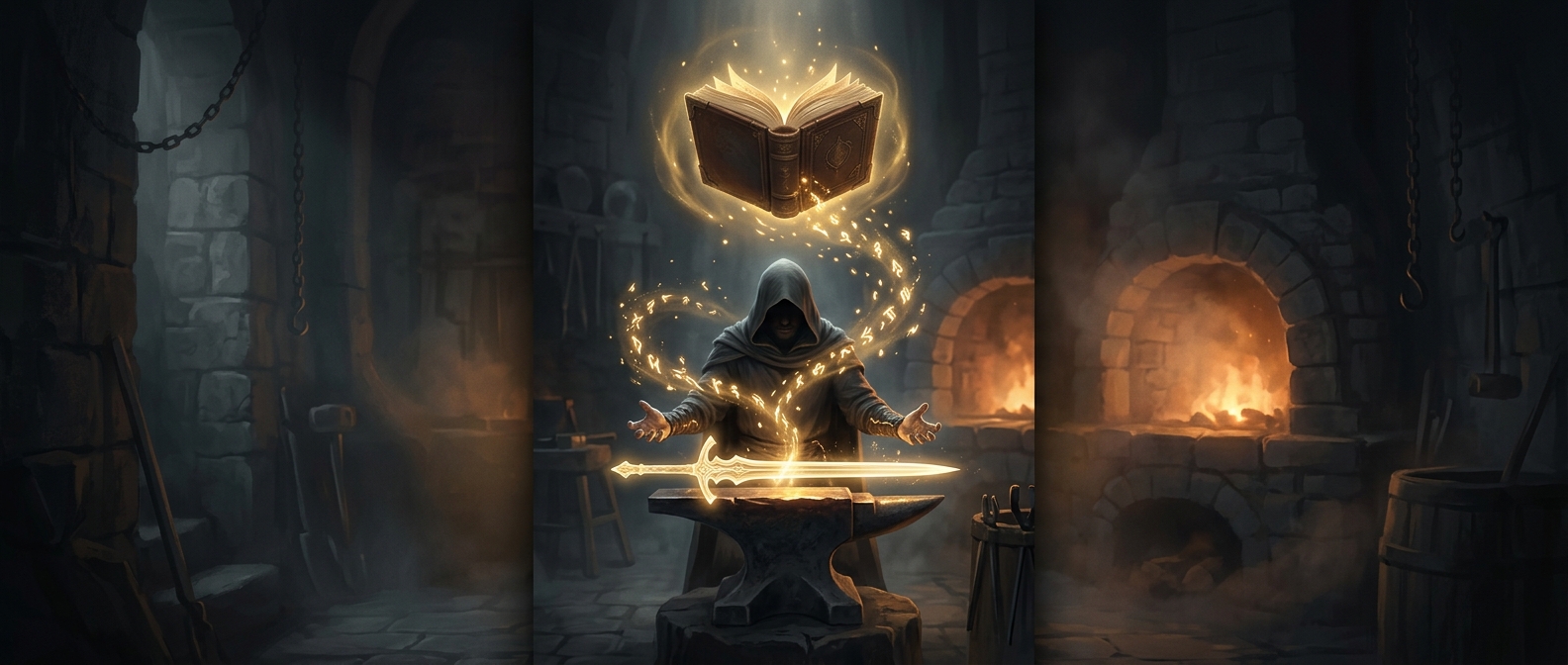
A book turns mastery into a clear game-state change
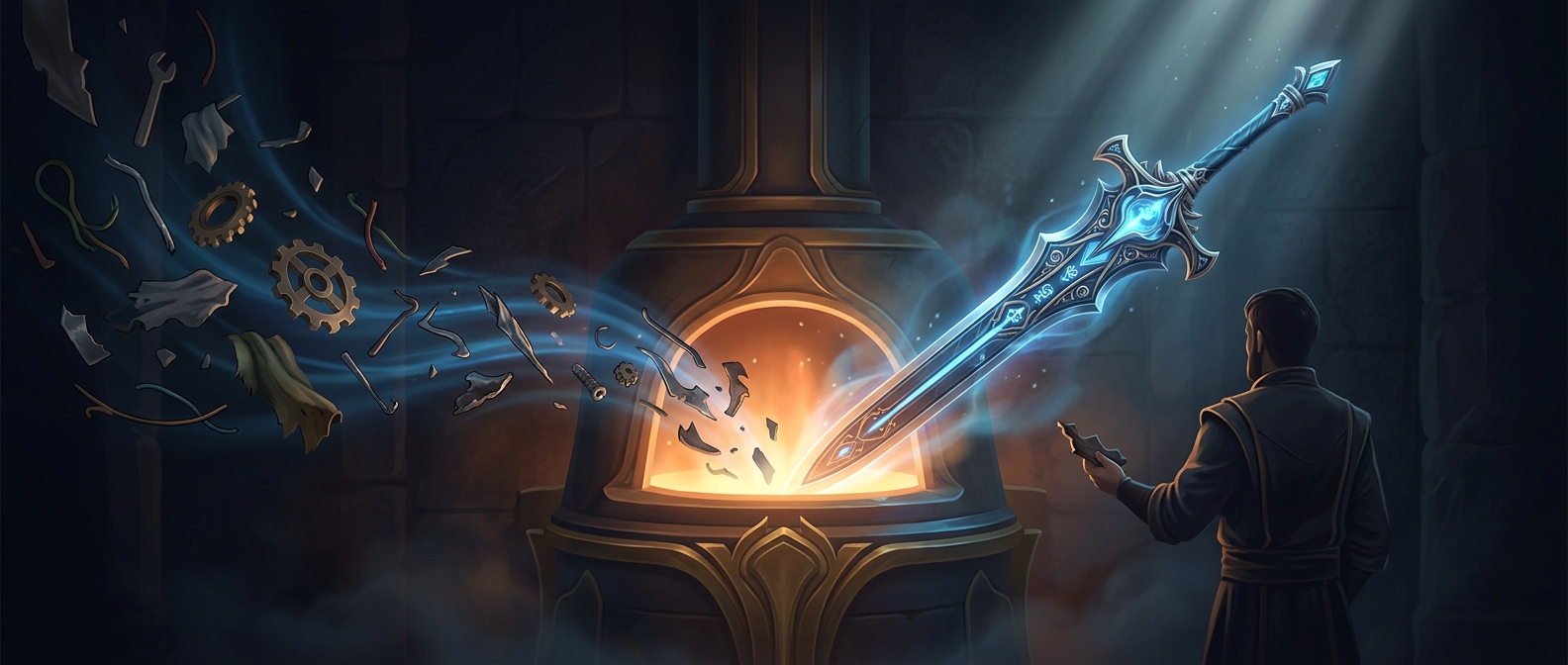
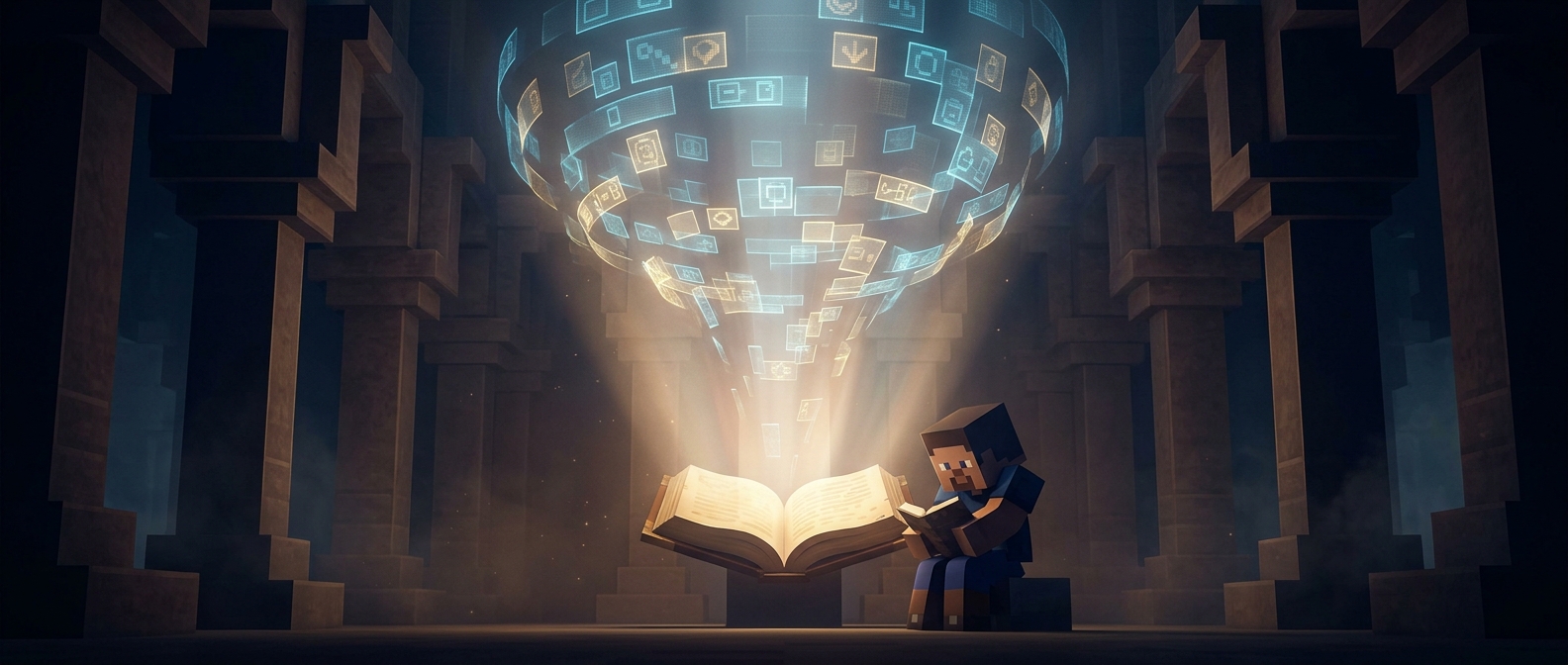
A swordsmith’s craft would normally involve years of practice: choosing and shaping metal, controlling heat, and learning how a blade behaves under stress. A fantasy game can compress all that into a single moment because it is tracking a character’s abilities, not simulating every hour of training. Reading the book gives the player a visible signal that a new option has been unlocked.
That shortcut makes the reward easy to understand. Before the read, the legendary sword is an aspiration; afterward, the character can attempt to make it. The book is less a complete workshop manual than a key that changes what the game permits.
The recipe still leaves room for play
Often, the unlock does not create the sword by itself. The player may still need rare materials, access to a forge, or enough magical energy. Those requirements preserve a sequence of challenges after the instant lesson: the book explains what can be made, while exploration and resource-gathering determine whether it can be made now.
This division also lets a game connect story and systems. A legendary blade can demand a legendary method without asking the player to spend dozens of simulated years learning it. The book converts long-term expertise into a short, legible progression reward, while the hunt for ingredients supplies the work that follows.