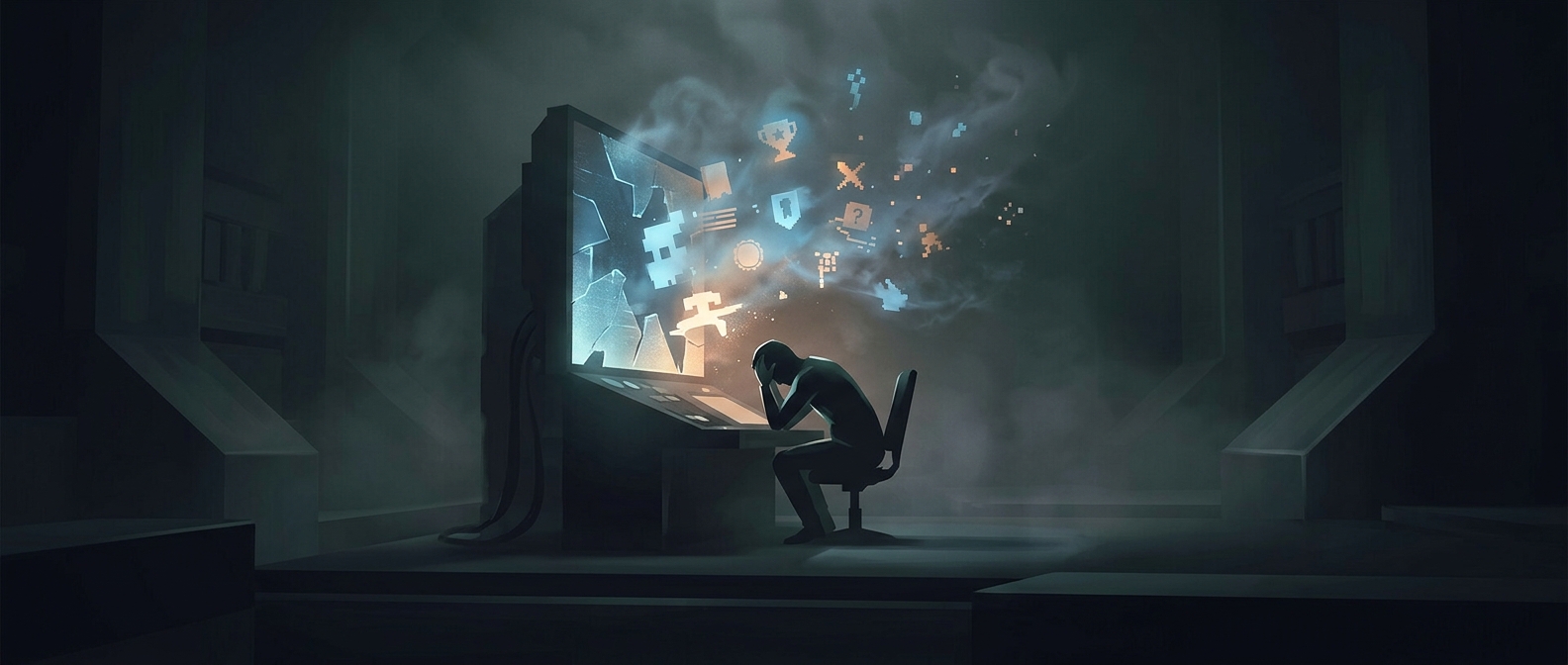
Why a sudden shutdown can roll a game backward
While a game is running, it keeps much of its current state—your position, collected items, and completed actions—in working memory. That memory is fast, but it does not preserve its contents when power disappears. The lasting record lives in a save file on storage, and the game updates that record only when it reaches a save point or performs an autosave.
Until then, the game may look as if it remembers everything, even though the latest progress exists only in the running session. If the console or computer loses power before a save is written, restarting can load the most recent saved version instead. The lost time is the gap between that version and the shutdown.
Saving is also a design choice
Games differ in how often they write progress. Frequent autosaves can limit how much a player might lose, but saving at the wrong moment can interrupt play or preserve a mistake. Some games therefore save at checkpoints, after major events, or when a player chooses to save; others save more continuously. The schedule shapes the stakes: a long stretch between saves makes each interruption more costly.
A save icon or brief pause is a useful signal that the game is recording progress, but it cannot guarantee that every recent action has been stored. The practical consequence is simple: after a long session, reaching a checkpoint—or confirming that an autosave has finished—can be the difference between resuming near the end and replaying the whole stretch.