Why Lockpicking Becomes a Loop of Small Corrections
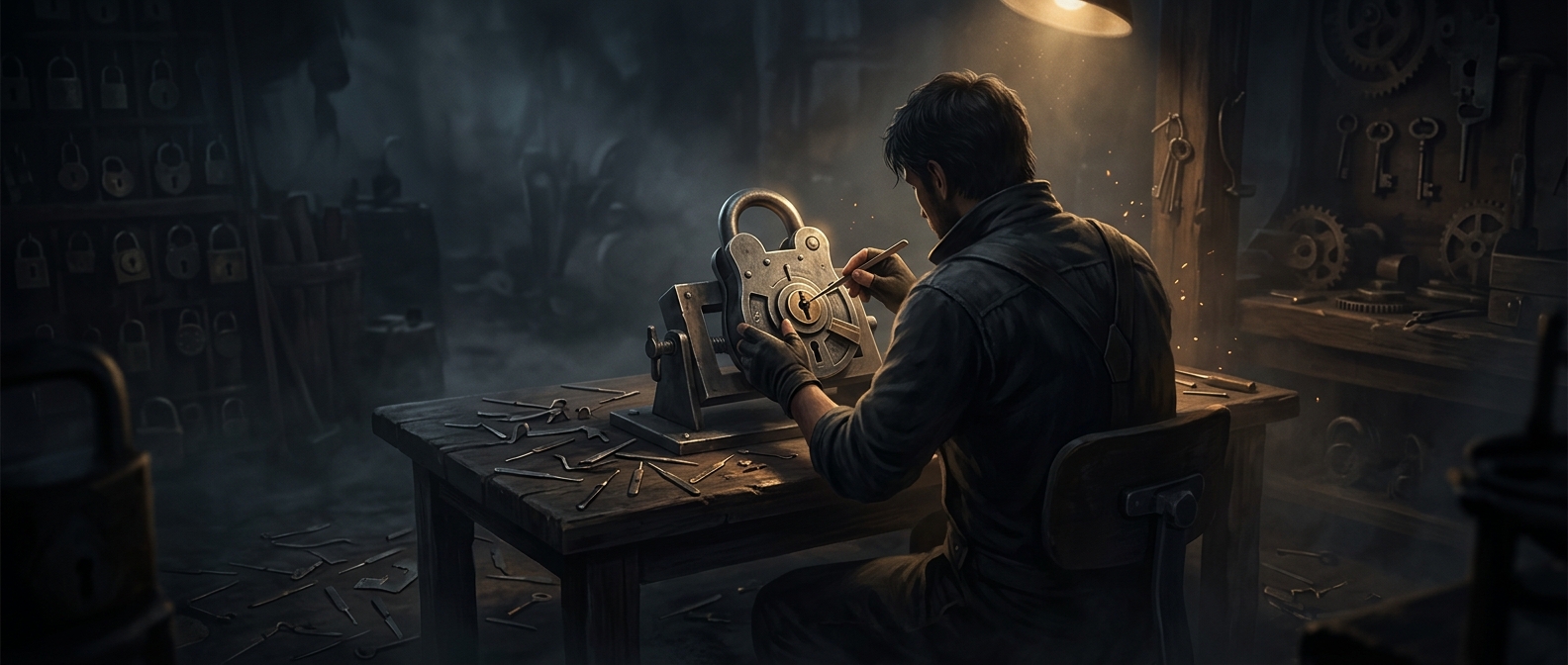
A lockpick attempt rarely produces a simple “right” or “wrong” signal. The player makes a small adjustment, tests whether it helped, and tries again. In real life, much of that feedback is subtle; in a game, designers have to make it visible enough to understand without making success automatic.
That translation is the challenge. A game might show a needle shifting, change the controller’s resistance, or let a tool slip when the player pushes too far. Each cue turns an otherwise invisible mechanical response into information. The player is not merely repeating the same action: they are using each failure to narrow down what to change.
The Design Tradeoff: Tension Versus Tedium
Too little feedback makes attempts feel random, so persistence looks like button-mashing. Too much feedback can reveal the answer immediately and drain the scene of suspense. Designers tune the clues, the cost of mistakes, and how long the player can keep trying to make repetition feel like learning rather than waiting.
That is why lockpicking can work as a compact test of patience in a game. The satisfying moment is not just opening the lock; it is recognizing that a small correction, informed by the last attempt, finally changed the result. Failure becomes useful only when the game gives the player something to learn from it.