Why a Safe Throw Can Become a Self-Inflicted Blast
A projectile does not travel to a destination and wait politely. In many games, it follows an arc while a fuse counts down, so the player has to account for both where it will land and how long it will take to get there. A throw that clears a wall may still land close enough to catch its thrower when it detonates.
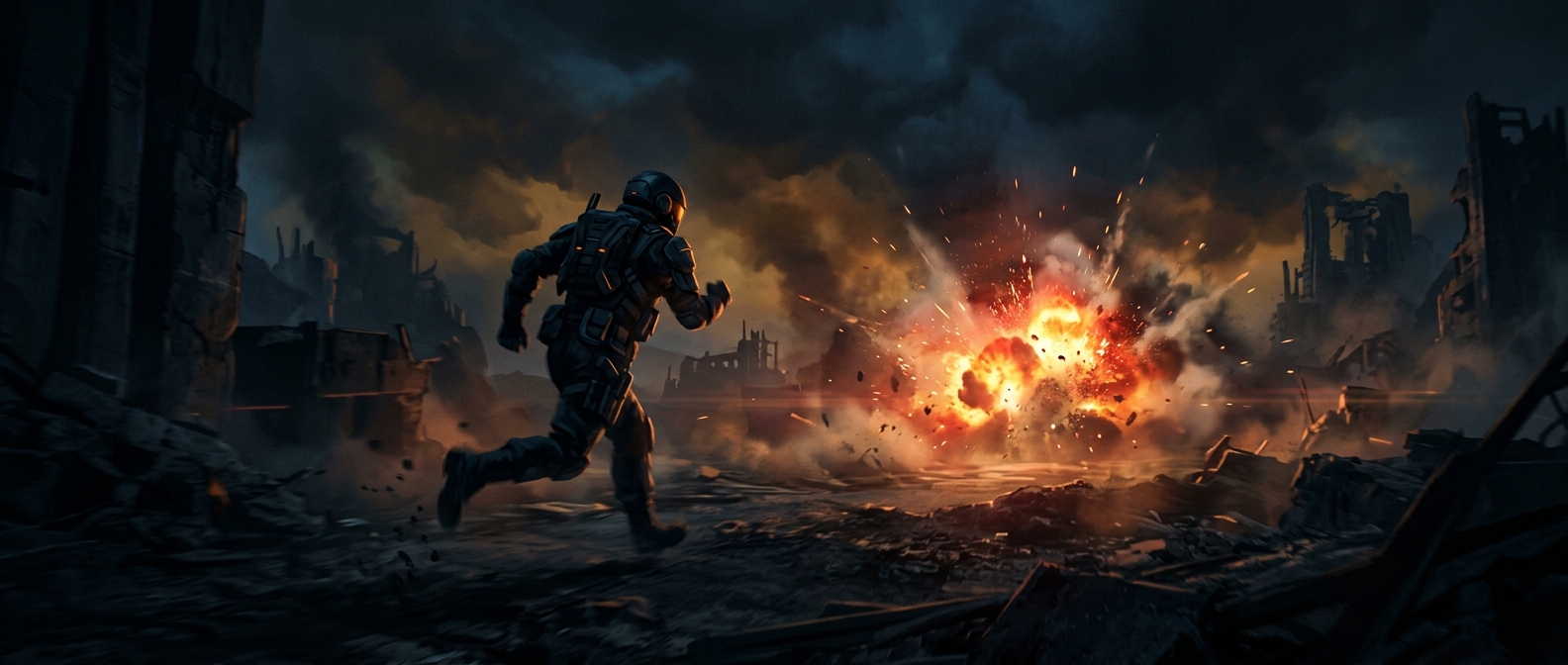
Moving forward makes the calculation worse. The character may advance during the throwing animation, or the player may rush ahead as soon as the projectile leaves their hand. Either way, the gap between player and blast zone shrinks while the fuse keeps running. Cover that blocked enemy fire does not necessarily protect the thrower from an explosion on the same side of it.
The Useful Habit Is to Create Distance
The safer sequence is simple: throw from cover, stay behind it or step back, and wait for the blast before pushing forward. That pause is a small but meaningful design constraint. Explosives can clear clustered enemies or force opponents out of hiding, but their short fuse and broad blast area make timing and positioning part of the weapon’s cost.
When a player charges straight into their own projectile, the game is turning impatience into a consequence: the weapon may have cleared the obstacle, but its user failed to leave the danger zone.