Why a New Account Starts in the Wrong Place
A matchmaking system usually has to estimate a player’s skill from results: wins, losses, and sometimes performance within a match. A newly created account has little or no history, so the system begins with an uncertain estimate and adjusts it as games accumulate. An experienced player can win far more often than that early estimate predicts, but the correction takes time—and those first matches still count for the opponents drawn into them.
The Damage Happens During Calibration
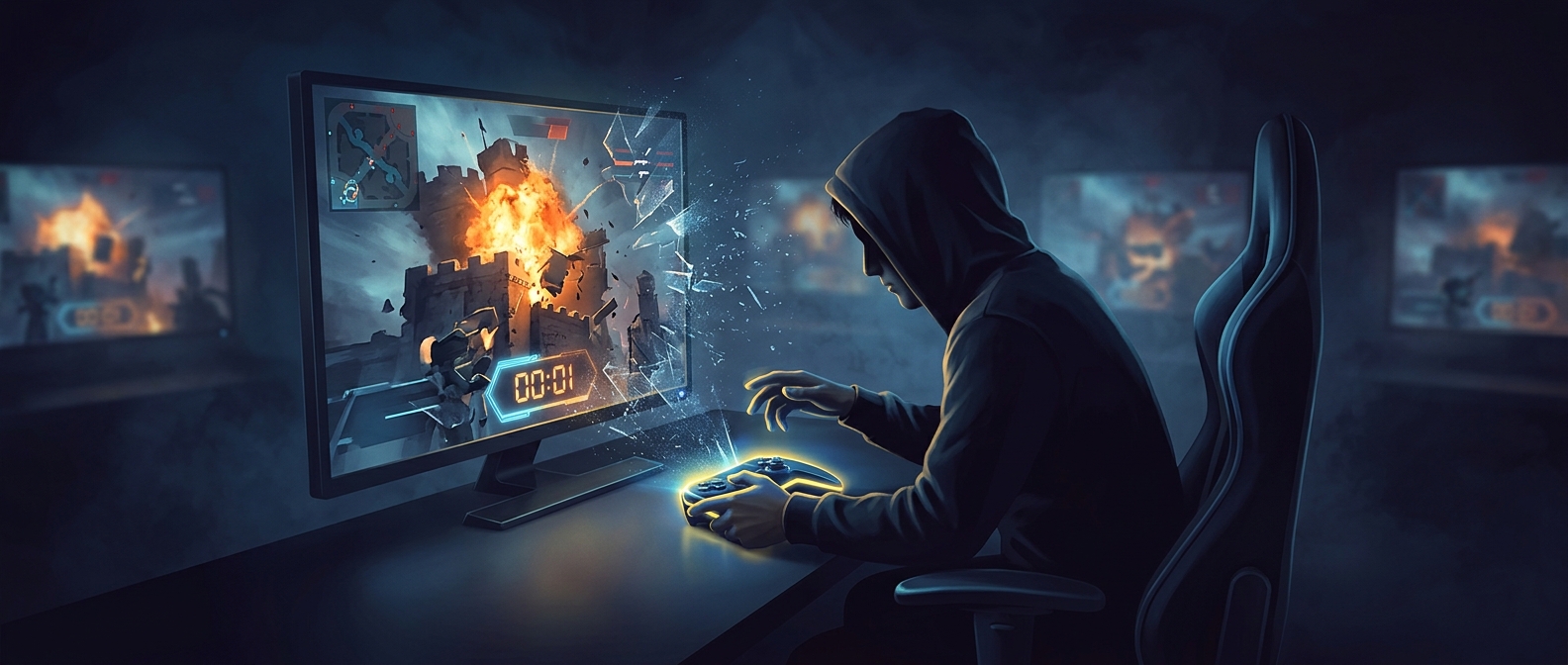
Competitive games often try to place players near others with similar ability, where neither side can reliably dominate. When a high-skill player enters through a fresh account, the system may initially treat them as a beginner. The mismatch can turn a low-rank match into a lopsided contest before the system has enough evidence to move the account upward.
That is why smurfing affects more than a leaderboard. Players on the other team may lose progress or confidence, while teammates can end up relying on an unexpectedly powerful carry. Either way, the match stops being a useful test of the group’s actual skill.
Why It Is Hard to Stop Immediately
The system faces a tradeoff: move accounts upward quickly when their results look unusually strong, or wait for more games to avoid misplacing ordinary players after a lucky streak. Faster adjustments can shorten the period of mismatched games, but skill is not perfectly visible from a single win; teammates, opponents, and circumstances all shape the result. Account restrictions can also discourage repeat offenders, but they cannot make a brand-new player’s ability obvious before play begins.
The practical consequence is a short but costly window: a few calibration matches can be enough to spoil the fair competition that matchmaking is meant to create.