When Agent 47’s Barcode Enters the Checkout System
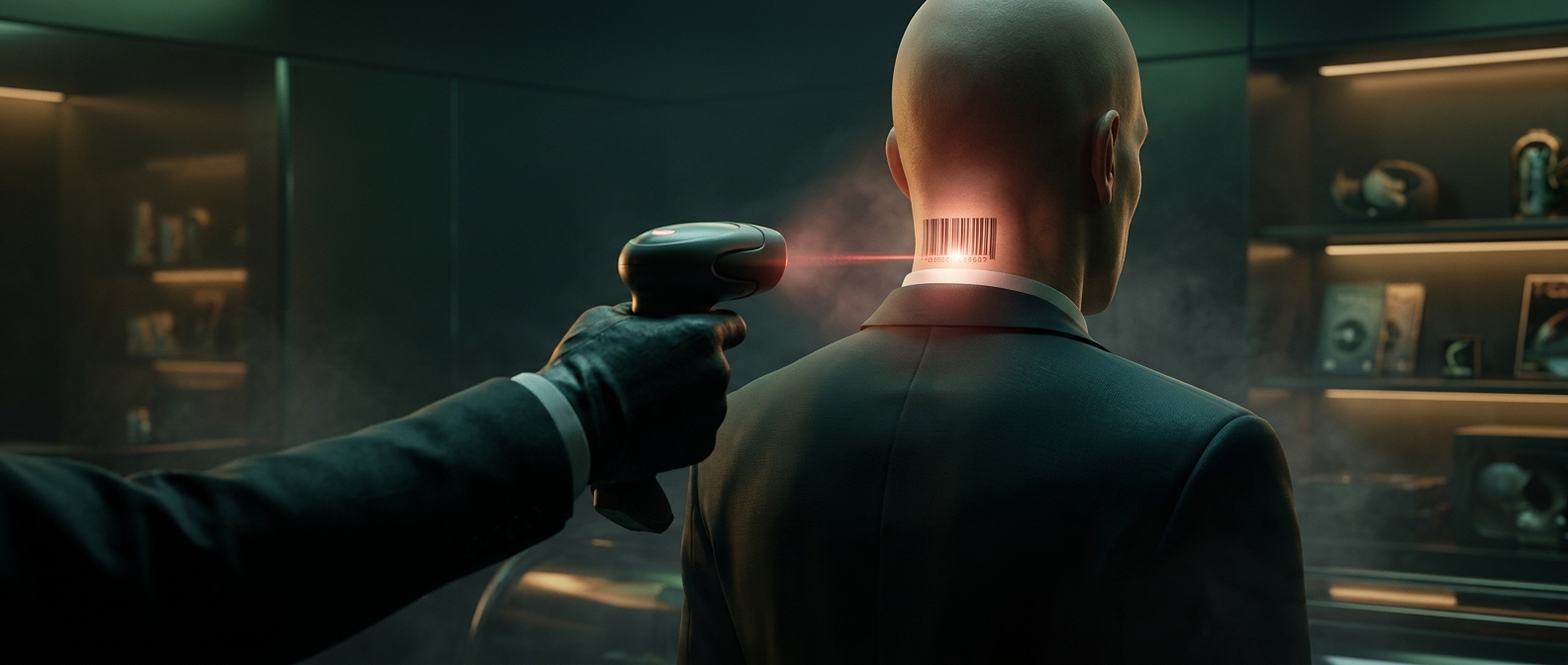
Agent 47’s barcode is usually part of his identity: a stark, instantly recognizable mark that helps make the assassin seem less like an ordinary person and more like a product with a number. A commercial scanner flips that image into a joke. Instead of treating the mark as a secret identifier or a sign of danger, the device reads it as retail packaging for a novelty adult toy.
The gag depends on what a barcode scanner actually does. It does not judge what an object is or infer its owner’s identity; it reads a pattern and retrieves the product record associated with it in a store’s system. The scanner’s matter-of-fact result therefore clashes with the dramatic meaning players attach to 47’s tattoo.
A Threat Reduced to a Product Listing
That clash is the punchline: a symbol tied to a contract killer becomes an unremarkable item in a shop’s inventory. The scanner is not exposing a hidden truth about 47. It is applying a mundane retail system to a conspicuous piece of game iconography—and producing an absurdly ordinary answer.
The joke works because it needs no elaborate setup. Players recognize the barcode as 47’s; the scanner supplies a different context in a single beep and lookup. For a moment, the game’s feared assassin is less a figure of deadly purpose than a barcode attached to something someone might find on a novelty-shop shelf.