Why a Long Combo Gets Harder to Continue
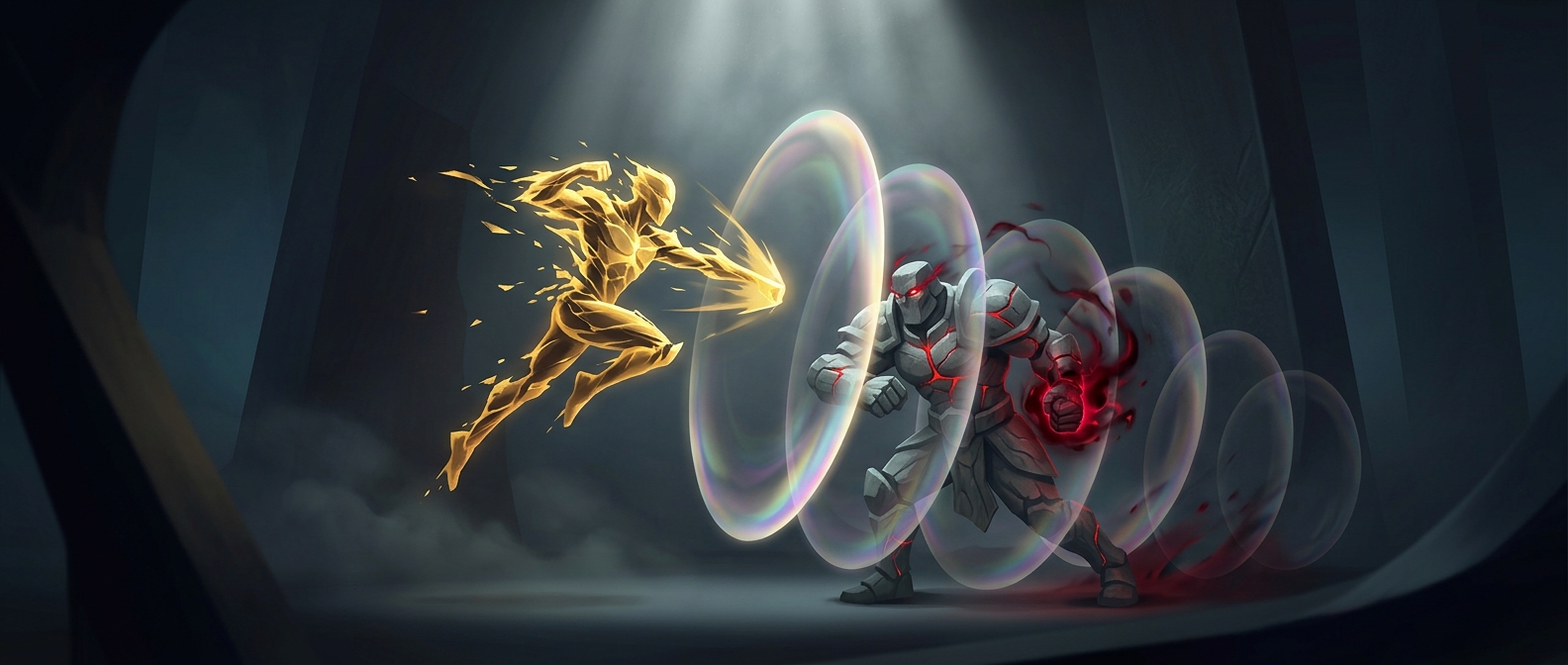
In a fighting game, hit stun is the brief period after a character is struck when they cannot act. The attacker uses that opening to land another hit. With hit-stun scaling, each successive hit in a combo shortens the next opening, so the defender recovers sooner as the sequence goes on.
That shrinking window changes the attacker’s timing problem. A follow-up that connects easily near the start may arrive too late near the end. If the defender regains control before the next hit lands, the combo ends—and they can begin blocking, moving, or fighting back.
A Limit That Shapes Combo Design
This is one way designers keep a successful opening from turning into an indefinitely repeatable string. Without some limit, a player might be able to keep an opponent helpless for as long as the attacker can execute the sequence. Scaling instead gives a combo a natural expiration point, while still allowing the attacker to choose how to use the diminishing opportunities.
The exact effect depends on the game. Some attacks may still connect because of their speed, range, or launch effects; others may become unreliable as the stun window closes. The practical consequence is that a combo’s later hits are not simply more of the same: each one consumes a tighter timing window, until the opponent can finally act again.