Why Backward Input Can Become a Block
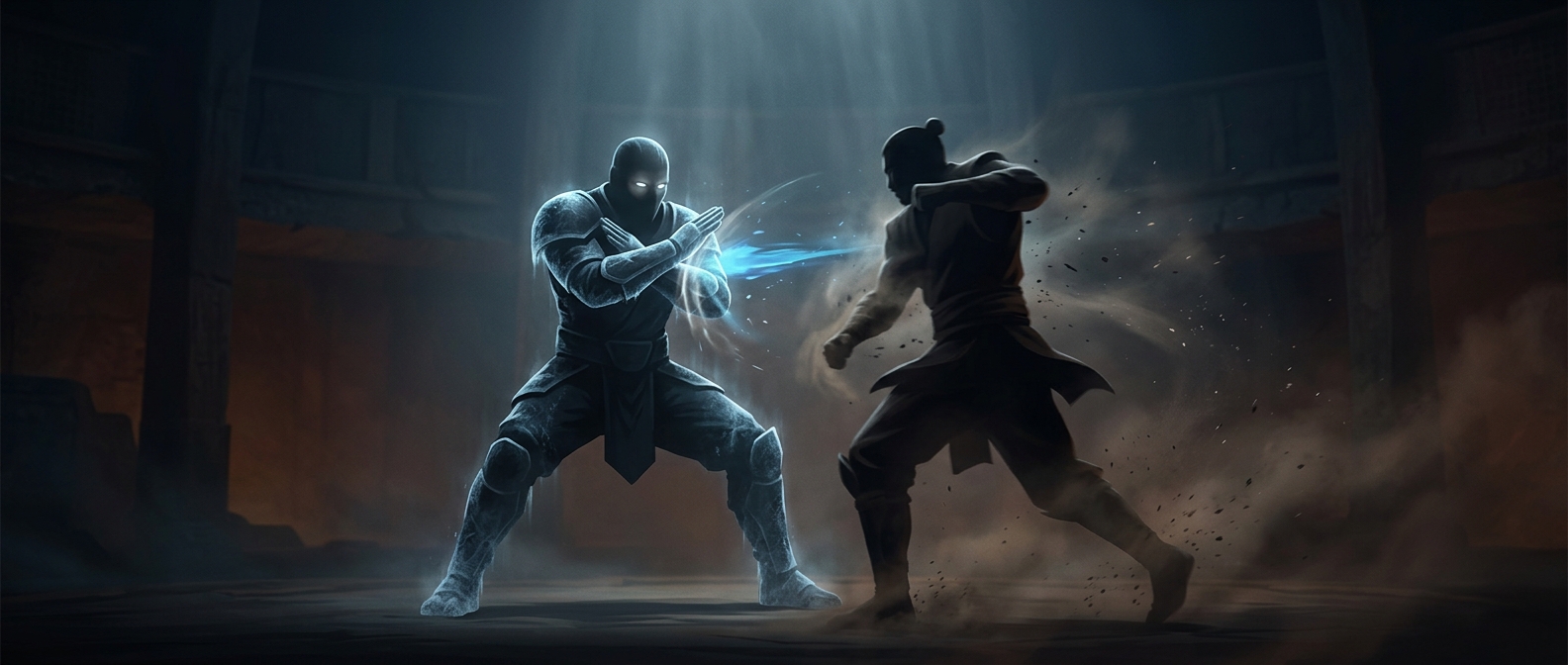
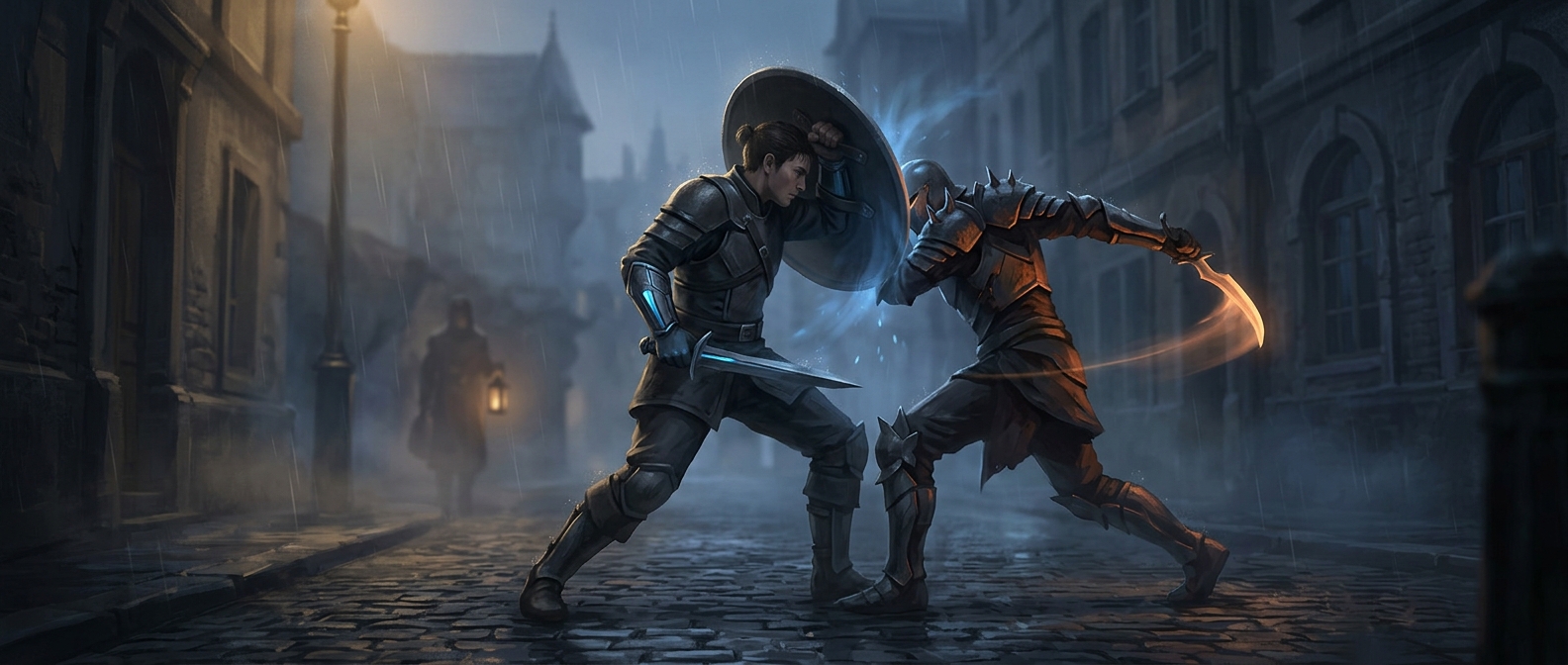
In some fighting games, holding away from an opponent does not always make your character retreat. If the opponent is close enough, the game may interpret that input as a request to guard and play a blocking animation instead. This behavior is often called proximity blocking: distance changes what the same directional input does.
That can matter after an attack misses. The attack may leave the character briefly committed to its recovery animation—the time it takes to regain control. If the player holds back as that recovery ends while the opponent is still nearby, the game may start a guard animation before it allows the character to walk away. The result can look like the character is planted in place, even though the player is pressing toward safety.
A Small Rule With Tactical Consequences
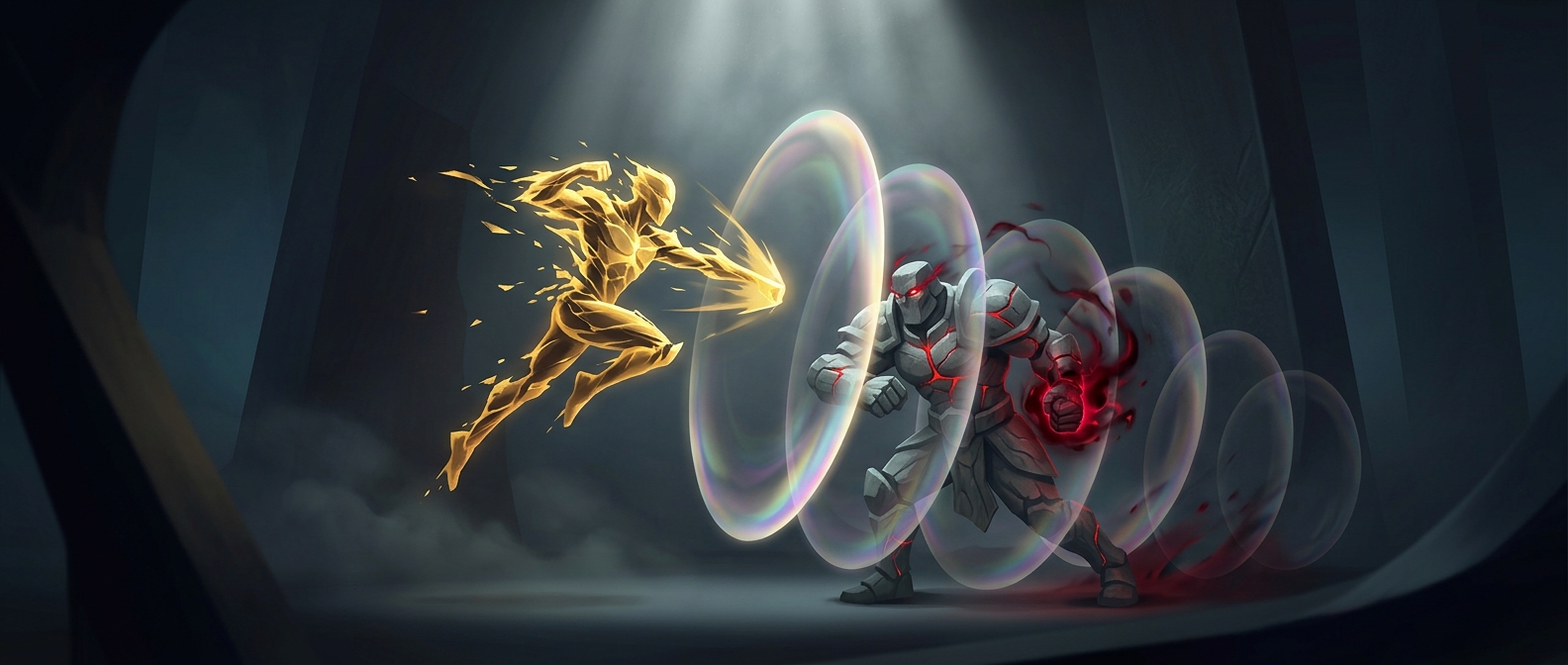
The mechanic makes close-range defense easier: a player who is already holding back can guard an incoming attack without needing to time a separate button press. But that convenience has a cost. Guarding gives up ground and may leave the defender vulnerable to an opponent who waits, changes position, or uses an attack that beats the attempted defense.
For the attacker, a missed move can therefore create a brief contest over space. The defender may want to retreat, but proximity blocking can keep them in a defensive pose until the opponent moves away or the game accepts a different action. Near the end of a missed attack, a direction is not just movement—it can decide whether the next moment is spent escaping or still guarding.