A Burst Turns a Combo Into a Decision
In a fighting game, a combo is a sequence of attacks that connects before the defender can act. Once an opponent has started one, ordinary blocking or movement may no longer help; the trapped player has to wait for the sequence to end while taking damage.
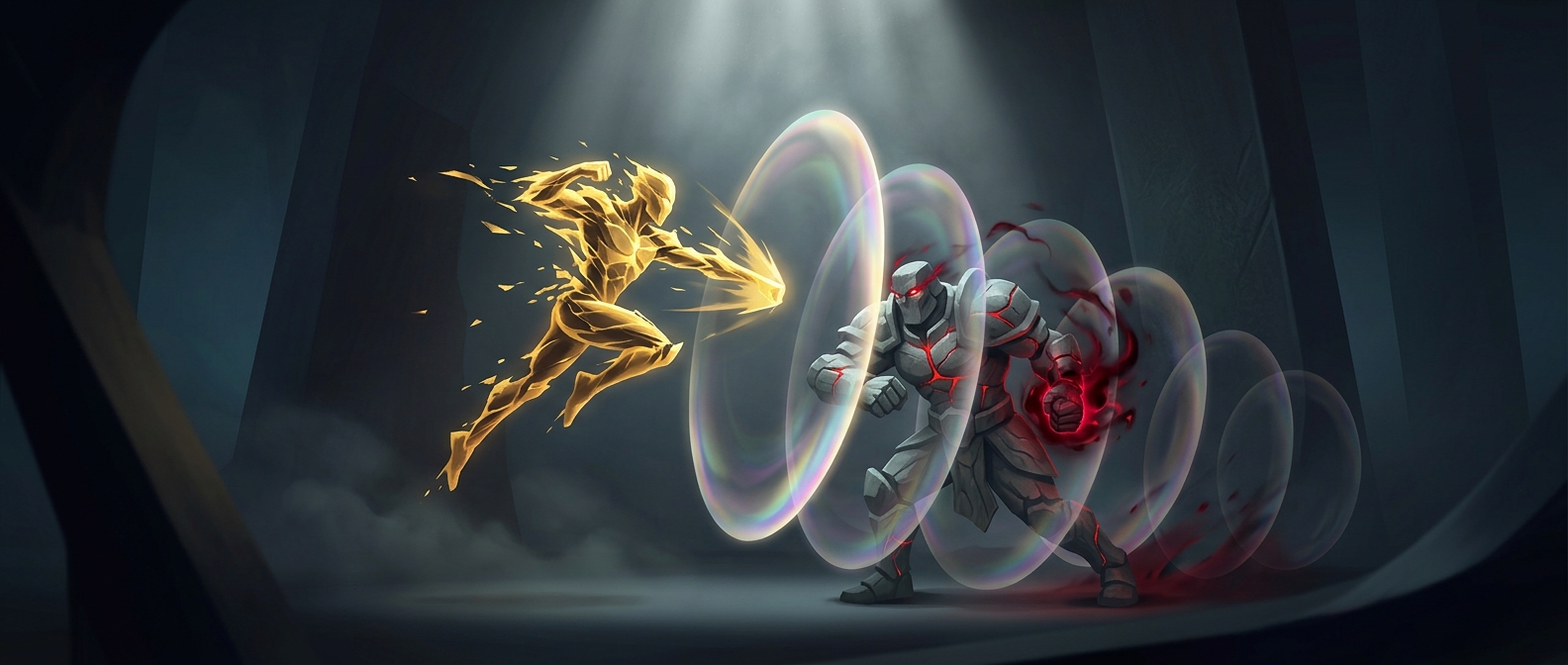
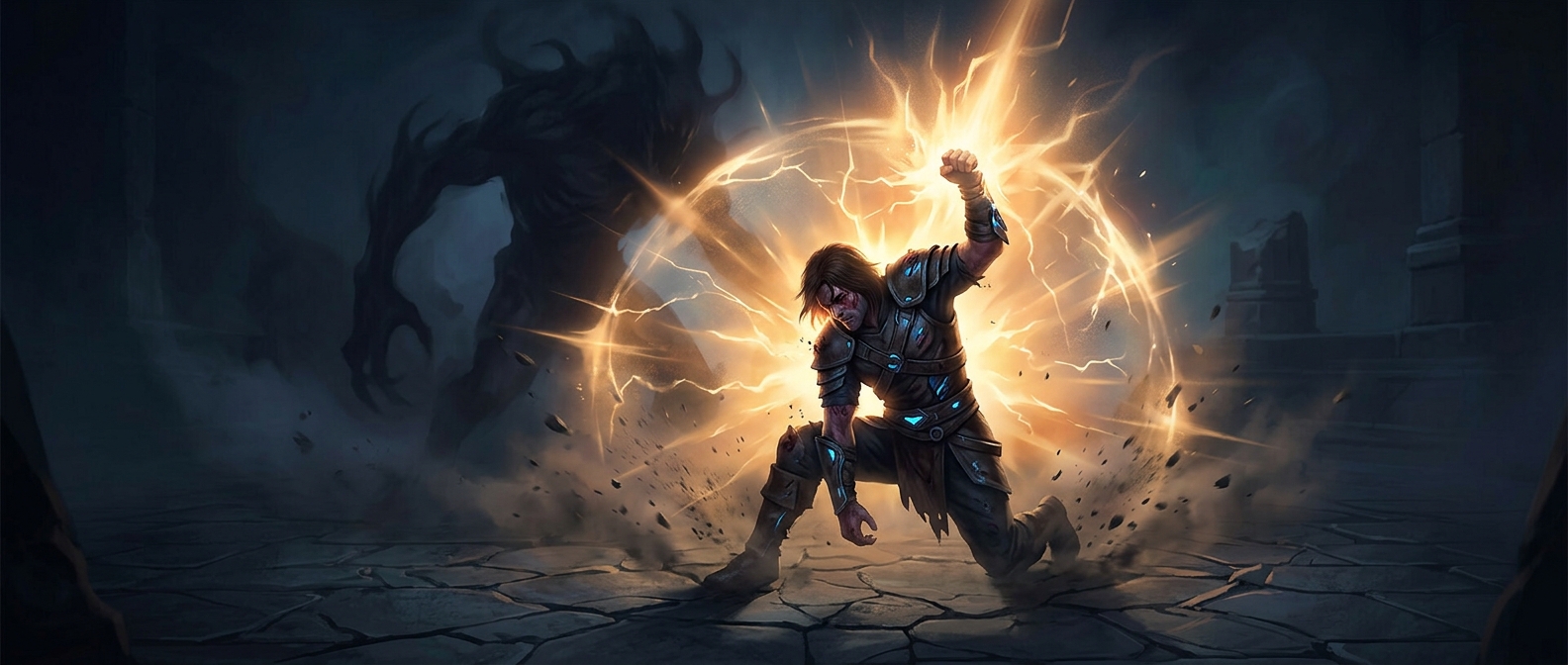
A burst changes that situation by letting the defender spend a limited resource to force space between the characters. The opponent’s attack sequence stops, and the player who was caught can act again. It is less a free escape than a chance to reset the fight: the attacker may be pushed away, while both players regain control of their next move.
The Escape Has a Cost
Because a burst is powerful, its availability is restricted—often by a meter, a cooldown, or a once-per-round or once-per-match limit, depending on the game. Using it early can prevent a large loss, but it may leave the player without a defense later. Waiting is risky too: the opponent may continue the combo, or deliberately pause to bait the burst and punish it.
That tradeoff makes the mechanic a small contest of nerve and timing. The losing player must decide whether to spend their escape now; the attacker must decide whether to keep pressing or anticipate it. A burst can interrupt momentum, but it does not erase the damage already done or guarantee a comeback. Its value is that it gives a player who has lost control one consequential choice before the combo is over.