How compressed air makes the moles move
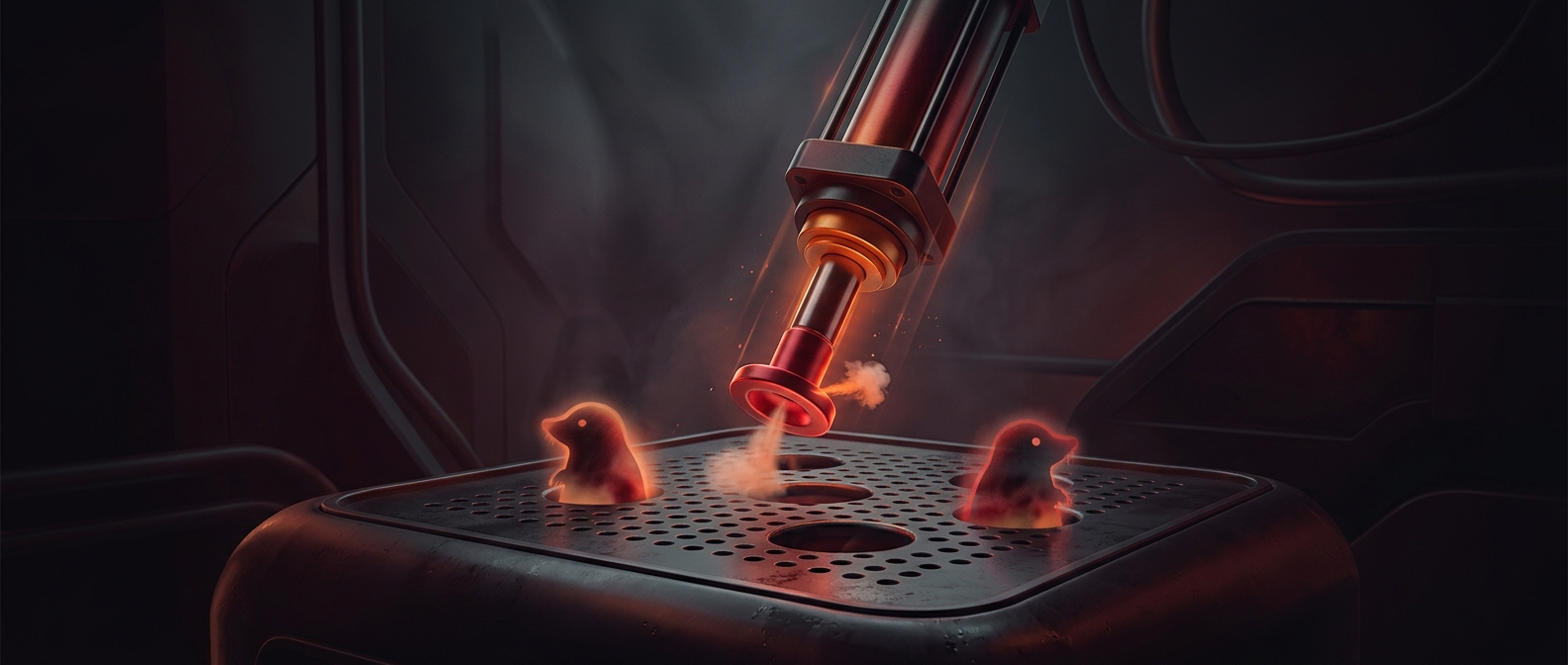
A pneumatic cylinder turns air pressure into a quick straight-line push. In a Whack-a-Mole cabinet, a valve directs compressed air into the cylinder, pushing a piston and its attached mole upward. When the valve changes the airflow, the piston retracts and the mole drops back into its hole. The game’s controls coordinate those movements so targets appear and disappear during play.
The speed is part of the challenge: a mole has to pop up briskly and return before the player can keep hitting it. That means the cylinders are not making a single gentle movement. They cycle repeatedly, often in rapid succession, while the cabinet absorbs the resulting knocks and vibration.
Why the cabinet needs upkeep
Compressed air can produce a forceful, repeatable motion, but the moving parts still wear. Seals inside cylinders can deteriorate; valves and air connections can leak or become unreliable. Repeated impacts also put strain on the mole assemblies and the structure around them. A small change in pressure or a sluggish cylinder can make a mole rise unevenly, return late, or fail to move as expected.
Maintenance is therefore part of keeping the game fair and responsive, not merely cosmetic repair. Operators may need to check air lines and connections, replace worn components, and confirm that each target moves freely. The same force that gives the game its snap also makes every round a little mechanical work for the machine.