Why a Night-Vision Display Must Stay Dim
Night vision works by making scarce light useful. A conventional image-intensifying device gathers faint light from the surroundings and converts it into a brighter image, often shown in green. The wearer looks at that image through an eyepiece; the display is meant to be visible to the wearer, not to illuminate the room.
But the eye is part of the system. In darkness, the pupils widen and the retina becomes more sensitive. A bright image close to the eyes can make that sensitivity fade, so when the wearer looks away, the dark surroundings seem harder to see. The problem is not that green light is uniquely harmful: a sufficiently bright display of any color can disrupt dark adaptation.
The Game’s Readable Silhouette
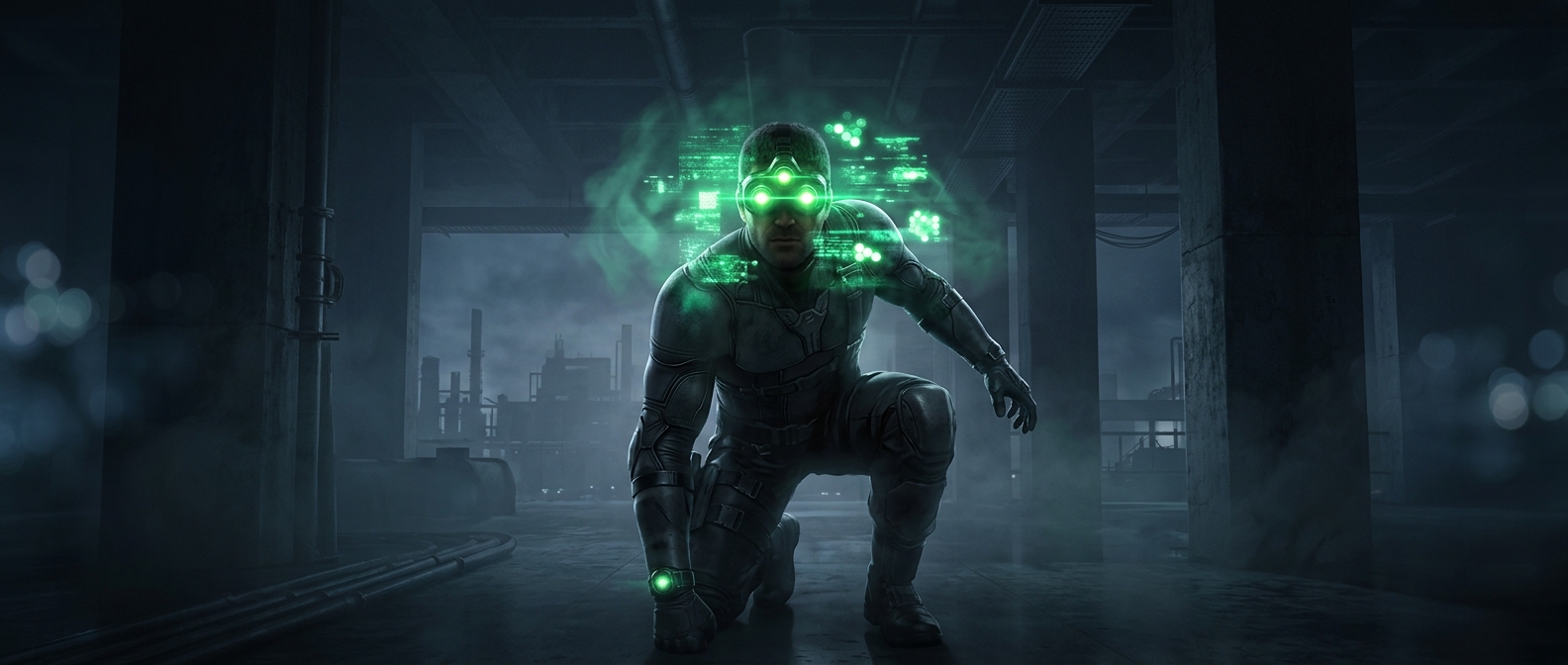
Sam Fisher’s three glowing green lenses are an instantly recognizable visual cue. They tell the player—and anyone facing him—that night vision is active, even in a dim scene. That is useful visual storytelling, but it turns a device designed to present an image privately into a conspicuous patch of light on the character’s face.
A more practical design would keep the image faint and shielded inside the eyepieces, limiting stray light. That would protect the wearer’s night vision, but it would also make the goggles much less visible to the audience. The tradeoff is a familiar one in game design: a believable piece of equipment must also communicate its function at a glance. In real darkness, the best night-vision display would be the one that hardly glowed at all.