What a Checkpoint Actually Saves
A checkpoint is less like a resurrection machine than a bookmark in the game’s state. It records a safe point—often the player’s location and some progress—so that after a failure the game can reload from there instead of starting the whole adventure over. Enemies, hazards, and puzzles may reset, while collected items or completed objectives may persist; each game chooses which parts of the world to rewind.
That selective rewind is a design decision. Restarting too far back can make one mistake erase minutes of effort, while restarting right beside the danger can make a difficult section feel like a quick, repeatable challenge. Checkpoints let designers tune that cost and place them where a player is likely to need another try.
The Story Has to Make Room for the Retry
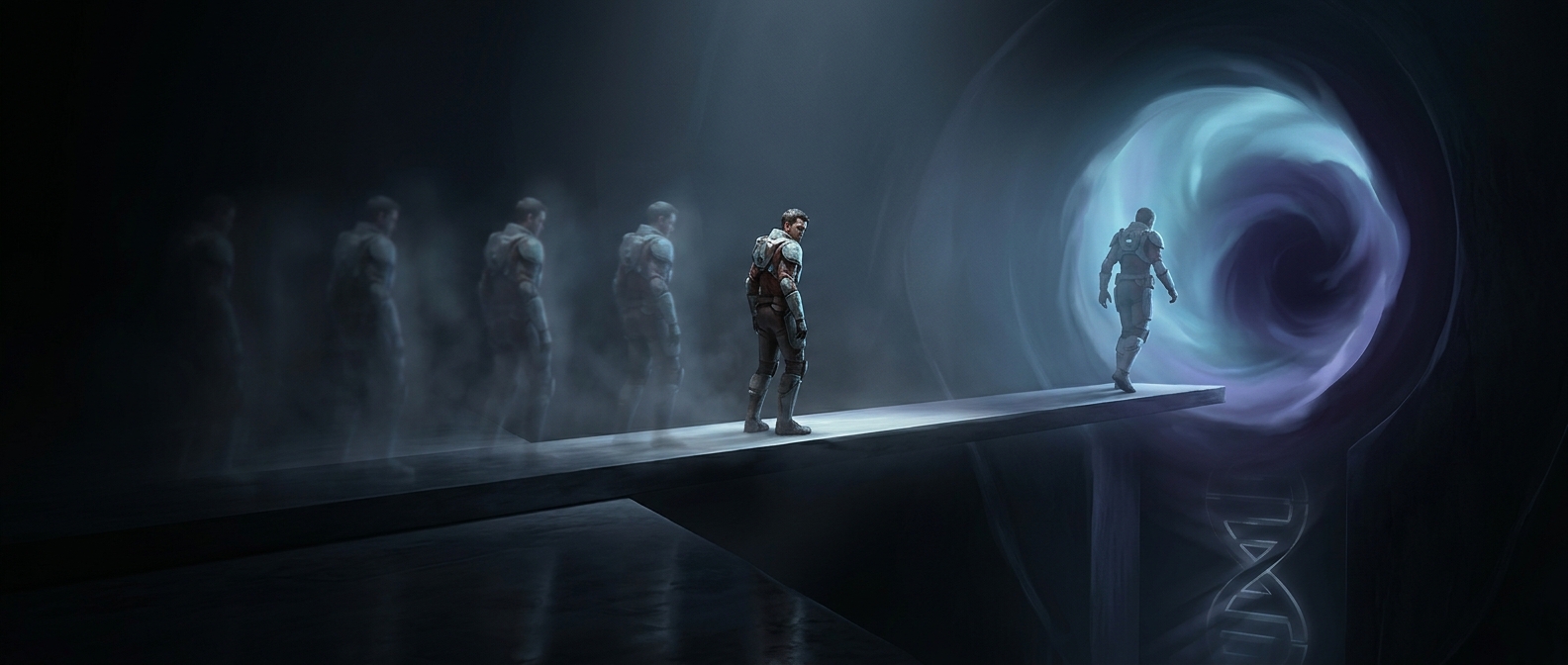
Games handle the mismatch between a character’s apparent death and continued play in different ways. Some treat failure as a literal event and explain the return through a story device. Others make death a gameplay rule, with no claim that the character remembers or survives it. The player’s retry can therefore be real even when the story’s timeline does not include every failed attempt.
This separation gives games a useful freedom: they can make danger feel consequential without making every mistake permanent. A checkpoint preserves enough progress to keep the player moving, but restores the challenge that led to the failure. The result is a compact loop—try, learn what went wrong, and try again—built into the world’s structure.