Rings Turn a Hit Into a Split-Second Recovery
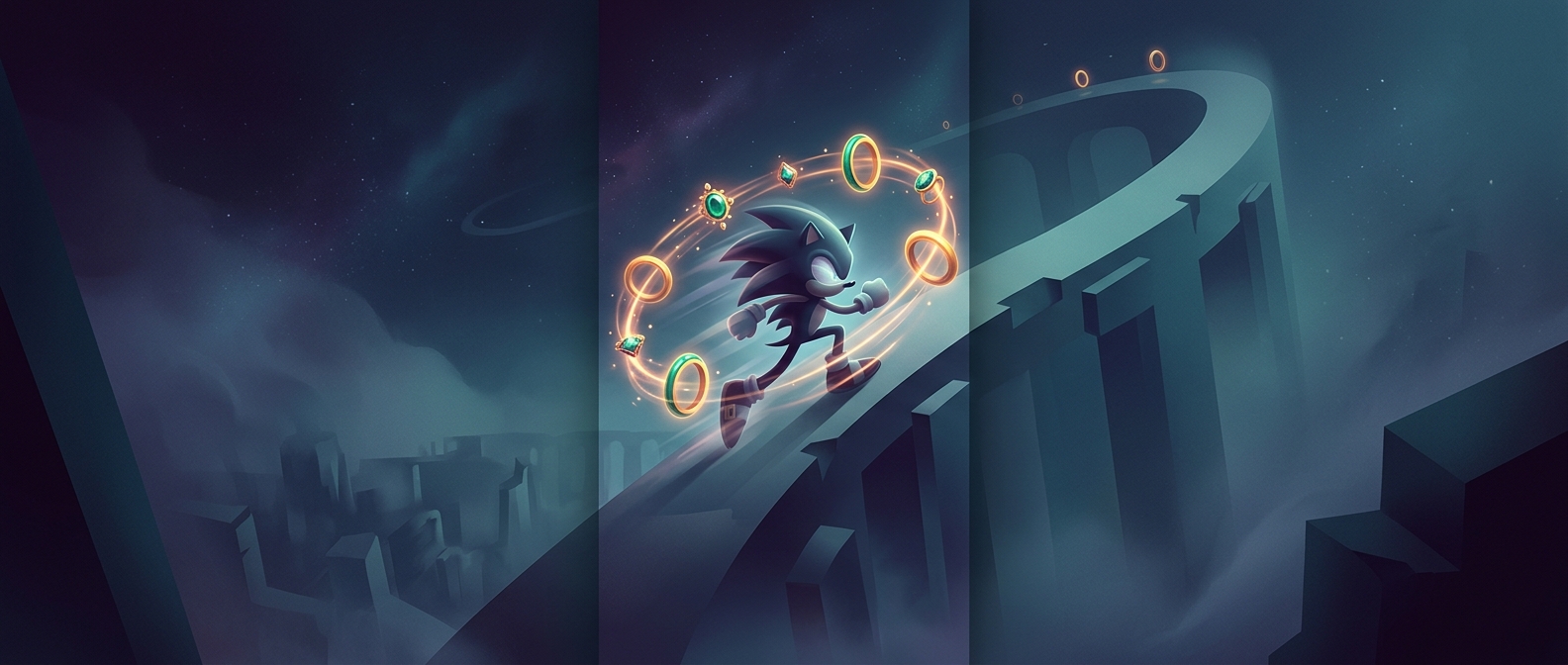
In classic Sonic games, a ring is more than a score token: carrying one gives Sonic a buffer against many ordinary hits. When an enemy or hazard strikes him, the rings burst outward instead of the hit immediately costing him a life. He can survive even if he was carrying only one.
The protection is not permanent. The scattered rings bounce away and begin disappearing, so Sonic has only a short window to grab them again. The hit also gives him a brief period of invulnerability, preventing a rapid second collision while he recovers. That moment can be the difference between escaping a crowded stretch and losing a life.
Why Scattering Makes the Safety Net Interesting
A simple health bar would let players absorb damage without changing what they do. Sonic’s rings make damage visible and urgent: a hit can empty his supply, but the rings spill across the level as objects he may be able to reclaim. The player must choose whether to risk a quick detour for them or keep moving with no ring buffer for the next mistake.
That protection has limits. Rings do not make Sonic invulnerable while he is holding them, and they cannot prevent every kind of death—being trapped or crushed by the environment, for example, can still be fatal. Their clever role is narrower: they turn many hits from an instant failure into a brief, frantic chance to recover.