A water shader, retuned for sand
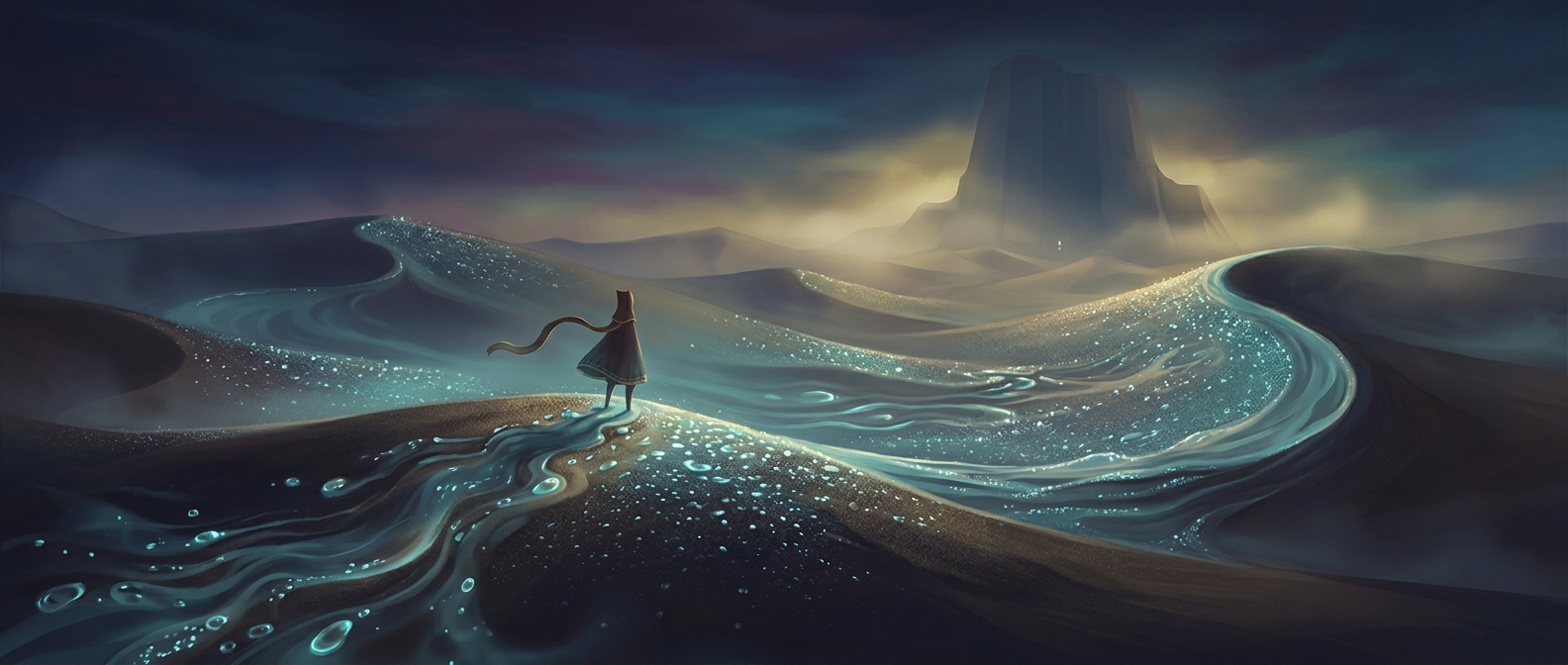
A shader is a small program that tells a graphics card how a surface should look—how its color, brightness, and texture change across the screen. Water shaders often create motion by shifting a surface pattern and changing its highlights over time. In Journey, that kind of effect was heavily modified to make the dunes shimmer.
The key was not to make the desert look wet. The water technique supplied a useful starting point for visual movement; its appearance could be adjusted so the result suggested light and fine ripples across sand instead. The same underlying tool can produce very different impressions when its patterns, timing, and response to light are tuned for a new material.
Making a still landscape feel alive
Dunes are broad, simple shapes, so a perfectly static surface could make them seem flat or lifeless. A subtle animated effect gives the slopes a changing sparkle, helping the desert feel expansive and active without needing the sand itself to move like a wave.
That reuse also illustrates a practical advantage of game graphics: an effect is not locked to the object it was first built to imitate. By adapting a water shader rather than treating every surface as a wholly separate problem, the artists could turn a familiar rendering technique into one of the desert’s defining visual details. The dunes shimmer because the game makes light behave as though it is traveling over water—even while the scene unmistakably reads as sand.