How a Cabbage Could Read as Water
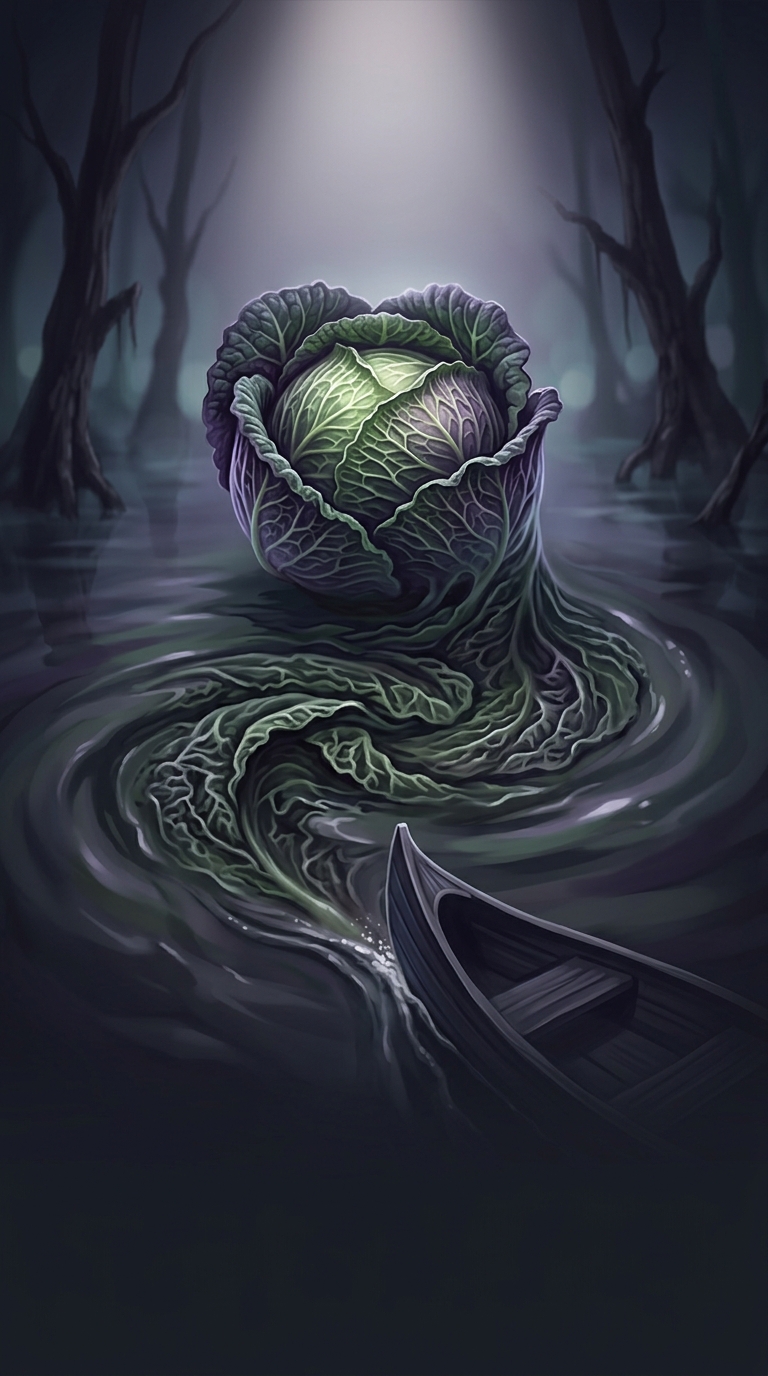
A cabbage leaf is not smooth: its folds and branching veins create a busy pattern of ridges, shadows, and highlights. In a game, that scanned surface could become a texture—an image applied to a three-dimensional surface. With the right colors and shading, the leaf’s irregular pattern could suggest ripples and murky movement rather than something edible.
The Illusion Comes From More Than the Image
A texture alone is still just a picture. To make it feel like water, the game can shift or animate the image across the surface, while lighting and dark color choices help turn the leaf’s raised details into wavering reflections. The player sees the finished effect in motion, not the original vegetable. That transformation is the clever part: a familiar, imperfect surface becomes convincing when the game presents it in a new context.
A Practical Kind of Resourcefulness
The GameCube version of Resident Evil 4 was made within the limits of its hardware and production tools. A real-world scan offered a ready-made source of complex detail, rather than requiring an artist to build every tiny variation by hand. It also gave the result an unevenness that could suit a stagnant, unsettling environment better than a clean, regular pattern.
The cabbage was useful not because it inherently looked like water, but because its texture gave the graphics engine something rich to reshape. In the finished game, the vegetable disappears; what remains is the convincing, slightly grotesque surface it helped create.