A single viewpoint changes how the story is staged
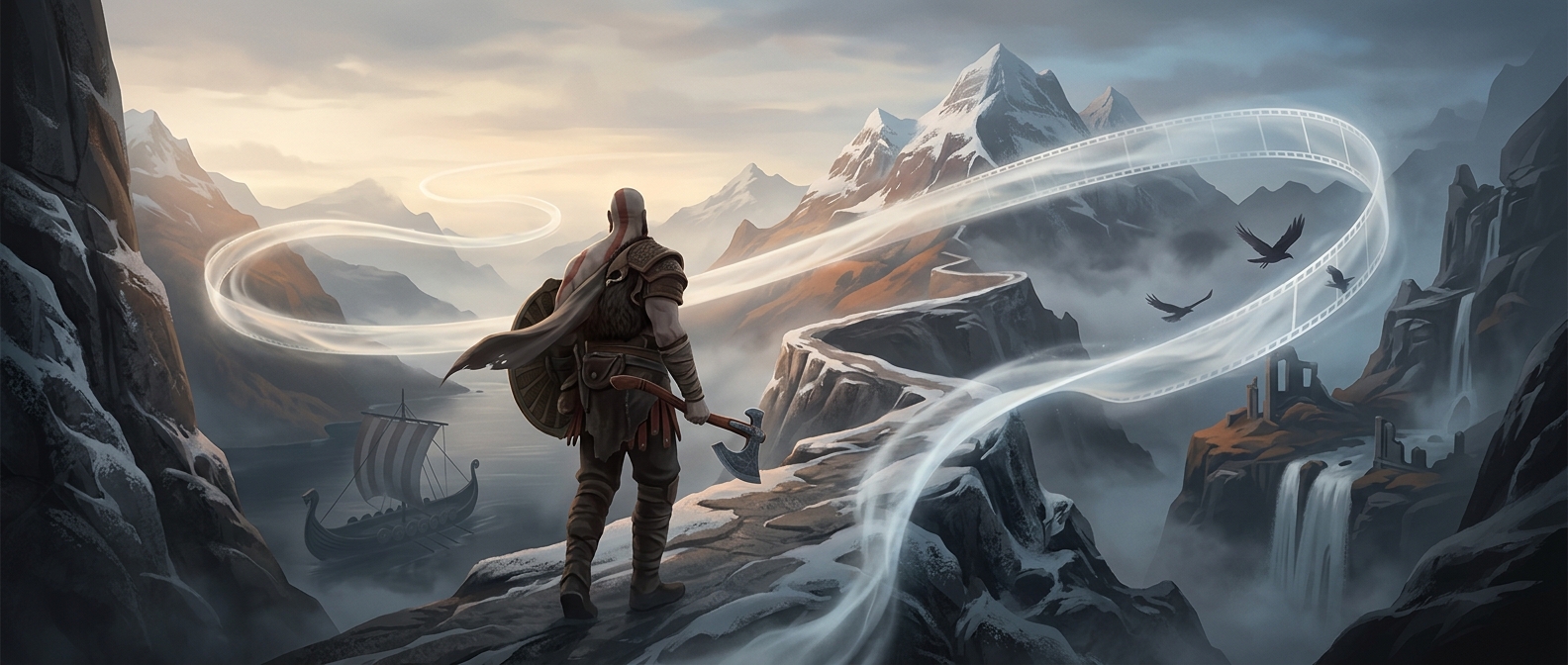
In God of War, the camera does not switch to a separate cinematic view when the story takes over. It stays close behind Kratos, so conversations, exploration, and combat unfold within the same visual perspective. That means a scene cannot simply cut to another character’s face or jump ahead in time; the camera and the characters have to move through the moment together.
The result is not just a visual flourish. With no edit to announce “gameplay is over,” the boundary between playing and watching becomes less obvious. The player remains beside Kratos and Atreus as events develop, which can make even a quiet exchange feel like part of the journey rather than an inserted movie scene.
Keeping the shot continuous takes choreography
A camera that never cuts also has fewer easy ways to hide transitions. The game must guide it around characters and environments while keeping the action readable. Narrow passages, slow walks, and other pauses help manage the pace—and can give the system time to load the next area without an obvious interruption.
Those moments are therefore doing two jobs: they shape the rhythm of the journey and help maintain the illusion of one uninterrupted take. The tradeoff is that players may have to move at the game’s pace instead of rushing through a transition. When the camera finally reaches the credits, the journey has been presented as one continuous passage rather than a sequence of scenes joined by edits.