A 48-hour challenge became a game about unsteady hands
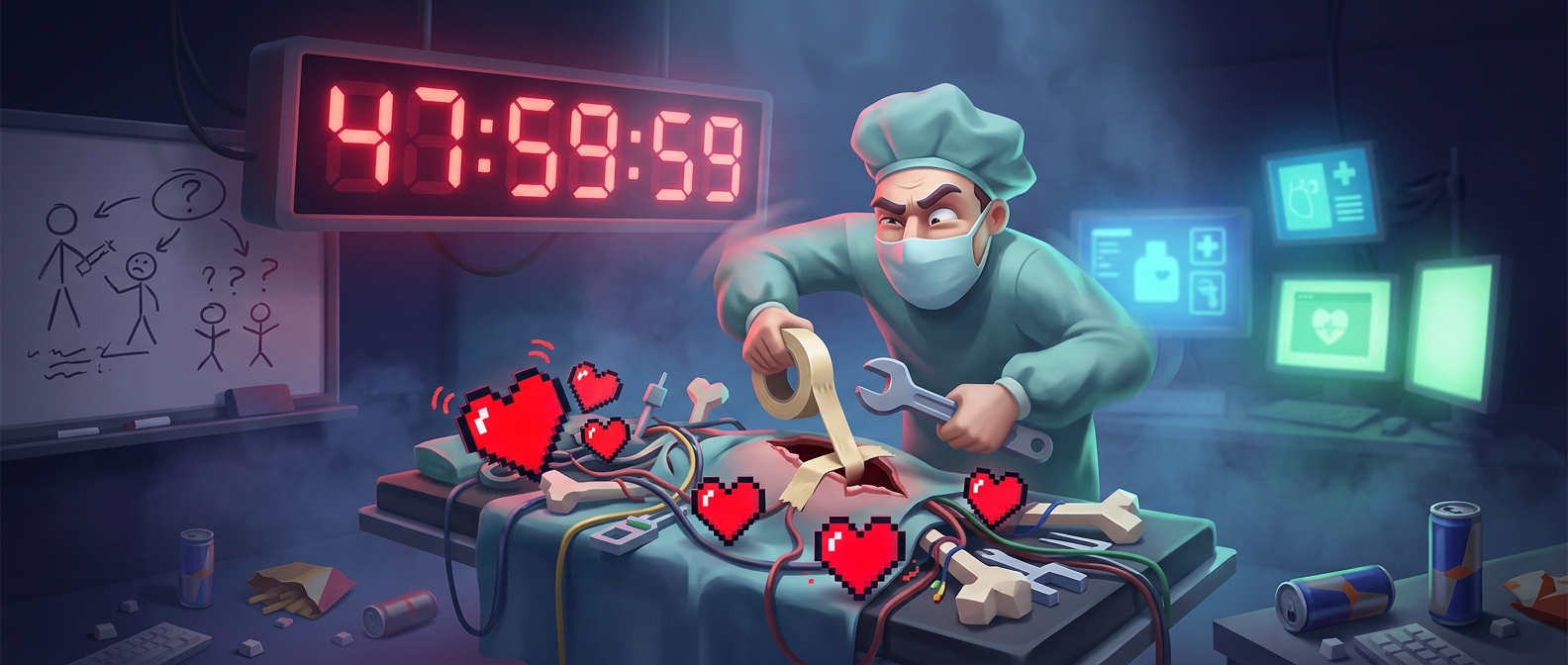
The prototype was Surgeon Simulator, made at a game jam—a short event where developers build a playable idea under a strict deadline. The jam’s theme was “heartbeat,” and the team turned that prompt into an operating-room scenario. Instead of aiming for a realistic medical simulation, they made the act of surgery itself the source of comedy.
The controls made the joke playable
In the prototype, moving a hand was not a single smooth action: players had to manage its fingers separately while guiding it with the mouse. That extra effort turned a simple task—pick up a tool, then use it—into a chain of awkward adjustments. Instruments slipped, movements overshot, and a small mistake could send the operation sideways.
That design choice gave the game its identity. The player was not merely watching a chaotic operation unfold; the controls made them feel responsible for the chaos. A compact jam prototype could test that comic premise quickly, and its roughness became part of the experience rather than a flaw to hide.