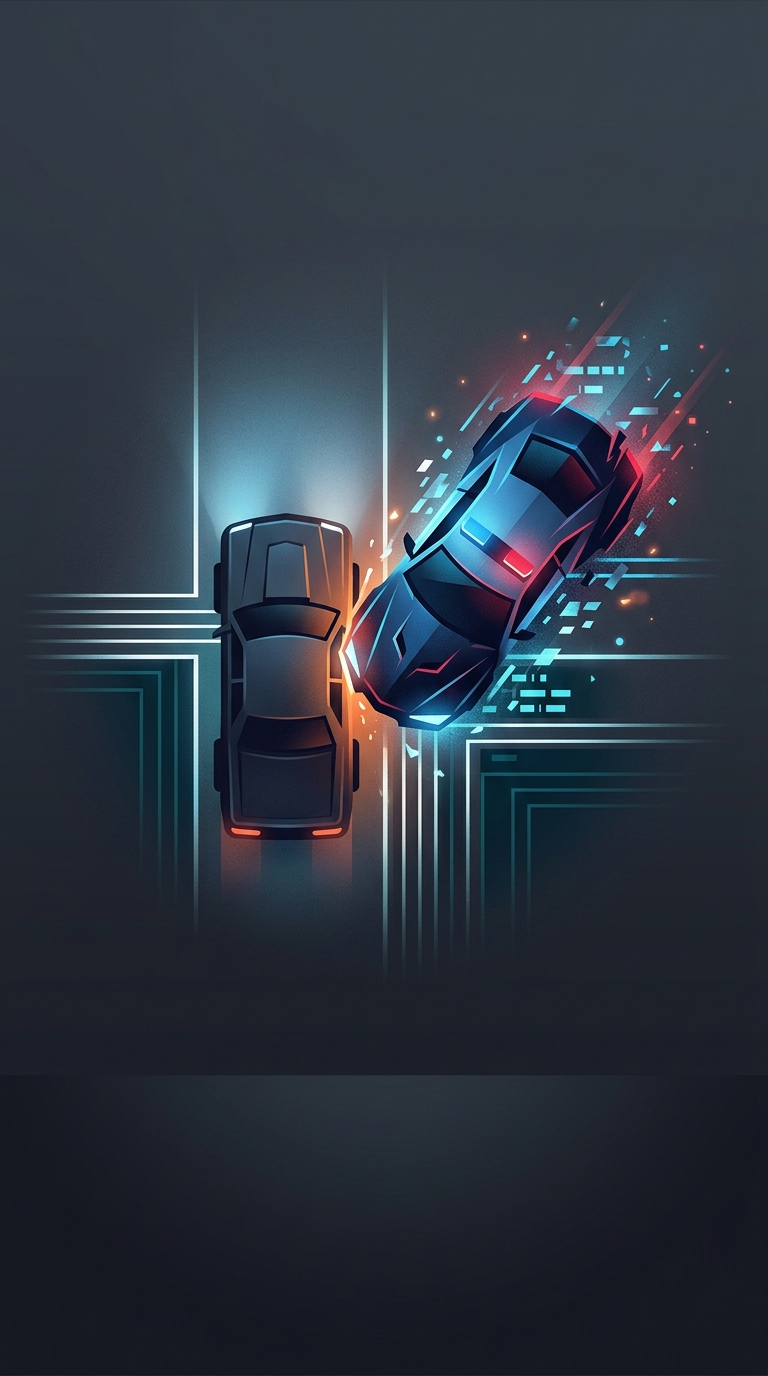
A police-car glitch changed the game
The early prototype of Grand Theft Auto was called Race and Chase. Its basic setup was straightforward: players would take the roles of cops or robbers in a top-down multiplayer game, viewed from above. The developers expected the appeal to come from competing within those assigned roles.
But during playtests, that intended contest fell flat. What caught players’ attention was a flaw in the police cars’ pathfinding—the system that helps computer-controlled vehicles find and follow a route. Instead of behaving like predictable pursuers, the cars would ram into players. The collision was a mistake, but it made the chase feel lively and dangerous.
The mistake pointed to a better kind of fun
That reaction gave the developers a more useful signal than their original plan: players were not most interested in playing a tidy game of cops versus robbers. They enjoyed driving through a city while the police pursued them unpredictably. The team shifted its focus toward that chaotic, player-driven experience.
The change was more than a tweak to the police cars. It redirected the game from a structured contest toward the pleasure of causing trouble and seeing what happened next. A pursuit could become its own event, shaped by the player’s driving and the police response rather than by a fixed sequence of objectives.
That design choice helped establish a defining quality of the series: the city and its reactions could make unscripted trouble feel like the main attraction. What began as a pathfinding bug was not simply patched away; the fun it revealed became a reason to rethink the game.