A test sound that became part of Navi
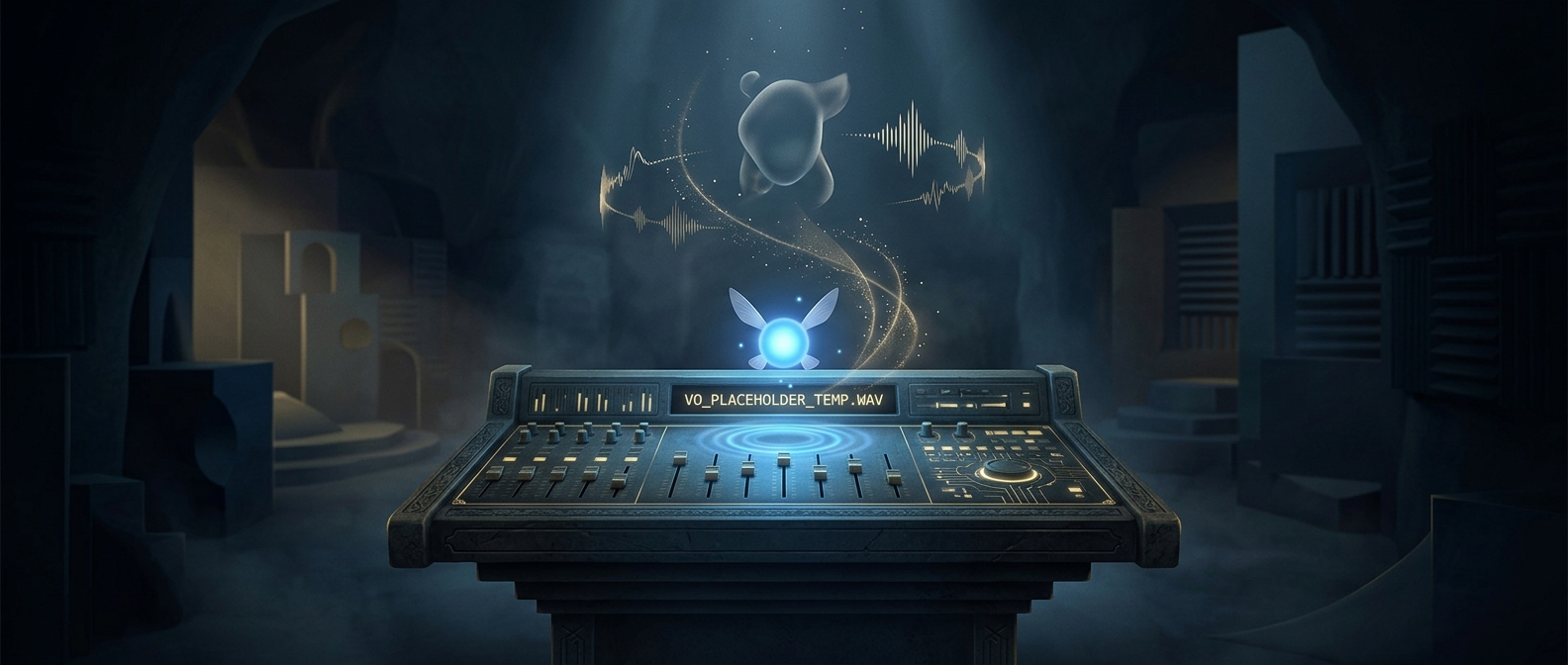
While building The Legend of Zelda: Ocarina of Time, the developers needed a quick audio cue for Navi, Link’s fairy companion. Her call had a practical job: draw the player’s attention when she had a hint or something to point out. The sound used during testing was meant to be temporary, not a finished performance.
Why the placeholder worked
A cue that competes with music and environmental effects has to stand out quickly. Navi’s short, high-pitched cry did that without needing words or a long spoken line. Its sharpness made it hard to miss—which suited a character whose purpose was to interrupt the player and redirect attention.
Replacing it would have meant finding and fitting a different sound to the same role. The developers instead kept the test file, apparently deciding that the rough cue already did the job. A production shortcut became one of the game’s most recognizable—and, for many players, most irritating—sounds.
The cost of being impossible to ignore
Navi can call out repeatedly as the player explores, so a sound designed to cut through the action also gets repeated. That is the tradeoff: the cue is effective precisely because it is difficult to tune out. A temporary sound survived not because it was subtle, but because its bluntness made the gameplay signal unmistakable.