How Nonsense Became Tactical Atmosphere
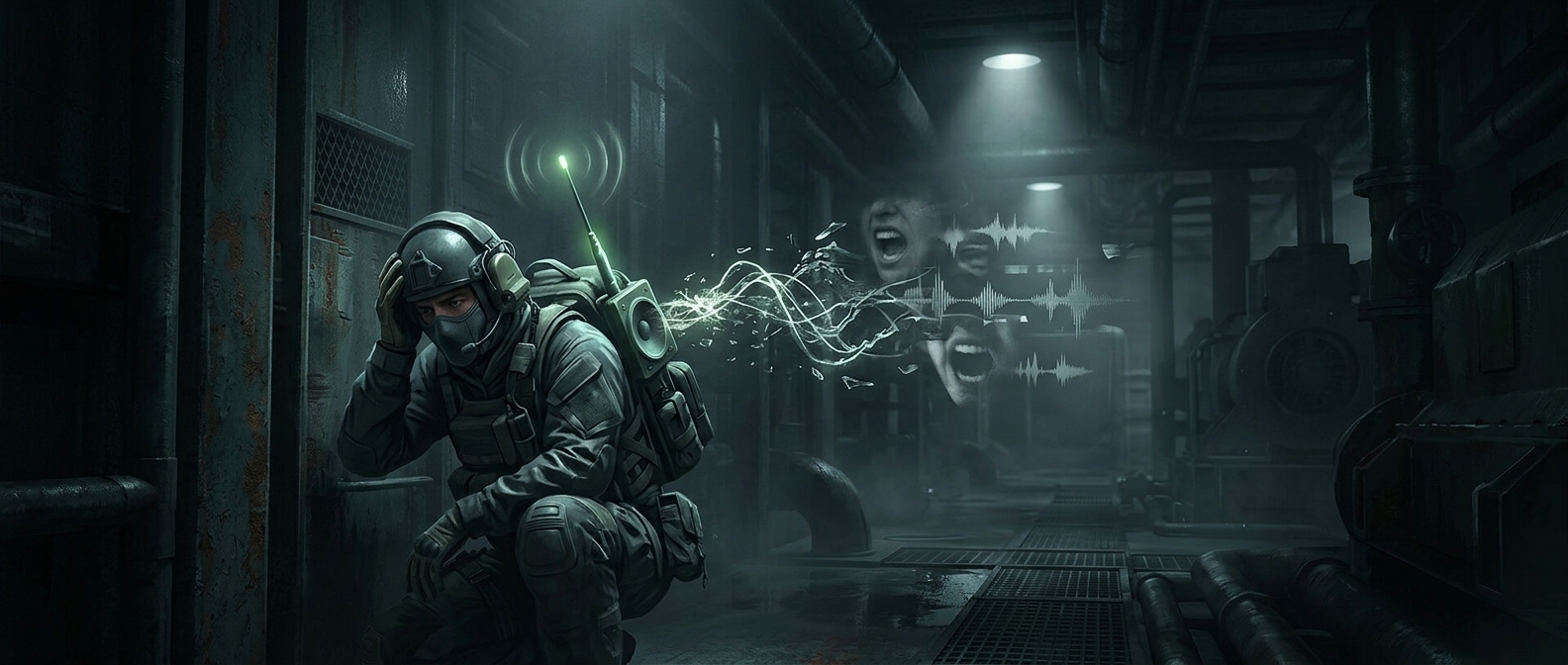
In a horror shooter, enemy voices have to do two jobs at once: suggest that soldiers are communicating, and make the player uneasy. FEAR’s developers achieved that effect without writing realistic military dialogue. They recorded themselves shouting improvised nonsense, then altered the recordings so the voices sounded as if they were coming through radios.
That choice solved a practical sound-design problem. Clear dialogue invites players to follow the words; unintelligible speech instead leaves them listening for tone, timing, and movement. A burst of urgent voices can imply that enemies have noticed something or are reacting to one another, even when no sentence delivers useful information.
Why the Chatter Feels Coordinated
Radio distortion supplies a shared texture: voices seem filtered and distant, as though they belong to the same communication system. The performance supplies urgency, while the editing and placement of the sounds can make separate outbursts feel like parts of an exchange. The result is not meaningful battlefield language so much as the impression of a functioning squad.
For the player, that impression matters. Enemy chatter can make opponents feel alert and connected rather than like isolated targets waiting in silence. And because the words are not clear, the voices remain atmospheric instead of spelling out exactly what the enemy knows. The unsettling effect comes from hearing apparent coordination without being able to understand it.