How an animal whimper becomes a monster’s voice
An injured animal’s whimper already carries a useful unease: it sounds alive and vulnerable, but also strained and unfamiliar. Lowering its pitch pushes that sound farther from an ordinary animal. The vocal shape remains recognizable, while its weight and apparent size change. A small cry can seem to come from something much larger—and harder to understand.
Pitch is the perceived highness or lowness of a sound. When audio is pitched down, its tones move lower; depending on the method, this can also make the sound longer. Either way, the altered cry loses some of the quick, familiar quality of a natural whimper. It becomes a groan with an animal trace still inside it.
Why the sound suits BioShock
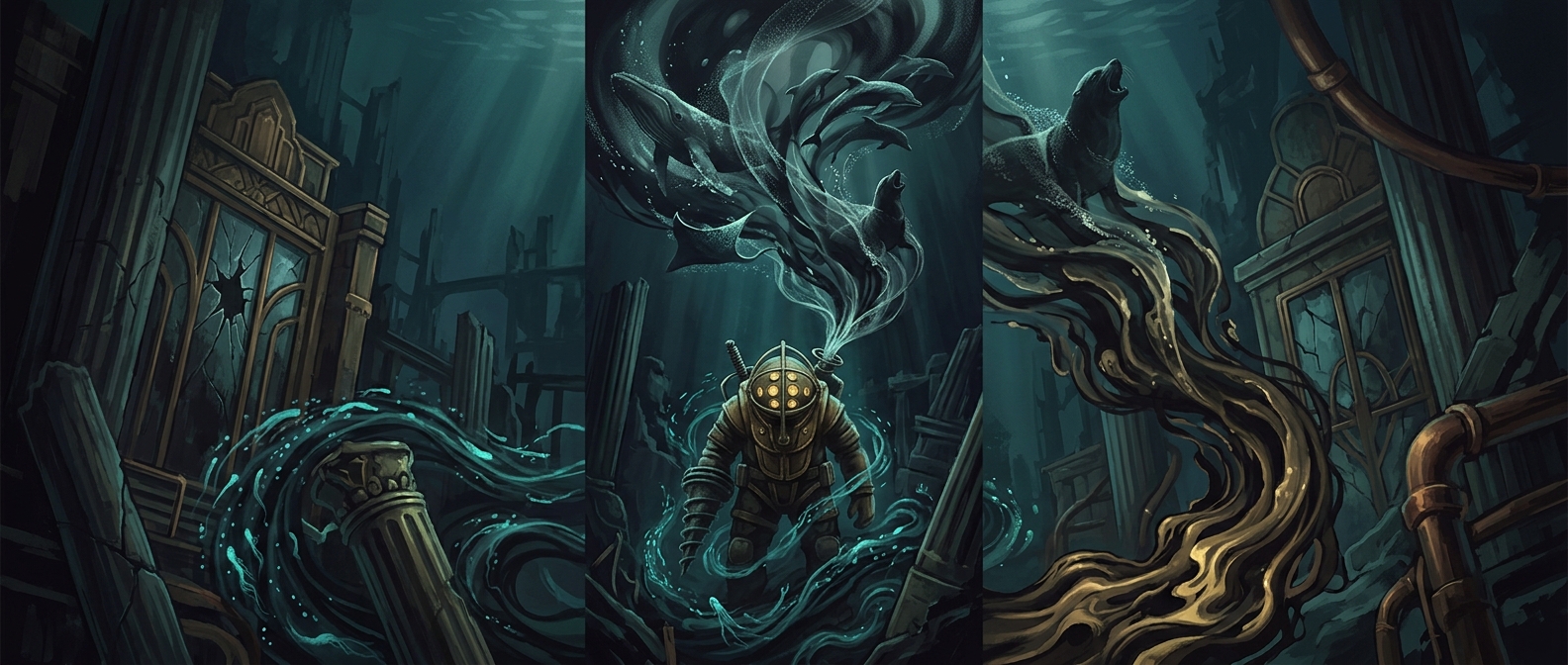
BioShock places its action in Rapture, a city built beneath the sea. In that setting, a creature’s voice does not need to sound like a recognizable animal to feel plausible. A distorted, low groan can suggest a living body while leaving the listener unsure what made it—or where it is.
That ambiguity is the design advantage. The sound starts with a real creature’s distress, then processing makes it feel larger and less familiar. Rather than relying only on a conventional monster roar, the game’s sound design turns a small, vulnerable noise into something that seems to belong to an unknown presence below the water.