Four versions, four different design problems
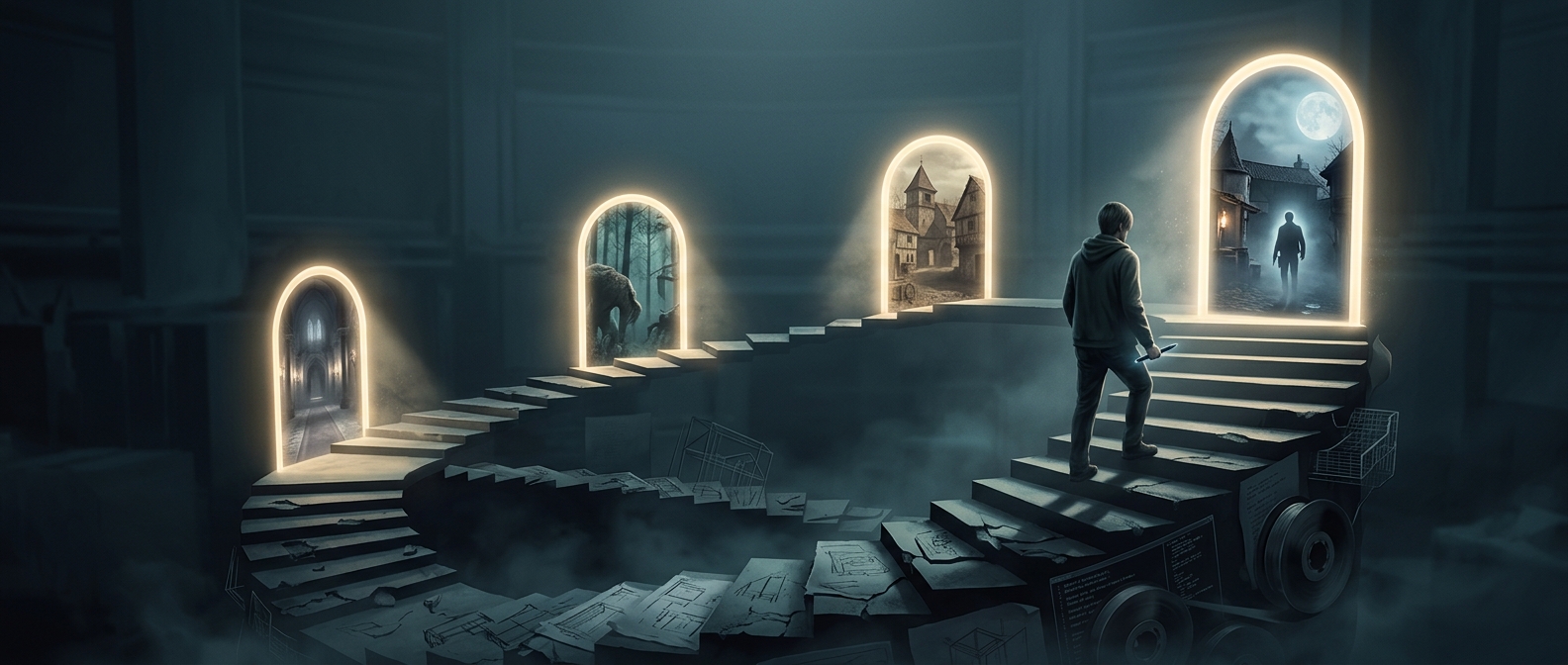
The original Resident Evil 4 did not move straight from concept to finished game. Its discarded versions explored sharply different ways to make a sequel feel new: one leaned into supernatural horror, while another emphasized fast, stylish action. That action-focused experiment grew into Devil May Cry, leaving the Resident Evil team to rethink what its own game should be.
These were not simply alternate stories. Each direction implied different enemies, movement, pacing, and camera control. A supernatural version called for one kind of threat; a game built around acrobatic combat demanded a different rhythm. As those experiments diverged from the series’ survival-horror identity, the developers had to find a design that could feel fresh without losing the tension of being vulnerable.
The camera changed the relationship to danger
The eventual redesign brought the camera close behind the protagonist, framing the action over his shoulder rather than showing the character from a fixed, distant viewpoint. That choice made aiming more deliberate: the player could see a target clearly, but the tighter view also limited what was visible around him. Focusing on one threat could mean missing another.
This camera arrangement helped connect shooting to suspense. Instead of making combat effortless, it made each encounter a spatial problem—where to stand, what to aim at, and what might be approaching from outside the frame. The result became an influential template for modern third-person shooters, in which the camera follows the character closely while keeping the player directly involved in aiming and movement.
Reinvention left a mark beyond the series
The four attempts were not four polished games released in sequence; they were major creative turns during development. One branch even survived under a different name: Devil May Cry. The final game’s legacy came from a separate decision—to make the camera itself part of the tension, turning a change in viewpoint into a new way to stage action.