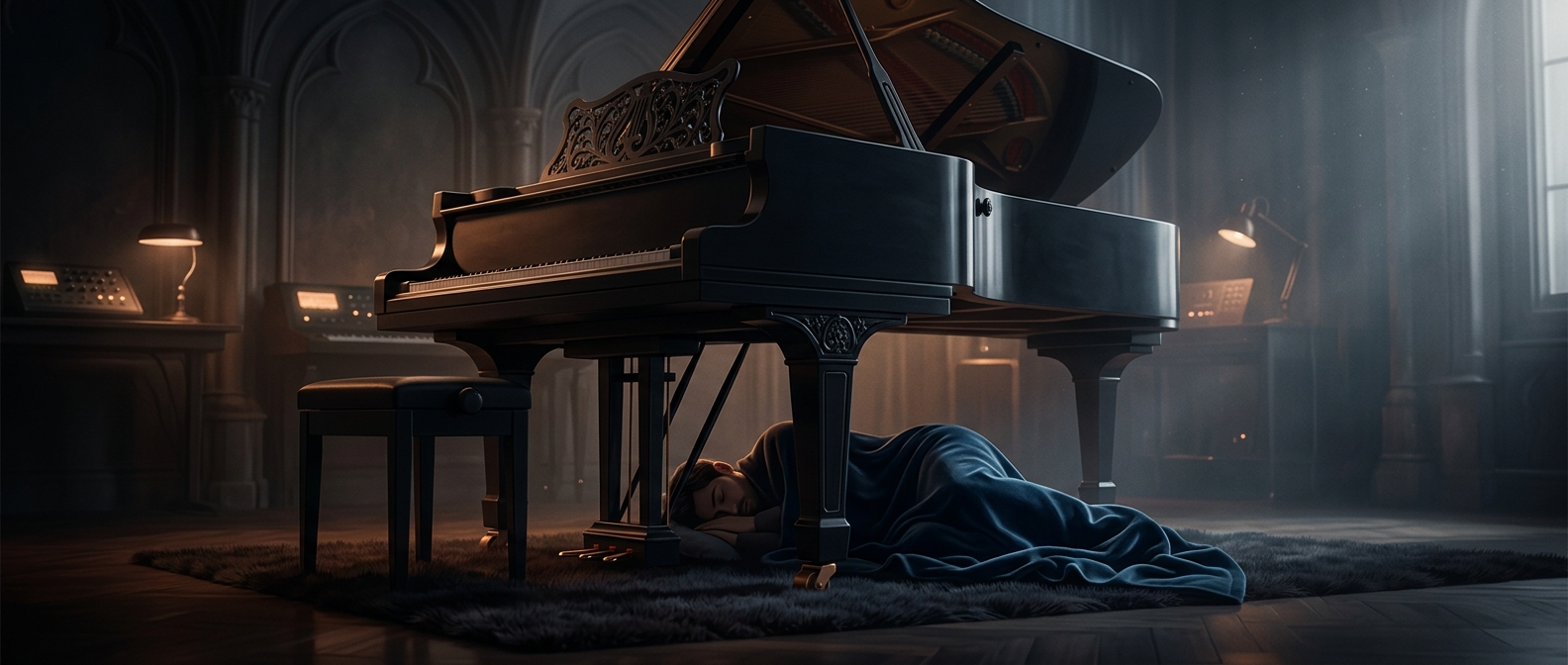
Why a Piano Became a Place to Sleep
A game score is often built in small, revisable pieces rather than composed once from beginning to end. A composer may be asked to reshape a cue as a scene changes, adjust its length to fit gameplay, or make a musical transition work when a player takes an unexpected route. In the final stretch of production, those requests can arrive while the rest of the game is still being assembled.
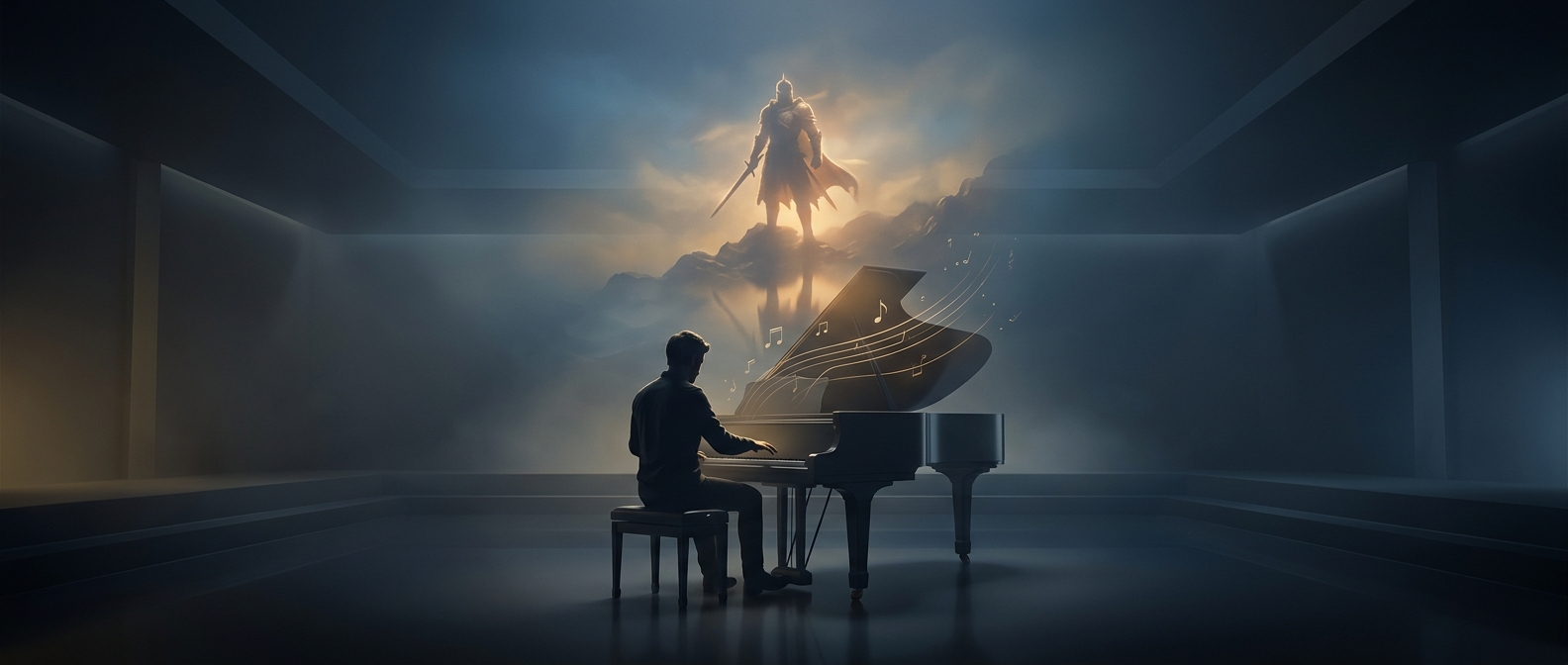
When the instrument is also the workstation, staying close to it makes the next change immediate: wake, try a phrase, listen, revise. A grand piano’s underside may offer just enough sheltered floor space for a short rest, with the keyboard within reach. The striking image is less about a piano’s special sleeping properties than about how little distance separated composing from production.
The Work Keeps Moving
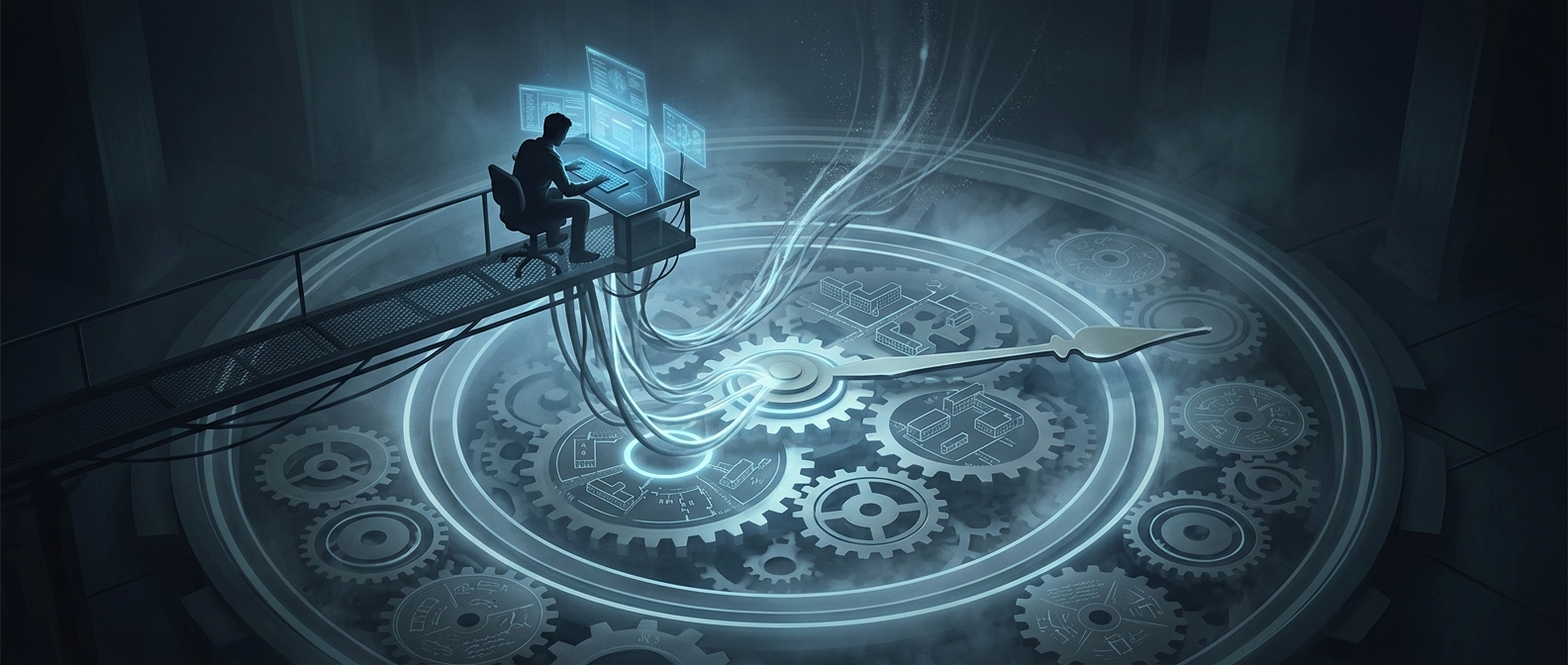
Game music has to respond to more than mood. It must fit timing, gameplay events, and the way separate sections join together. A passage that sounds right on its own may need another edit once it is tested in the game. That back-and-forth can make late production feel less like finishing a fixed score and more like repeatedly fitting music to a moving target.
Sleeping beneath the instrument captures the intensity of that cycle, but it also hints at its cost: work and rest have collapsed into the same room and routine. The composer can reach the next measure quickly; the piano is still there when they wake.