Listening for the notes inside the noise
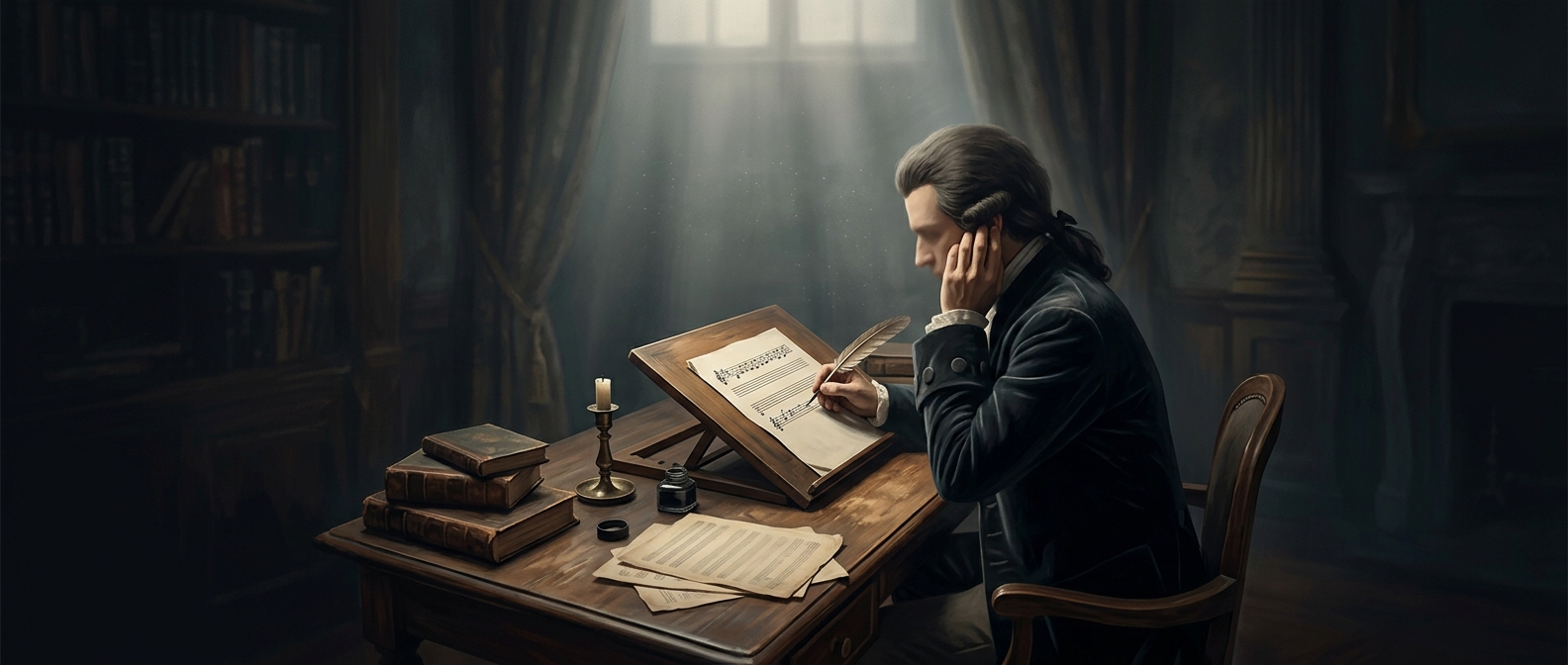
A worn or low-quality recording can preserve a tune without clearly revealing how it was made. Distortion, hiss, and crowded instruments blur pitches and rhythms together. A composer rebuilding the music listens in short stretches, singing or playing back what seems audible, then checks each note against the recording again. That process is called transcription: turning recorded sound into written or playable musical parts.
The composer is not simply copying a clean score. They may have to infer where one instrument ends and another begins, or decide whether a faint sound is part of the melody or background accompaniment. Familiarity with the music helps, but it can also create a trap: a remembered version may sound more convincing than the notes the recording actually supports.
Rebuilding more than a melody
A melody is only one layer of a soundtrack. To make it work in an updated game, the team may also need to recreate its harmony, rhythm, instrumentation, and timing. Those details shape the tune’s character: the same notes can feel playful, tense, or grand depending on how they are arranged.
The reconstruction often becomes a cycle: listen, make a playable version, and compare the result with the surviving audio. Where the recording is too unclear to settle a detail, the composer has to make a musical judgment rather than recover certainty that is no longer available.
That judgment matters because game music must function as music, not just as an artifact. A rebuilt piece needs to hold together when heard again and again alongside play. The final version is therefore both a recovery of what can still be heard and a practical interpretation of what the recording cannot fully reveal.