The last unmatched card became a social penalty
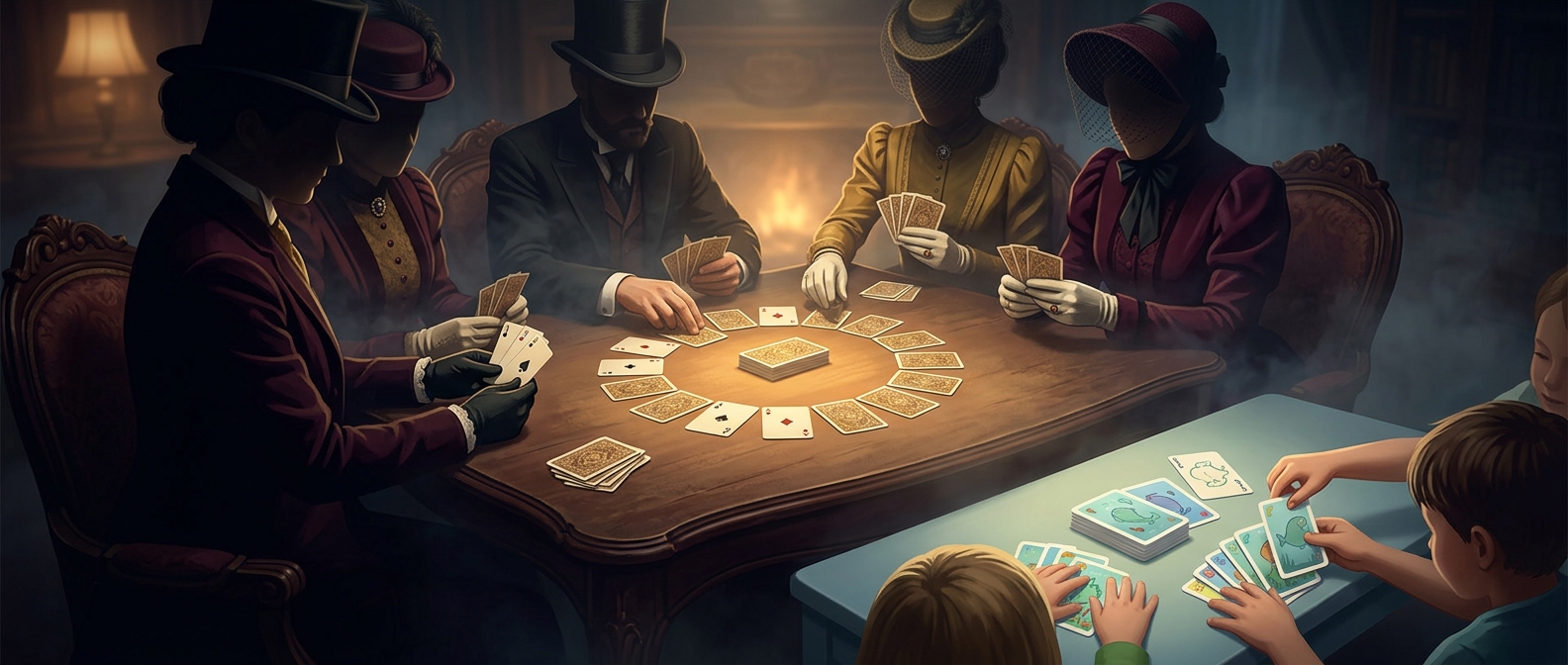
Old Maid is built around making pairs: players discard matching cards, then draw from one another until most cards are gone. One card has no partner. The player holding it at the end is the loser—not because of a complicated score, but because the game leaves that person visibly stuck with the leftover.
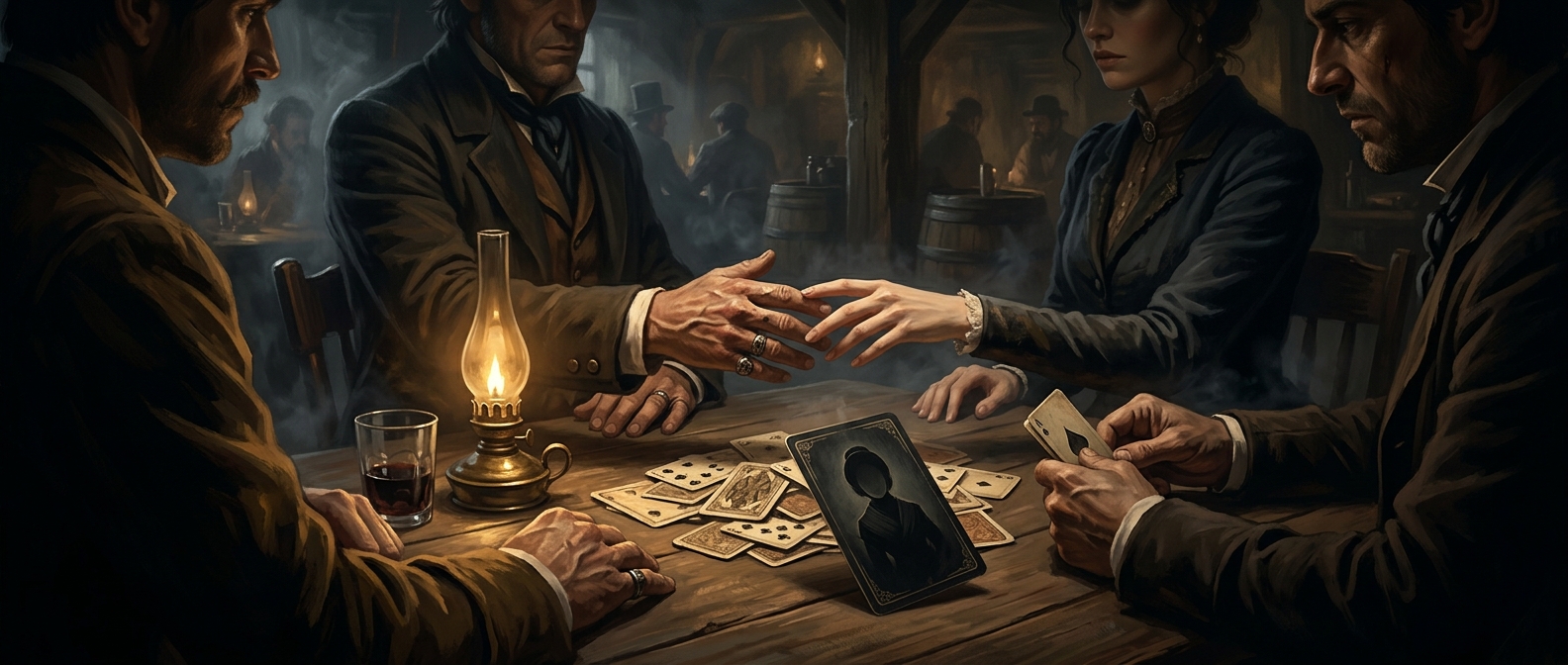
In the Victorian-era drinking version, that simple ending carried a cost beyond losing. The player with the unmatched card had to buy the table’s next round. The card game thus turned a small stroke of bad luck into a shared expense, while giving everyone else a reason to watch who was still holding the unwanted card.
A round of drinks made the stakes public
The penalty also changed the game’s social rhythm. Players weren’t only trying to shed cards; they were trying to avoid becoming responsible for refreshments. And because the purchase benefited the group, the loser’s forfeit became part of the gathering rather than a private scorekeeping mark.
That is the neat twist in the drinking version: the game’s leftover card assigned the next round’s payer. An ordinary ending—one player unable to make a pair—could decide who picked up the table’s drinks.