The Queens Behind the French Court Cards
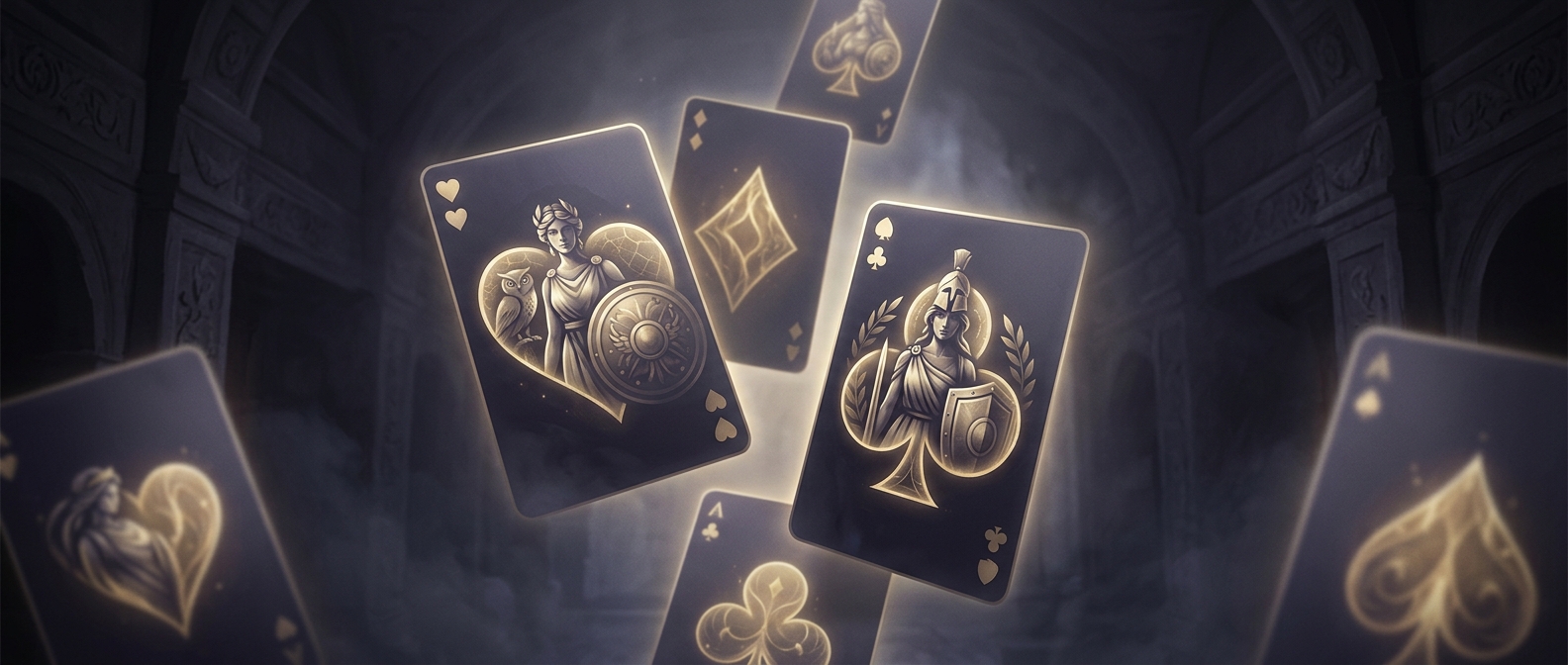
The names attached to French playing-card queens come from a tradition of identifying the figures, not from labels printed on every deck. In familiar French patterns, the queen of spades is linked with Pallas—another name for the Greek goddess Athena—and the queen of diamonds with Rachel, a biblical figure. The other traditional pairings are Judith for hearts and Argine for clubs.
From Portraits to Playing-Card Symbols
French card makers inherited the idea of giving court figures recognizable identities from earlier European card traditions. As card designs became standardized, artists kept the ranks—king, queen, and knave—but simplified the portraits into repeatable patterns. The names survived as lore around the images, even when the cards themselves no longer displayed enough detail to identify a particular person.
The associations are not a tidy set of historical portraits: they draw on different kinds of stories and traditions. Pallas and Rachel, for example, come from very different cultural worlds. Their presence makes the court cards feel like a cast of characters, but it does not mean each queen was modeled from a single, verifiable individual.
A Name That Hides in Plain Sight
Argine is especially distinctive. It is commonly understood as an anagram of regina, Latin for “queen.” That makes the club queen’s name less a reference to a famous woman than a wordplay on her rank. The result is a small piece of storytelling embedded in a deck: some queens borrow identities from legend and scripture, while another may simply be named for being a queen.