Go Fish began in grown-up company
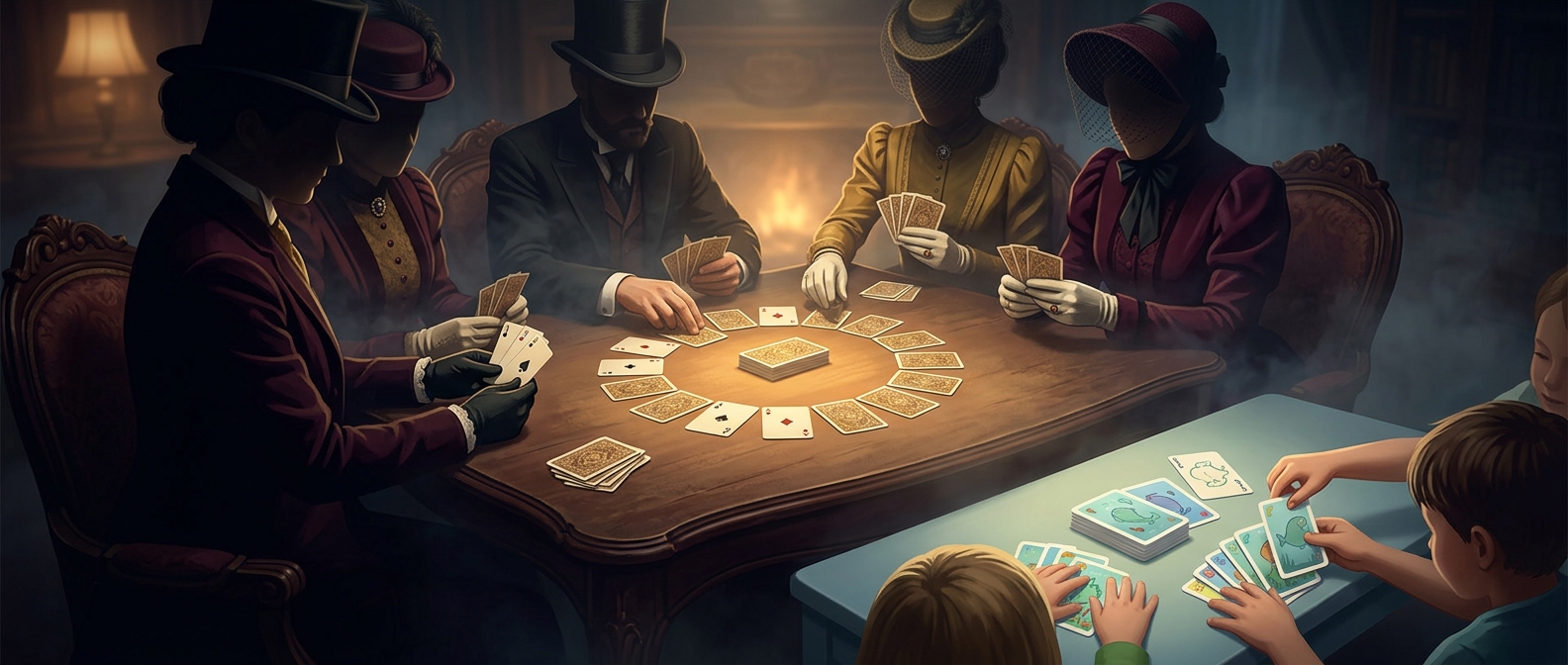
Go Fish is now commonly associated with children learning to play cards, but nineteenth-century accounts place it among adult parlor games. “Parlor game” meant a pastime played socially at home, often in a group—not necessarily a game designed for children or for serious competition.
The familiar game turns a simple request into a small test of attention. A player asks someone else for a card rank they already hold; if the other player has it, the cards change hands, and if not, the asker must “go fish” and draw. Players try to collect matching sets while remembering what has been asked and who might hold which cards.
A game that could travel between generations
That combination—plain rules, ordinary cards, and room for bluffing or deduction—works in a casual adult gathering as well as around a children’s table. The same basic structure can make a game approachable without making it entirely luck: players still have to track what others reveal and choose what to ask for.
The nineteenth-century record shows that Go Fish’s identity was not always the one many players know today. Its later association with childhood reflects a change in how the game was used and remembered; it did not begin as a children-only pastime. A deck could move from an adult parlor to a family game, while the request to “go fish” stayed the memorable center of play.