From literary knowledge to matching cards
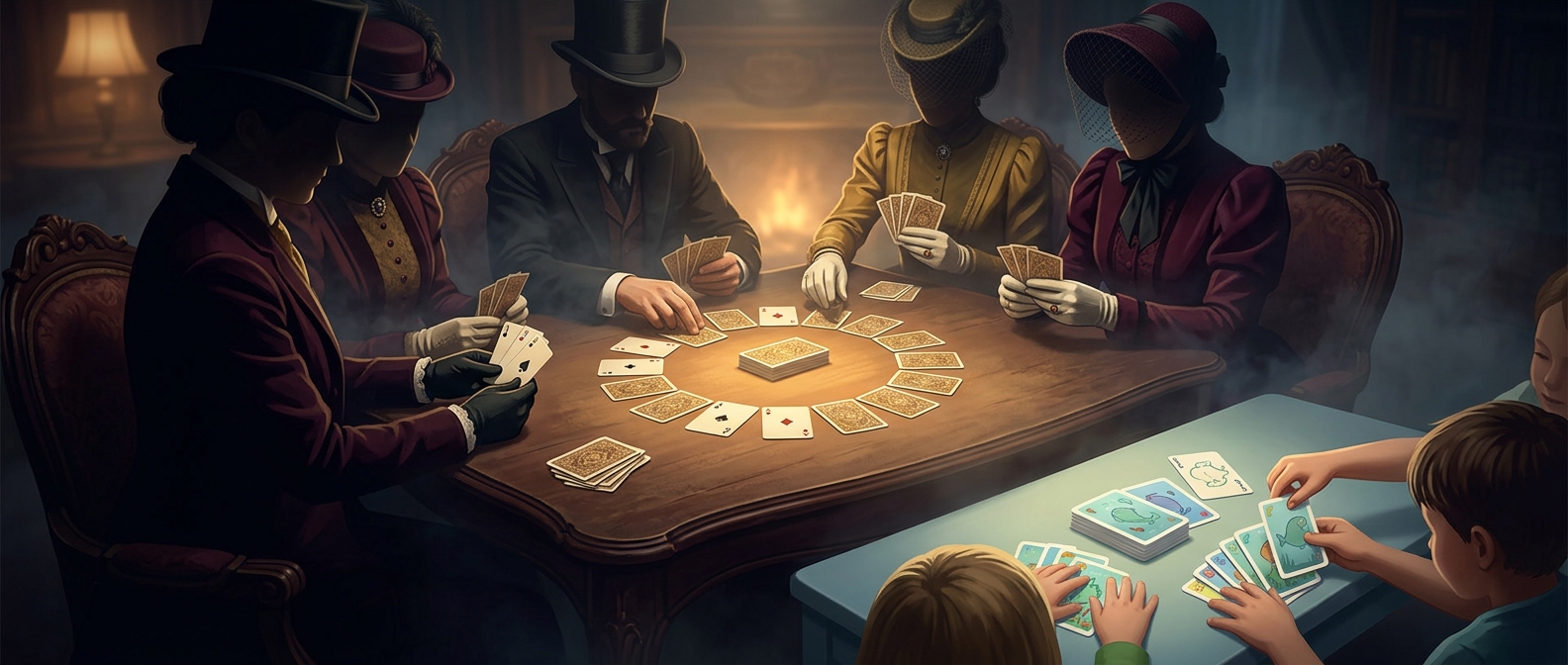
Go Fish’s distant ancestor was not simply a game of collecting identical pictures. In the 16th-century literary card game behind it, the cards connected play to books and learning: players had to recognize literary material as they sought to complete sets. That made a hand of cards a small test of memory and familiarity with writing, as well as a contest among players.
The knowledge requirement faded
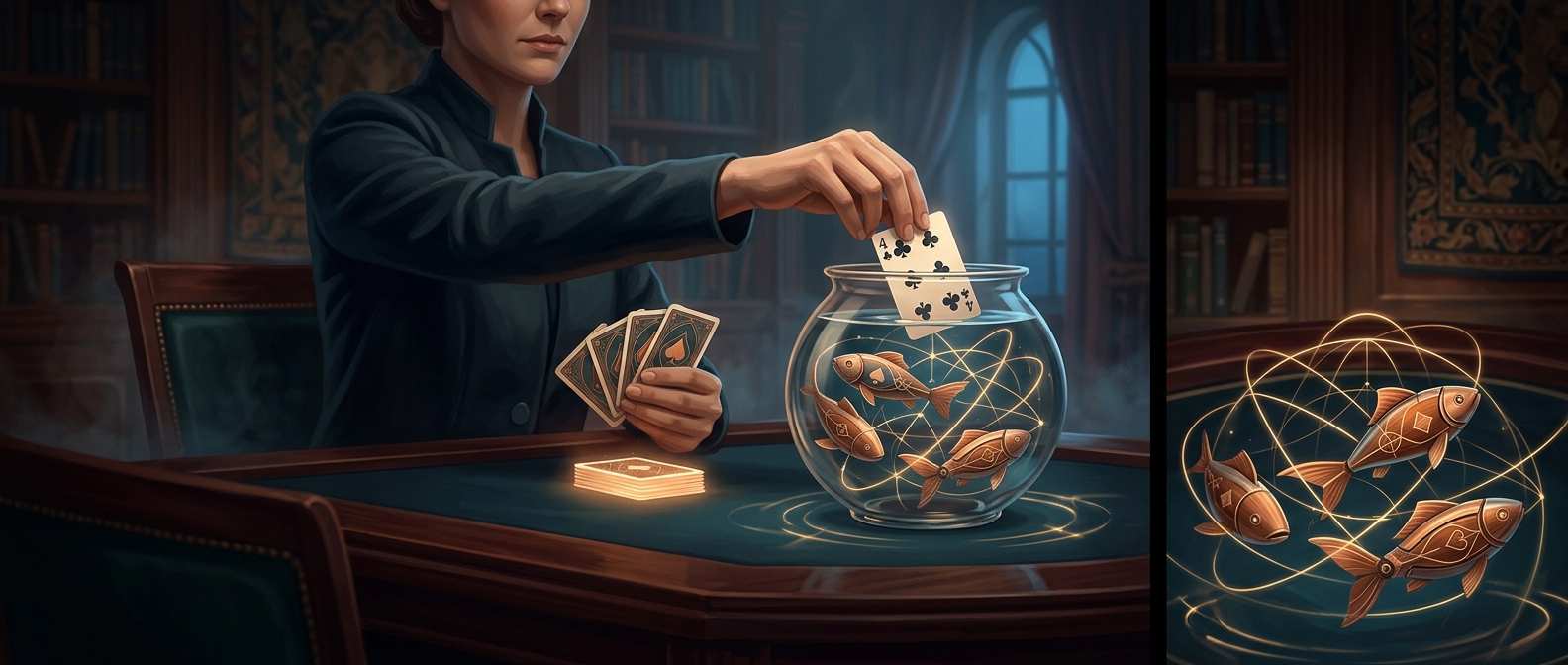
As the game changed over time, its central structure proved easier to keep than its literary content. Players still needed to ask one another for cards and gather matching groups, but they no longer had to identify authors or recall details from texts. In the children’s version, the question is straightforward: does another player hold the card you need? If not, you “go fish” by drawing from the pile.
That shift made the game accessible to young players who could count and recognize a match without knowing literature. The enduring design is the social exchange—ask, remember who has what, and try again—while the subject matter became simple enough for children to learn as they played.