Why a Blocked Attack Can Leave You Exposed
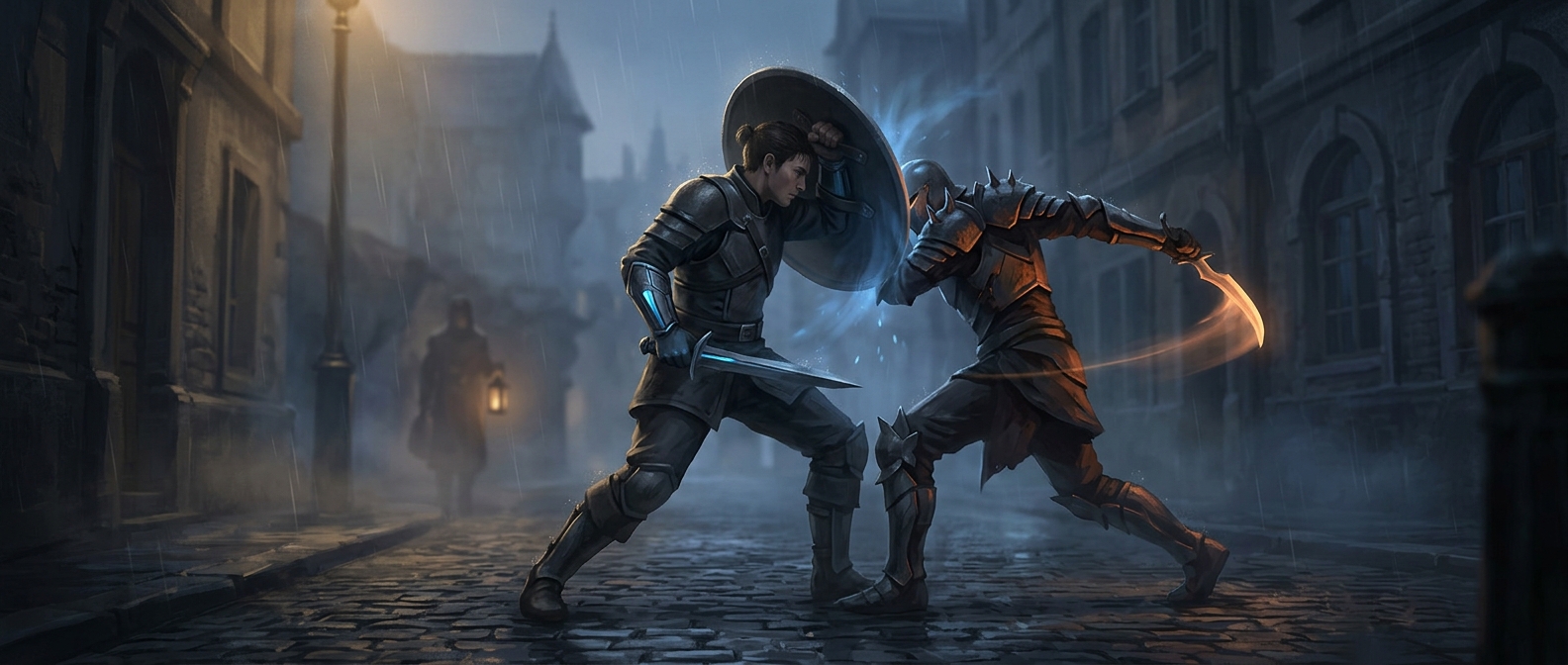
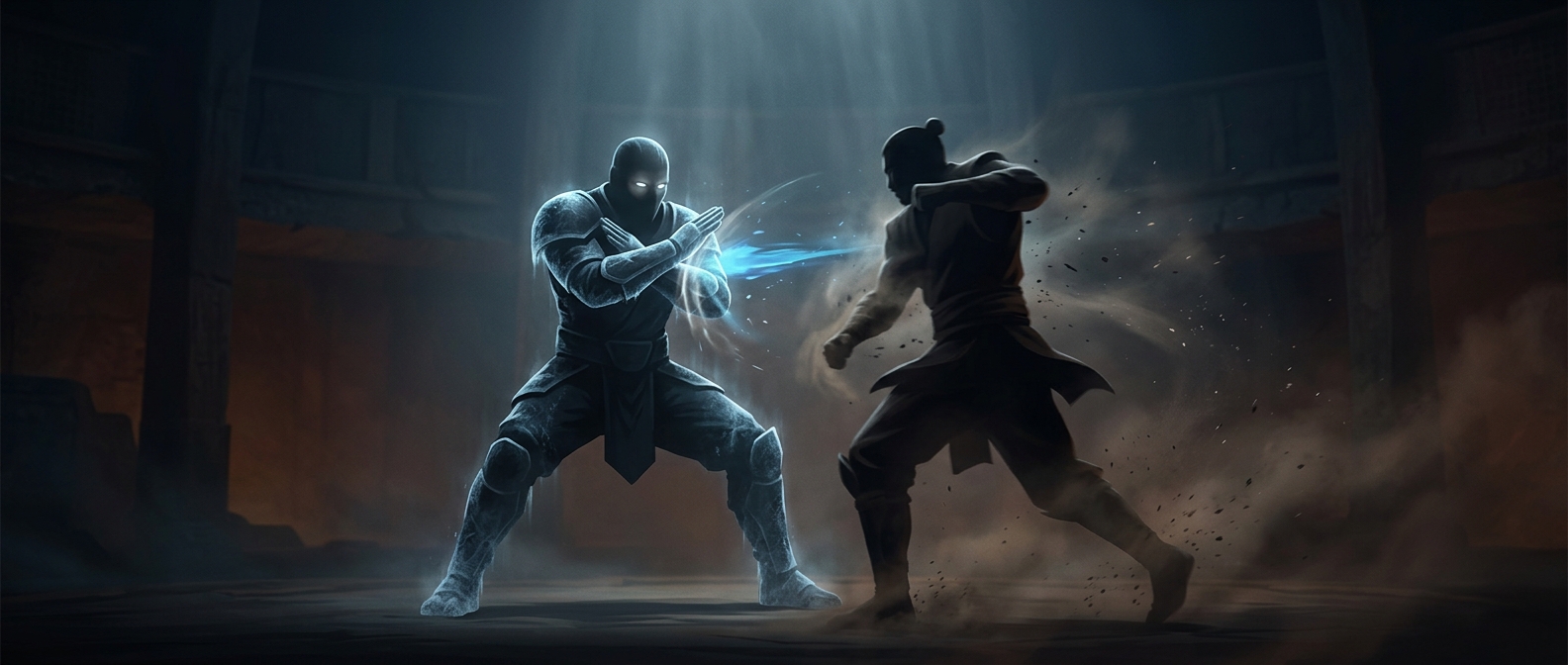
Blocking stops a hit from dealing damage, but it does not let the defender act immediately. The game briefly keeps that character in a fixed defensive animation. This pause is called blockstun: a built-in delay that prevents players from instantly moving or striking after absorbing an attack.
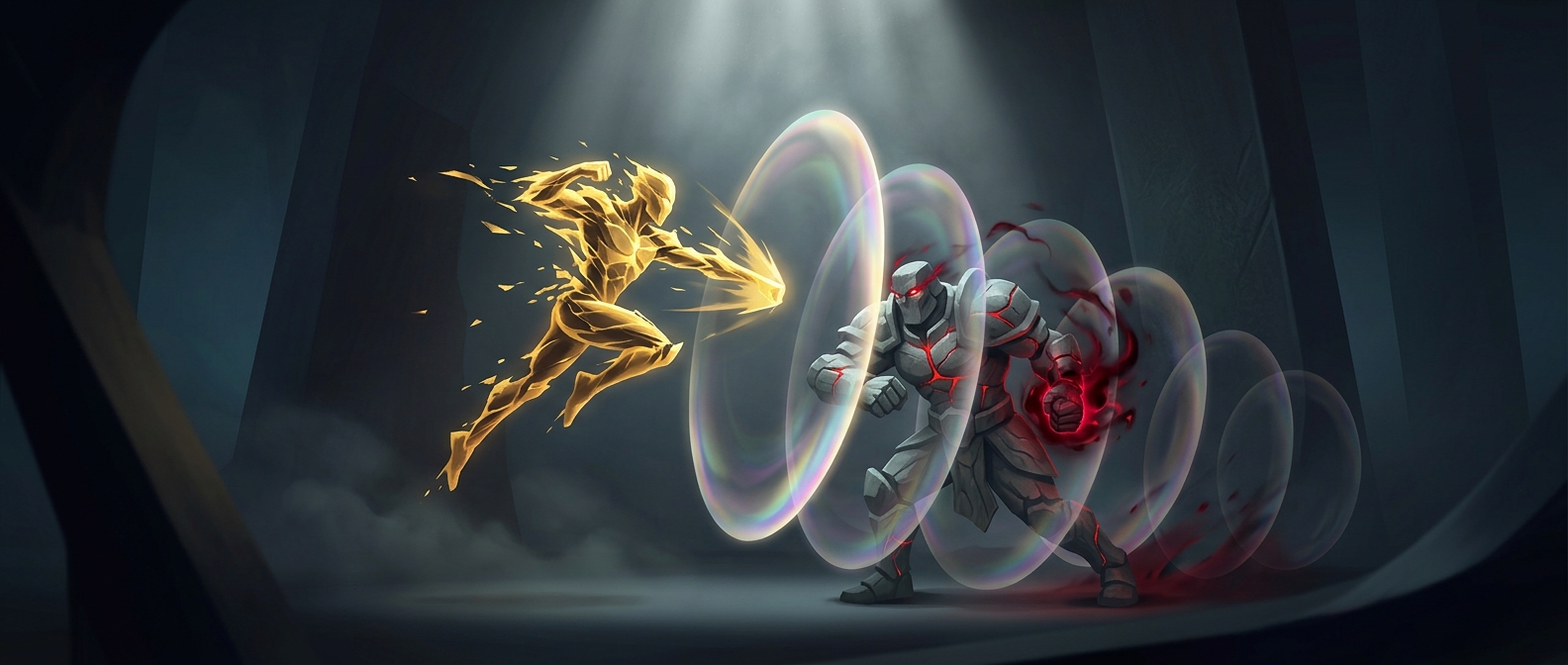
The attacker has a delay, too. After swinging, they must finish their own recovery animation before they can act again. The crucial question is which character recovers first. If the defender’s blockstun lasts longer, the attacker may be able to start another move while the defender is still locked in place.
The Punish Depends on Timing and Distance
That opening is not automatically a guaranteed hit. The follow-up must reach the defender, and it must begin quickly enough to connect before the defender can move or block. Players call a response a punish when it takes advantage of an opponent’s recovery, rather than simply catching them by surprise.
A heavy attack often creates more blockstun than a quick attack, but it may also leave the attacker recovering for longer. So “heavy” does not necessarily mean “safe to follow up.” The game’s timing and the move’s reach determine whether the attacker truly has an advantage.
This is why experienced players sometimes avoid blocking a powerful move when another defense is available—or, after blocking it, choose a quick response rather than trying a slower, stronger attack. A moment that looks like a pause is really a timing contest: the first character allowed to act can seize control of the exchange.