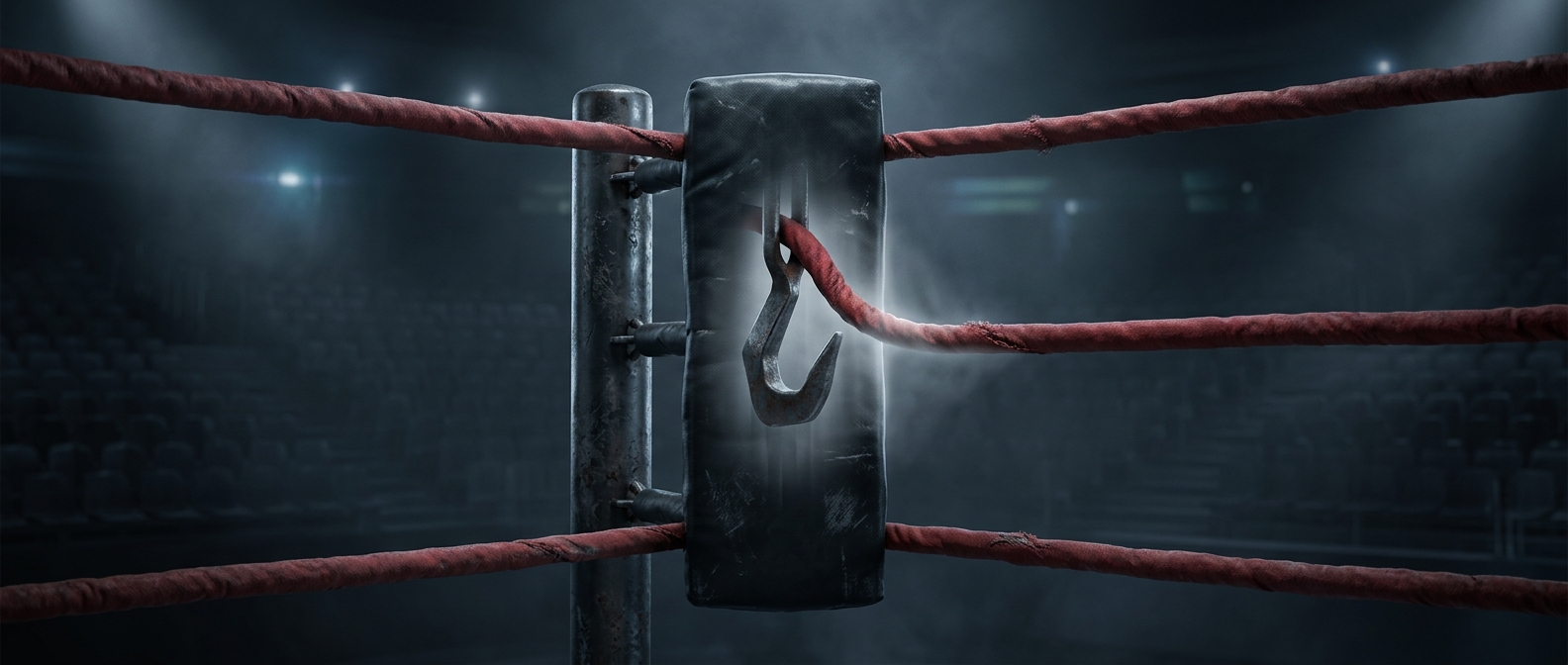
The Rest Built Into the Match
A tag-team match solves a practical problem: a long wrestling bout can demand more sustained exertion than one performer can comfortably maintain. With a partner waiting at the edge of the ring, a wrestler can make a legal handoff and step out while the other takes over. The match keeps moving, but the person who was just fighting gets a short chance to recover.
That rest is brief, not a break in the contest. The resting partner waits on the apron—the narrow platform outside the ropes—and must stay there until tagged in. The handoff turns recovery into part of the match’s structure: one wrestler tires, reaches for a partner, and the pair changes who is carrying the action.
A Practical Device Becomes Drama
The arrangement also gives a match a changing rhythm. A fresh partner can bring renewed energy, while an isolated wrestler may struggle to reach the corner and make the tag. The same rule that lets performers conserve strength therefore creates a visible point of tension: can the tired wrestler get to a teammate before the opponent stops the exchange?
Tag teams began as a way to manage the physical demands of extended matches, but the format makes that solution legible to the audience. Rest happens in plain sight, at the edge of the ring, and the moment it ends is an action beat of its own.