The Lock Is Built for the Audience’s View
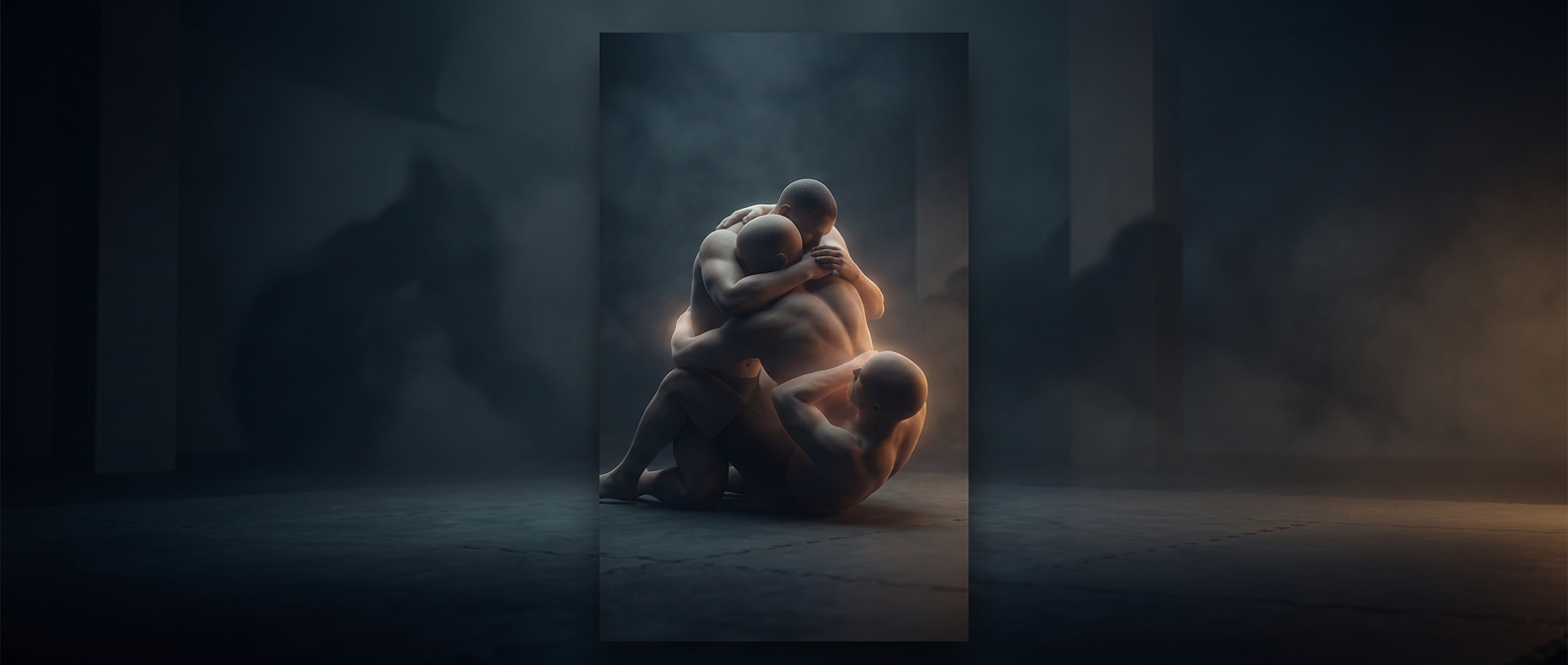
A joint lock looks threatening because it puts a limb in a position associated with pain: an arm is bent behind the body, or a leg appears to twist against its natural range. In a real fight, forcing a joint farther could injure it. In a staged match, the performers arrange the hold so the dangerous-looking angle is visible without actually cranking the joint.
The person applying the hold may support or lightly guide the limb while keeping their own body positioned to suggest pressure. The opponent then supplies the other half of the illusion, reacting as if the joint is under strain. From the crowd’s angle, the pose reads as a painful lock; from inside it, the limb can remain comfortable.
Selling Pain Without Creating It
That performance is often called selling: using facial expression, movement, and timing to make an apparent impact feel consequential to the audience. A performer might tense their body, struggle to escape, or pause before tapping out. Those signals tell the story, but they do not prove that the hold is applying force.
The distinction matters because joint locks rely on leverage. A small increase in pressure can move a joint beyond its safe range, so performers need control and coordination rather than simply copying a dramatic pose. They also have to account for the audience’s sightline: a hold must look clear from the seats while remaining manageable for the person in it.
The result is a physical piece of storytelling. The apparent danger comes from the shape of the hold and the opponent’s reaction; the actual pressure can be minimal. That is how a move that looks like a limb is about to break can, for the performer inside it, feel more like being held in place than being twisted.