Why Dead Space Makes the Stomp Feel Personal
In Dead Space, survival is usually a matter of precision. Necromorphs—the game’s reanimated, mutated enemies—are most reliably stopped by severing their limbs, not by firing wildly at the body. That turns combat into a grim task: identify a threat, aim for a limb, and keep enough distance to avoid being grabbed.
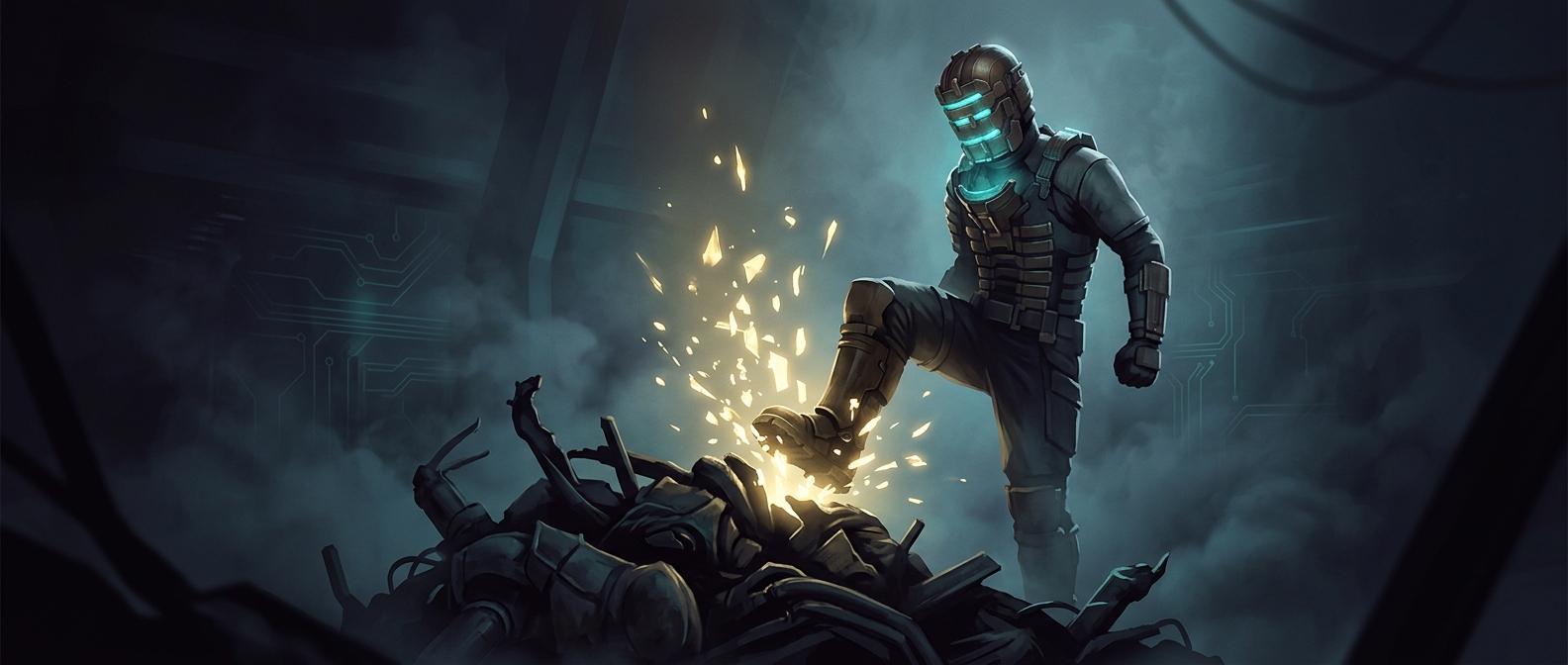
The stomp is the opposite kind of action. Isaac plants himself over a fallen enemy and brings his boot down at close range. It is blunt, noisy, and deliberately physical—a sudden release after the careful, anxious work of aiming. The game gives that violence a practical use, too: stomping bodies can expose supplies, making the motion part of the search for resources as well as a finishing move.
A Combat Habit That Doubles as Character
That combination matters because Isaac is not a detached action hero. He is an engineer trapped in a catastrophe, and the story presents him as a person under severe psychological strain. The stomp lets players enact that pressure through the controller: after the danger seems over, they can choose one more forceful act against the thing that threatened them.
It also changes how a corpse reads. In many games, a defeated enemy is simply scenery. Here, players may approach cautiously, strike it, and check whether it has yielded anything useful. The routine keeps fear and resource management tangled together: even a moment of apparent safety can become another small, ugly decision.The stomp is memorable because it is both a survival tool and an outlet for the panic the game makes players feel.