What a Roleplaying Dice Roll Is Really Deciding
A roll usually does not measure whether a character is capable of doing something at all. It resolves an uncertain attempt: Can the character do it now, under these conditions, before the guard turns around or the court loses patience?
The game assigns the attempt a difficulty, then combines a random result with the character’s relevant abilities. In many systems, a skilled character gets a bonus or a better chance of success. That makes training matter without making the outcome automatic. A routine task with no meaningful risk may not need a roll; dice are most useful when either result could change what happens next.
Failure Can Change the Scene
The roll also gives the group a shared way to settle uncertainty. Without it, the person running the game might have to decide whether the assassin clears the fence, while the player argues that years of training should make it easy. A rule turns that disagreement into a result everyone can work from.
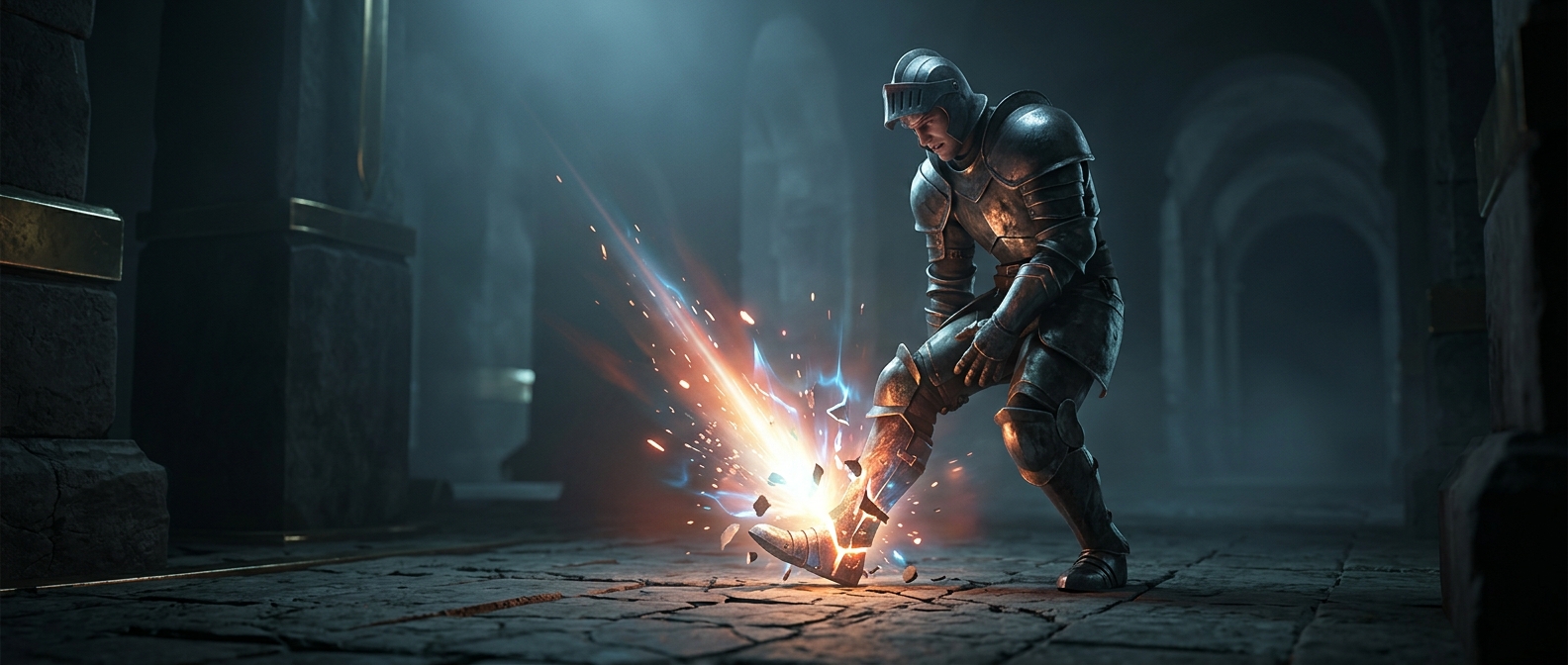
That result need not mean the character suddenly lacks skill. The fence might be slick, the landing noisy, or the timing wrong. In games that allow complications, an attempt can succeed while causing a new problem; in others, failure simply closes off that approach. The rules and the people at the table determine how much detail to attach to the outcome.
This is why a surprising roll can be useful rather than merely silly. It forces the story to respond to something nobody planned: the expert is still dangerous, but now has to deal with a snag in front of witnesses—or explain an unexpected breach of etiquette to the king.