Height turns Lordran into an argument
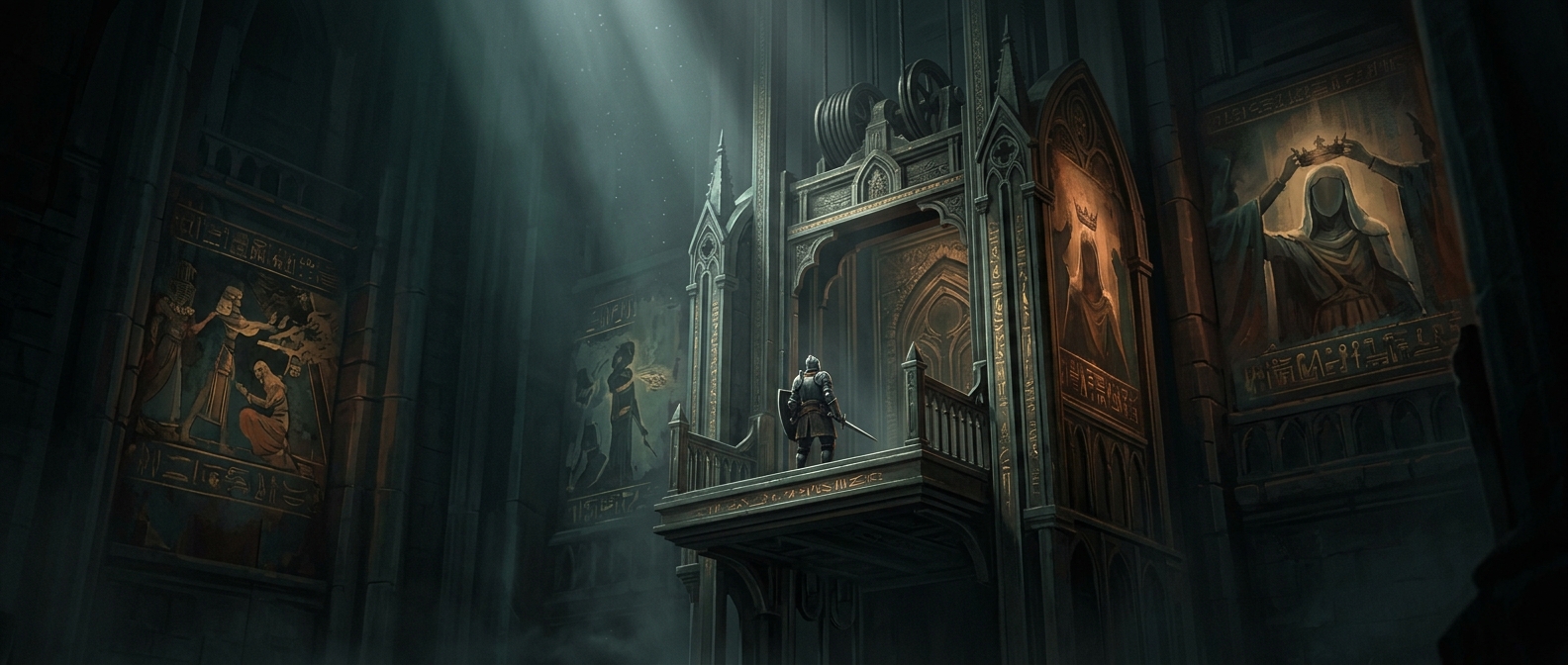
In Dark Souls, elevation does more than help players find their way. It shapes how each place feels before its story is spelled out. Anor Londo’s broad, exposed spaces and towering architecture put the player beneath a city built to look untouchable. Blighttown, by contrast, is a maze of narrow platforms, ladders, and precarious drops. Its layout makes every step feel costly: a missed foothold can mean a fall, while enemies and hazards press in close.
That contrast lets the world communicate status through the player’s body. In one place, the scale suggests authority; in the other, movement itself becomes a struggle for survival. The game does not need a guide to explain that these are radically different worlds. Their architecture makes the difference tangible.
The descent is not a single route
The contrast is thematic, not a direct journey from Anor Londo down into Blighttown. Players reach the two areas by different paths, and Lordran’s connections are more complex than a simple staircase through society. That distinction matters: vertical space works as a recurring visual language across the world, rather than a literal map of rank.
The design also changes how players read the landscape. From a cramped ledge, the next platform is an immediate problem; from a grand open space, the surrounding structures become a spectacle. The same world uses height to make power feel distant and hardship feel close at hand.