The school day is part of the game’s clock
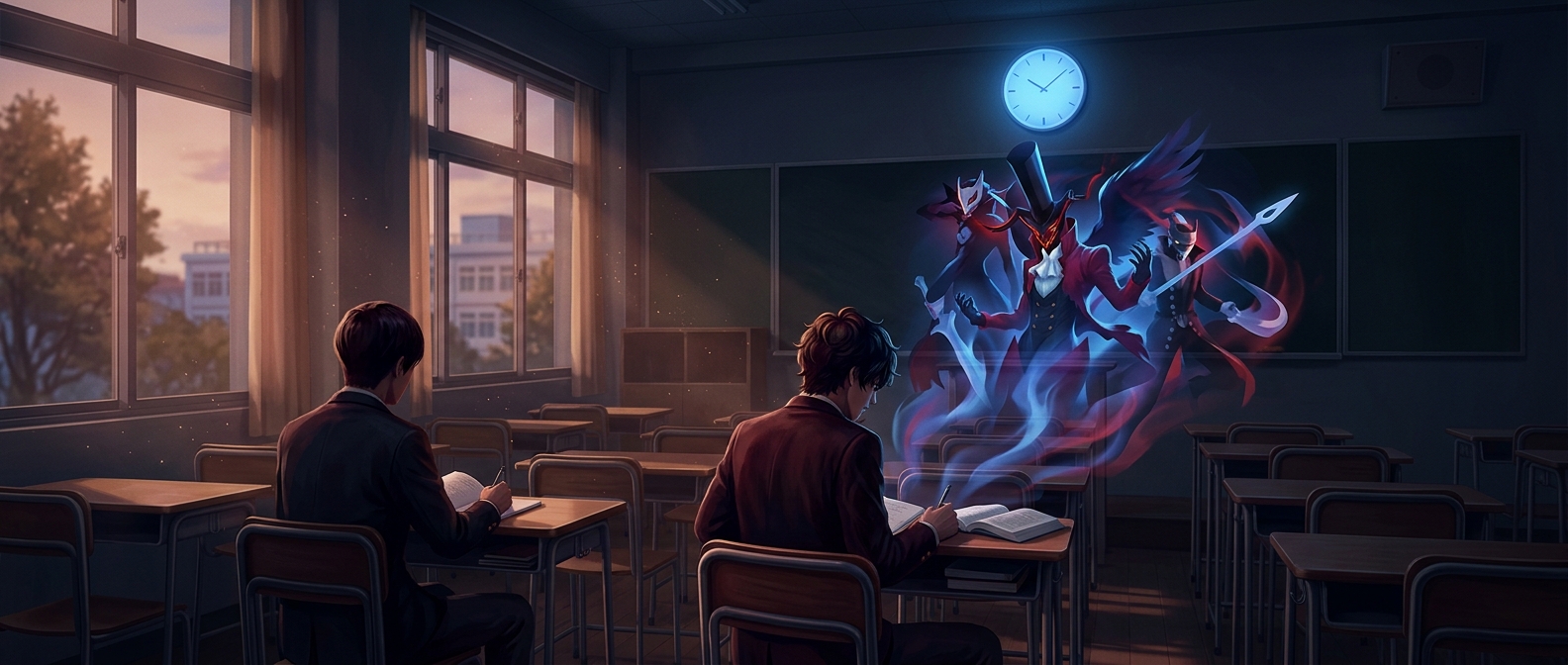
In the Persona games, school is more than a backdrop between battles. The calendar turns ordinary days into a limited resource: a class, a study session, or time spent with a friend can use up a chance that cannot simply be recovered later. That makes small choices matter. Spending an afternoon improving a character’s abilities may mean postponing another relationship or activity.
Classes also give the player a reason to inhabit the protagonist’s routine rather than jump straight from one dramatic scene to the next. Lessons and pop quizzes turn school knowledge into a brief gameplay test, while the timetable gives each day a recognizable shape. The player is not just told that these characters have ordinary obligations; they have to make time for them.
Routine makes the supernatural feel closer
That structure creates a deliberate contrast. The same character who faces extraordinary threats may also need to get through a lesson, manage friendships, and decide how to spend a free afternoon. The everyday responsibilities do not cancel out the danger. They show what the characters are trying to protect—and give the player reasons to care about their lives outside a fight.
Because the calendar constrains what can be done, school routines also help build anticipation. A deadline or looming confrontation sits alongside the next day’s schedule, so even quiet scenes carry a sense of time passing. The result is a distinctive rhythm: high-stakes nights are made more personal by the ordinary morning that follows.