A niche game needed cash before it had customers
A role-playing game could be designed around a table, but getting it into players’ hands required a different kind of work: producing physical rulebooks. Printing a first run meant paying for manuals before sales could bring money back. For a new game with no established market, that upfront cost was a practical obstacle, not a minor detail.
Shoe-repair income became publishing capital
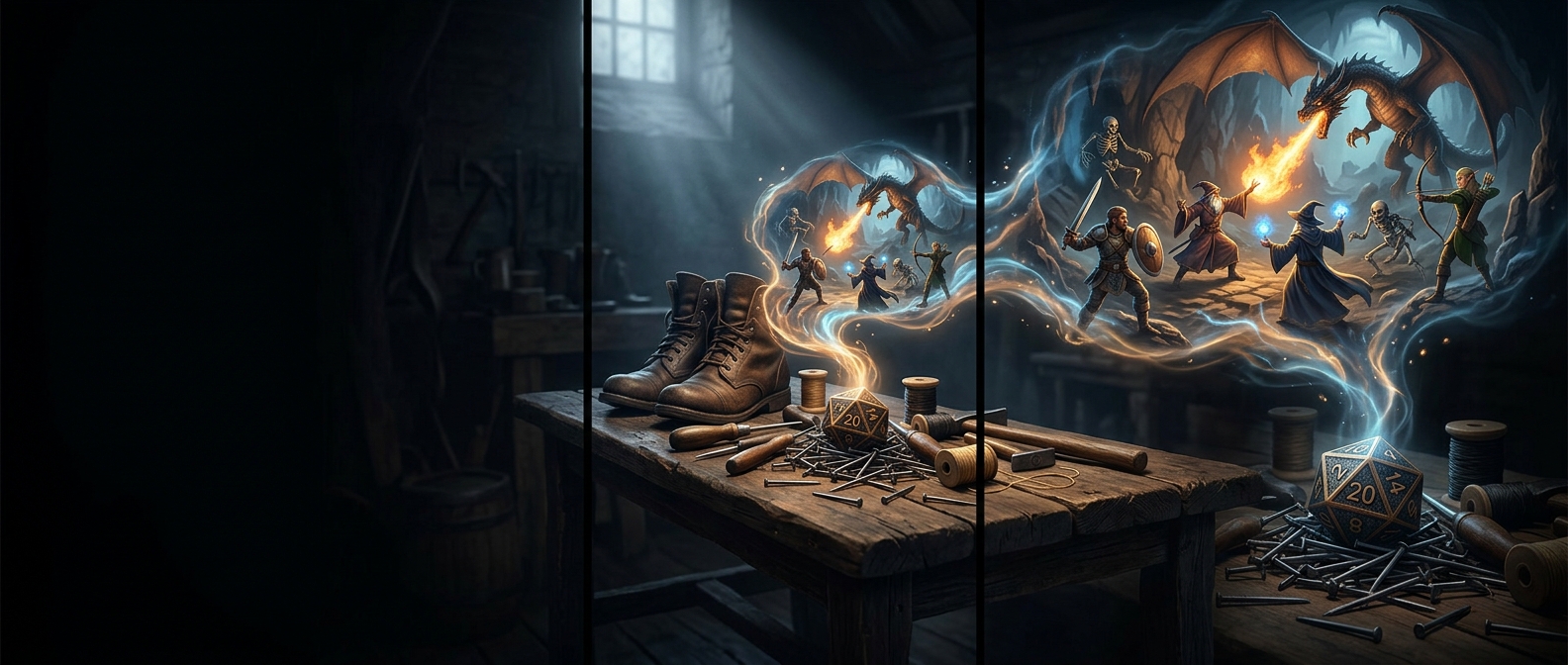
Brian Blume joined Dungeons & Dragons’ creators as a third partner and put money earned from shoe-repair work toward the first 1,000 manuals. That income helped turn the game from a set of ideas and rules into copies people could actually buy and play.
The connection is striking because it shows how early game publishing could depend on ordinary, unrelated work. D&D did not begin with the infrastructure of a large publisher; the money that paid for its first run came from a partner’s trade beyond the game business.
The first run made the game tangible
A printed manual could travel beyond its creators’ own gaming circles. Each copy gave a new group the rules it needed to run adventures, creating a way for the game to spread through play rather than remain an idea shared by its designers. The shoe-repair work helped finance that first step from homemade game to reproducible product.