How a spoken description becomes a game world
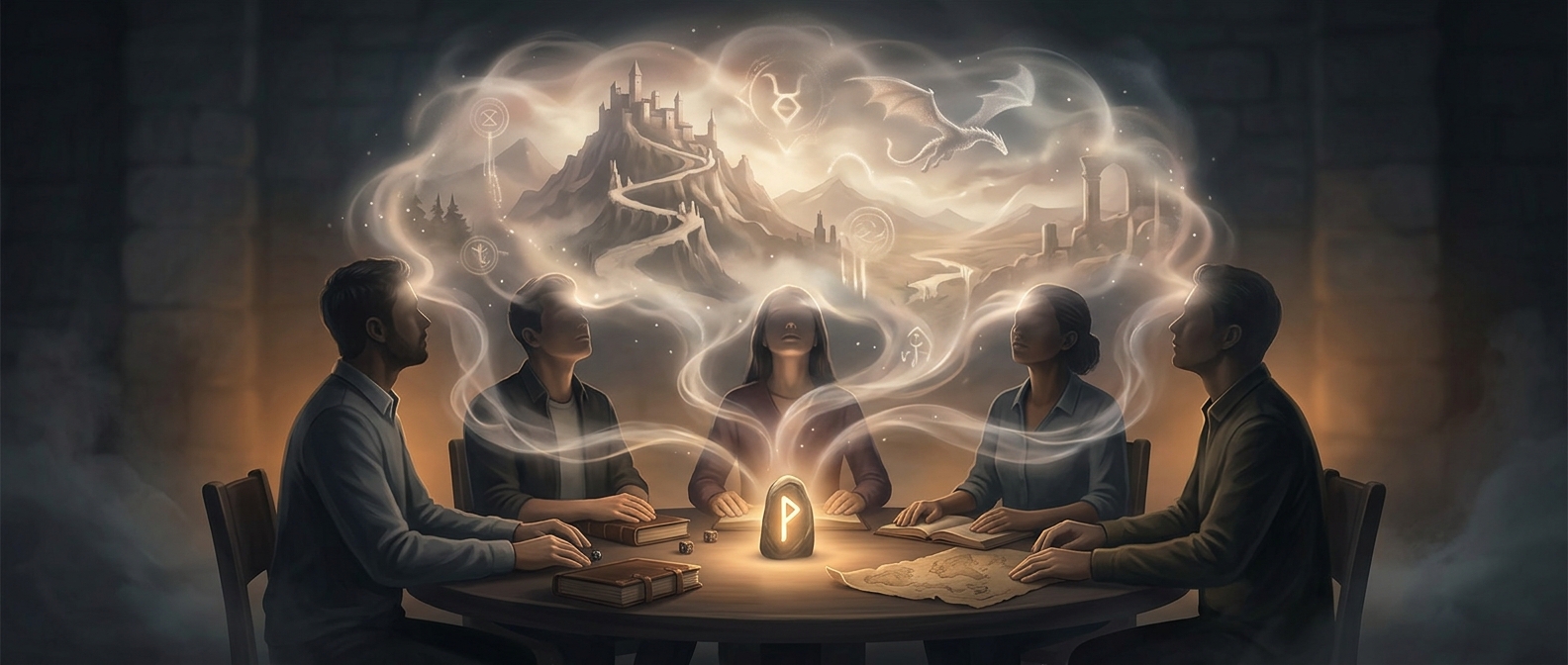
In Dungeons & Dragons, one person usually serves as the Dungeon Master, describing places, people, and events. The players say what their characters try to do in response. That exchange—description, choice, consequence—creates the world at the table without requiring the same picture in everyone’s mind.
A ruined door might be “heavy” to one player and ominous to another. What matters is the shared information the group can act on: it is shut, something is moving behind it, and the characters have choices. The Dungeon Master adds new details as those choices change the situation.
Rules give improvisation consequences
The game is not simply a story made up without limits. Its rules help decide what happens when an action is uncertain. A player might describe climbing a slick wall; the relevant rules and a dice roll can determine whether the character reaches the top, slips, or pays some other cost. The roll does not supply the scene by itself. The people at the table interpret its result and continue the story.
That division makes room for both invention and structure: players can propose unexpected actions, while rules make success and failure consequential. The imagination supplies possibilities; the game’s procedures help the group agree on what follows.
No single version has to be pictured
Because the world is described rather than displayed, players can imagine different visual details and still make decisions together. They do not need identical mental images; they need enough common understanding to know where their characters are, what is at stake, and what they can try. A few words can therefore open a scene, while the group’s choices determine what that scene becomes.