A journal that doubles as a memory limit
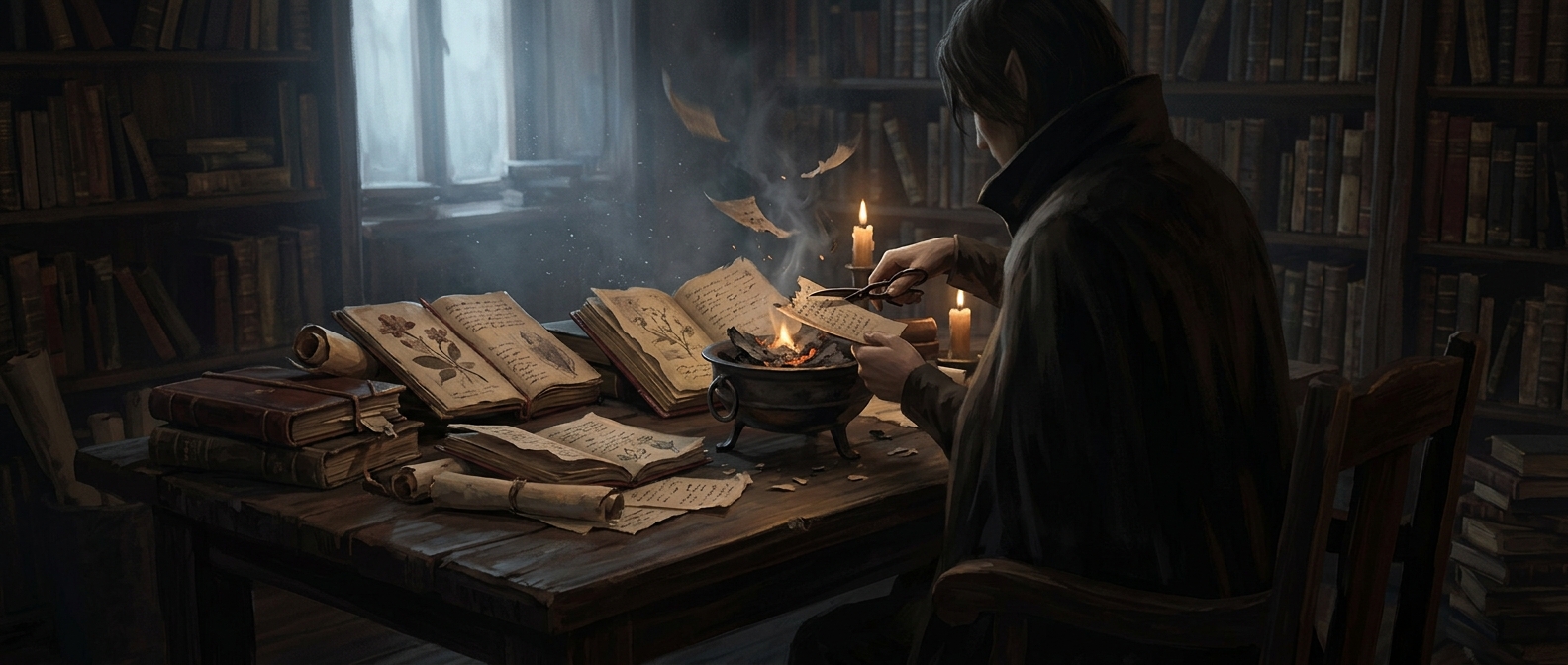
The journal is more than a record of what happened: it is the game’s model of what the vampire can still remember. Each new experience takes up room, so keeping the past is an active choice. When the available space runs out, an older entry has to be removed to make way for the new one.
That turns a familiar game reward—discovering something new—into a tradeoff. The player gains a fresh memory but gives up access to part of the character’s remembered past. Because entries can include something as basic as a mortal name, the cost is not limited to losing useful clues. It can mean letting go of a piece of who the character was.
Forgetting becomes a player decision
Many games let characters accumulate a growing record of discoveries. Here, the record stays finite. That constraint makes the player choose which experiences deserve to remain, rather than treating every past event as permanently available. The journal’s limits make forgetting visible: an entry is not merely buried under newer information but deliberately crossed out.
The result is a tension between discovery and continuity. Moving forward may require erasing a link to the vampire’s former life, while preserving that link means making room for fewer new memories. The player is therefore shaping not only what the character has experienced, but which parts of that experience can still define them.
A name is especially telling: it can identify someone, but it can also anchor a life before vampirism. When even that can be lost, the journal’s small storage limit becomes a concrete way to make the character’s changing identity part of play.