A belt change is more than a quick swap
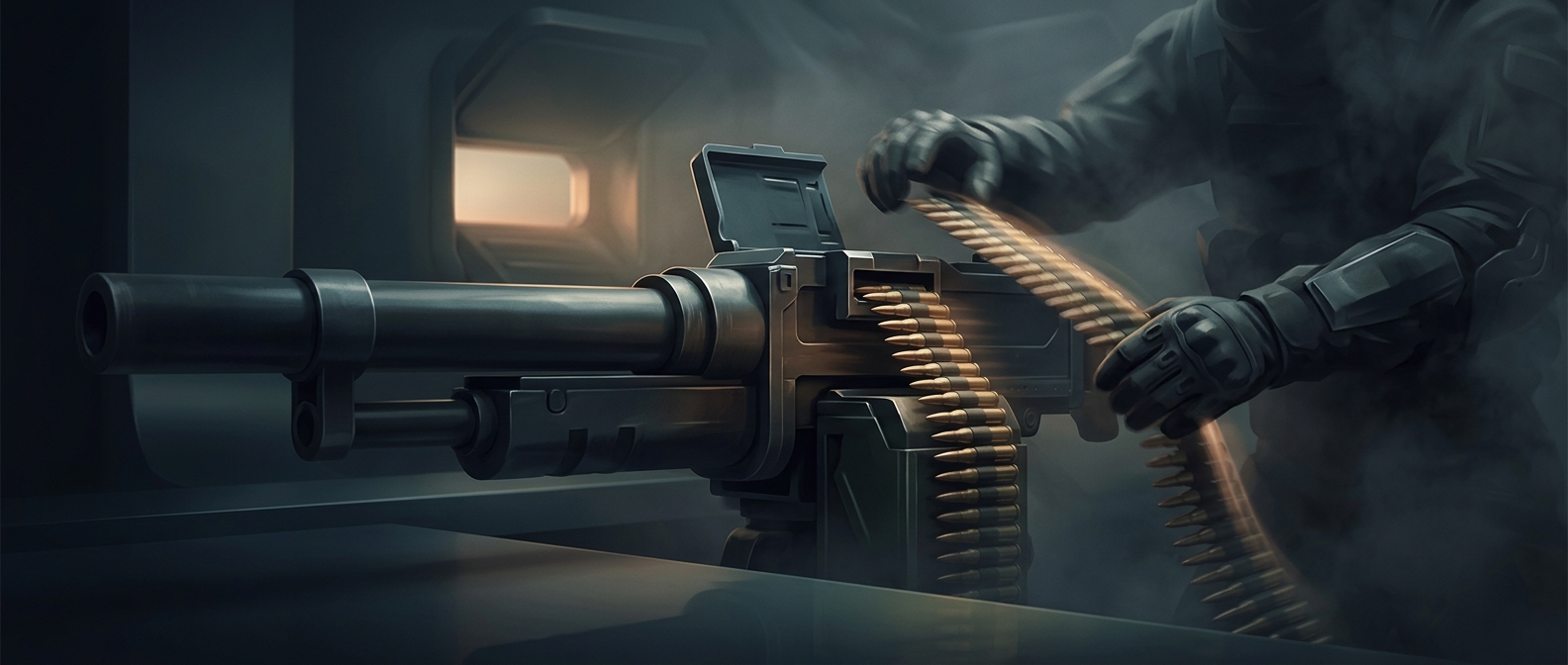
A belt-fed machine gun does not reload like a pistol with a single box magazine. The gunner must open the feed cover, clear or move aside the used belt, place the fresh belt so its first cartridge sits correctly in the feed path, and close the cover. Depending on the weapon and whether it needs to be charged afterward, there are several separate actions to get right.
That sequence matters because the belt has to meet the gun’s moving parts in the right position. A hurried or poorly seated belt can fail to feed, turning a pause for ammunition into a stoppage that needs further attention.
Why games compress the sequence
A game usually turns those steps into a short, recognizable animation: the character handles the belt, the ammunition counter refills, and firing resumes. Showing every adjustment would keep the player waiting while adding little to moment-to-moment play. The animation instead signals what is happening and gives the reload a visible beginning and end.
It also serves the game’s pacing. While the gun is unavailable, the player has to judge whether there is time to reload or whether to move, take cover, or switch weapons. A brief animation makes that pause legible without letting the mechanical procedure dominate the encounter.
The animation is a design choice
Games can make the reload longer or shorter to suit their combat rhythm; the same kind of weapon need not reload at the same speed in every title. The quick belt change is therefore not a stopwatch account of handling a real gun. It is a compressed visual explanation of a temporary vulnerability: for a few moments, the weapon that controlled a lane cannot fire.