Why hip-fire can still land near the crosshair
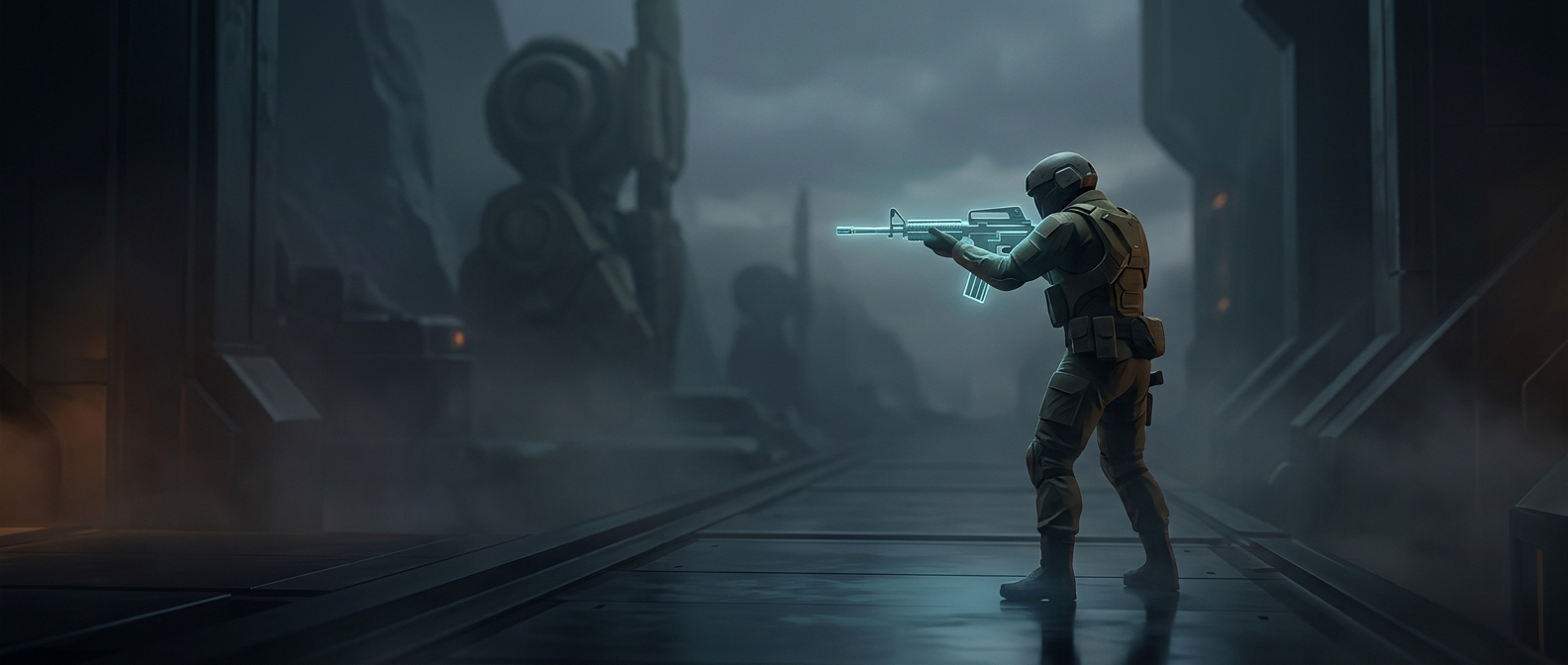
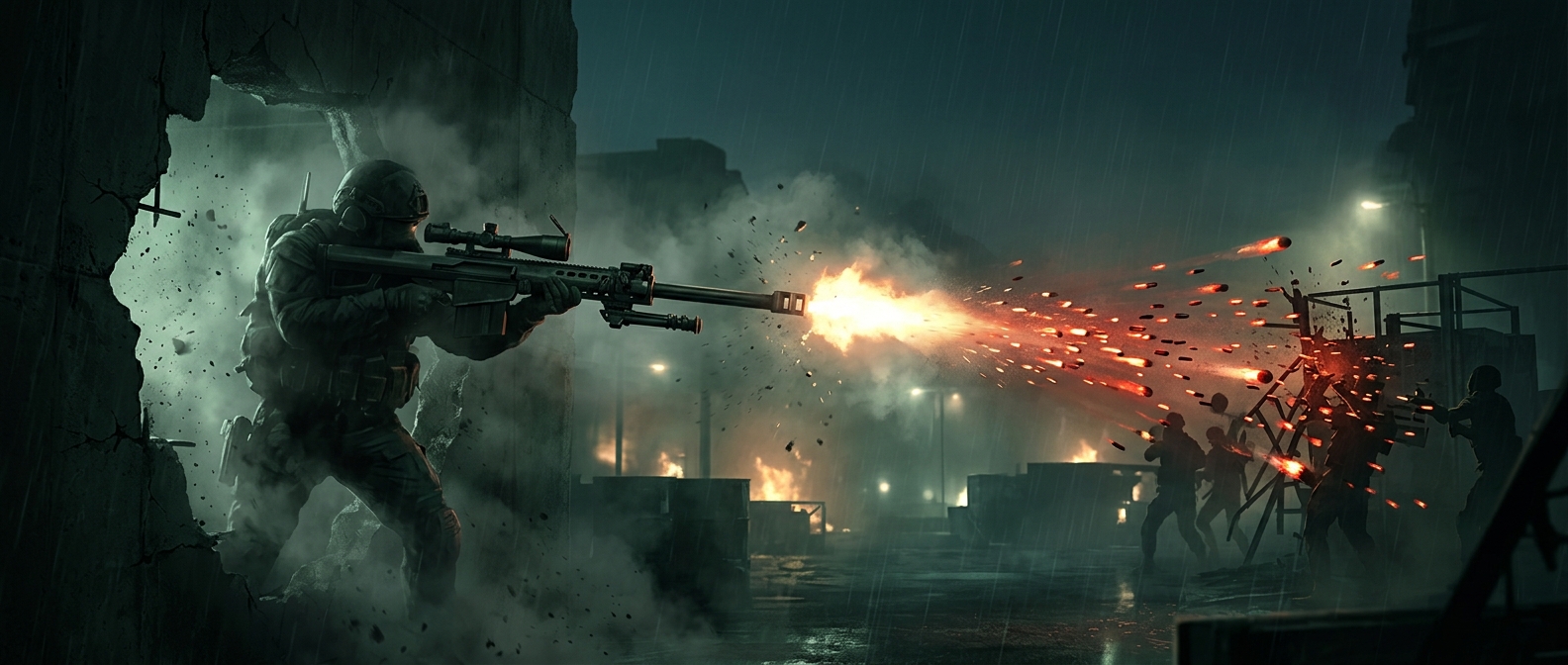
In a game, “hip-fire” usually means shooting without looking through the weapon’s sights. It does not necessarily mean the rifle is aimed randomly. The game can treat the center of the screen as the intended direction of fire, then add a spread pattern: each shot may land a little away from that point. A tighter pattern makes hip-fire more dependable; a wider one makes aiming down sights valuable.
That screen-centered model is a design shortcut. It gives players a clear target to steer toward, even though the on-screen rifle may be angled or bobbing. Some games also account for the weapon’s muzzle position—the point where the bullet leaves the barrel—so a nearby obstruction can block a shot even when the crosshair appears clear.
Accuracy is a balance, not a single setting
Designers can make hip-fire less reliable when a character is moving, jumping, or firing repeatedly. Those conditions widen the spread or make recoil harder to control. Aiming through the sights can narrow the spread and steady the view, but it takes time and limits awareness. The tradeoff lets players choose between a quick shot and a more deliberate one rather than making one method best in every situation.
Real rifles can be fired from the hip, but a shooter loses the stable sight picture used to align the weapon with a target. At very short range, pointing and practice can still produce hits; precision becomes harder as distance grows. Games compress that difficulty into readable rules. A centered hit is often less a claim about real-world technique than a promise that the player’s aim will have a consistent, understandable relationship to the screen.