A weak point has to be found before it can be exploited
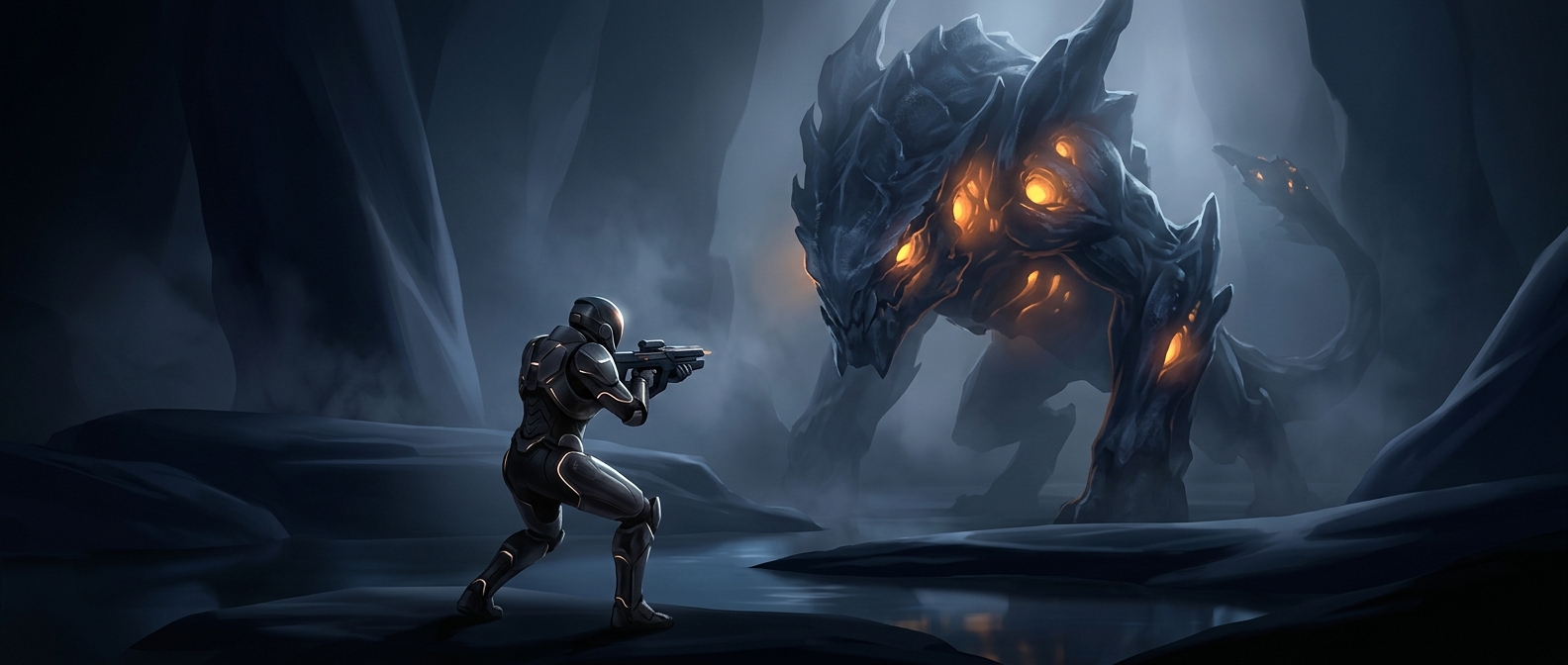
In a fast fight, an enemy’s vulnerable organ can be hard to distinguish from armor, animation, and visual effects. Coloring it brightly solves that problem at a glance: the player can spot the intended target without stopping to inspect the creature. The glow acts as an affordance—a visual cue that suggests what to do next, much like a handle suggests where to pull.
Making the organ conspicuous also ties the instruction to the enemy itself. Instead of relying only on a separate health bar or text prompt, the game shows where to aim on the body. That can make an unfamiliar foe easier to read while the action is underway.
Clarity changes the fight’s emphasis
A highlighted weak spot shifts attention from simply hitting an enemy to choosing where to hit it. If the target is exposed only during certain movements, the glow can help players recognize that opening; if it remains visible, it can keep aim focused amid the chaos. Either way, the cue makes the enemy’s body part of the combat interface—the part the player reads to decide what to do.
There is a tradeoff: a neon organ is easier to understand than a subtle one, but it can make a creature feel less mysterious or natural. The bright color is doing practical work, not just decorating the monster. It turns anatomy into an instruction, and the fight into a test of whether the player can put a shot where the game has made the answer visible.