What the padding hides
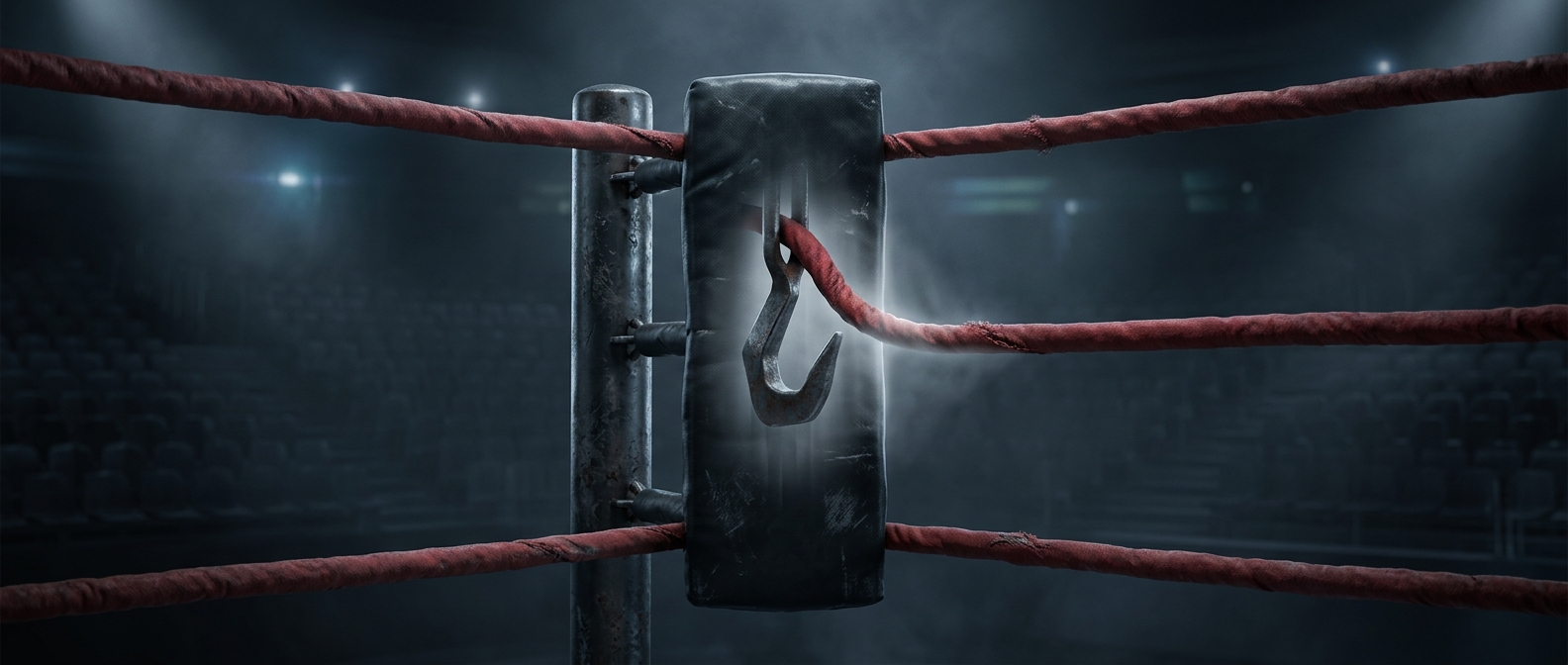
A ring corner has to do more than soften contact: it also helps hold the ropes in place. Beneath the covering, a steel hook anchors a cable under tension. When the cable is pulled tight, the hook and its mount resist that force rather than yielding like a cushion.
The padding is only a layer over that hardware. It can soften a glancing bump, but it cannot make the corner behave like a pillow. If someone leans their head into it, the foam compresses until the firmer structure underneath takes much of the pressure.
Why the corner feels different
Away from the corner, ropes can flex when pushed. Near their anchor, that movement is limited: the force is carried into the hook and the ring frame. So a head pressed into the junction meets a relatively rigid point, even if the surface looks soft.
That hidden difference matters in a sport where people may be driven toward the edge or brace themselves against it. The padding is there to reduce impact, not to make resting against the corner comfortable or safe; the hardware beneath it still determines how much the structure gives.