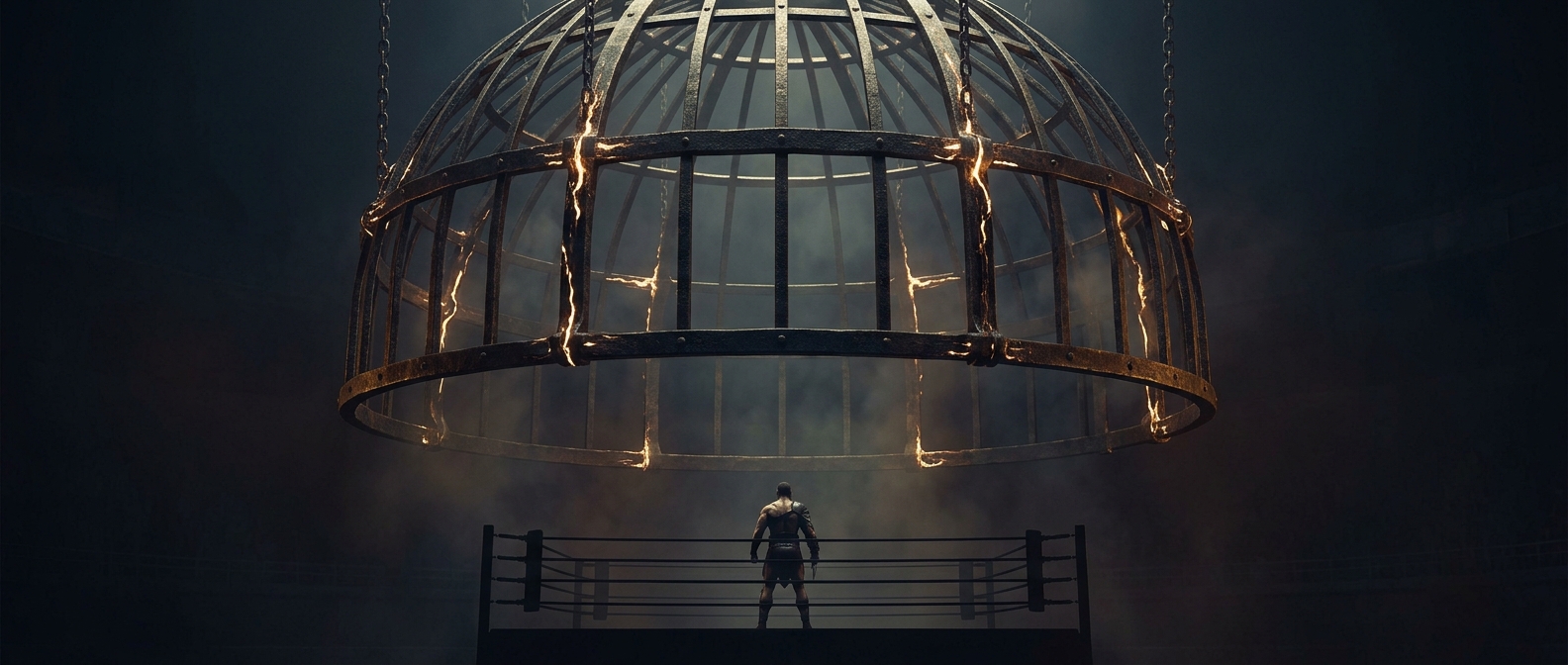
A Cage Built for the Crowd, Not Just the Match
A steel cage can look like a way to trap two fighters together. In this case, its more urgent job was to keep the audience out. When spectators were angry enough to climb into the ring—especially when the villain was getting the better of a fight—the mesh formed a physical barrier between them and the performers.
The design had to do two things at once: resist people trying to climb through or over it, while still letting the crowd see the action. Open mesh offered visibility without leaving a clear path into the ring. The cage therefore protected the people inside from an unpredictable audience, not simply one another.
The Villain Made the Barrier Matter
In wrestling, a villain is a character whose behavior is meant to provoke the crowd. That reaction can make a match feel emotionally charged, but it also creates a practical risk if spectators decide to intervene. A barrier let the performers stage a heated contest while limiting the chance that an angry fan could turn it into a real attack.
That changes how the cage reads: it is not only a dramatic enclosure. It is also crowd-control equipment, built for the moment when the audience stops watching and tries to join in.