A traffic signal turned into a child-sized rule
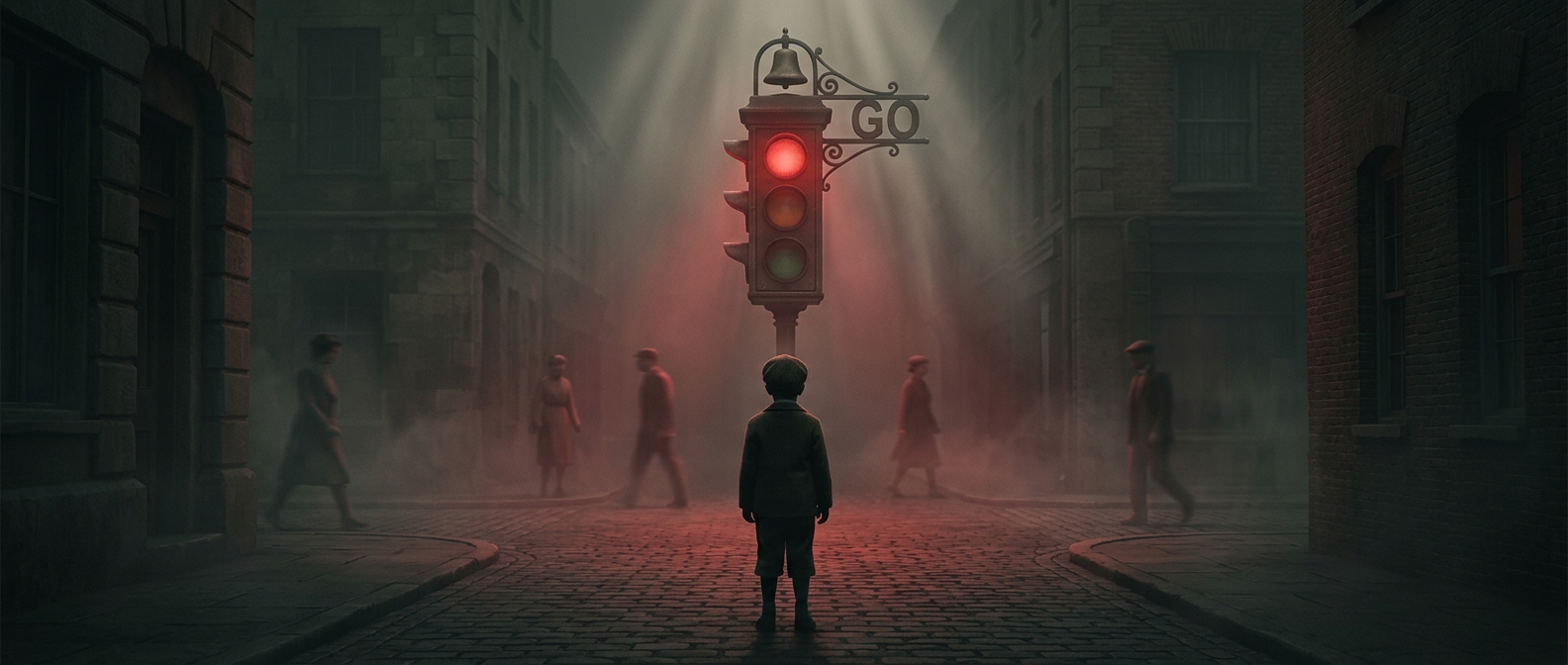
In “Red Light, Green Light,” one person calls the signal while the others move or freeze. The rule is simple enough for young children to grasp: green means move; red means stop. As cars became a familiar part of everyday life, those same words and colors carried a practical meaning beyond the game. A traffic signal could make “stop” and “go” visible from a distance, and the game gave children a playful way to rehearse the distinction.
The lesson is in the sudden stop
The challenge is not merely knowing what each color means. Players have to notice the call, control their bodies, and halt even when they are eager to reach the finish. That turns an abstract instruction into a physical memory: movement can be interrupted, and stopping matters.
The game is a simplified lesson, not a substitute for learning how to cross a street safely. Real traffic requires attention to vehicles, crossings, and adult guidance; a caller’s voice is not a road signal. But the game’s memorable reversal—move, then freeze—helps explain why a playground rule could echo a safety message. A child who has practiced stopping on cue has experienced the action behind the word.